

WEDNESDAY COLUMN BY USSIJU MEDANER
info@medaner.com, justme4justice@yahoo.com
I write this piece because I came to a junction where I sincerely asked myself why these protracted killings across the country. Why can we not end it no matter what efforts we make? Why do they become predictably recurrent? And why does it appear most strongly that we cannot do anything to stop them? And finally and most worrisomely, why do Nigerians respond the very way they respond to them; polarized, with one side seeming to be happy they are happening? I write hoping for answers as much as I want to see radical changes that alter the narrative in the best interest of our dear country.
Nigeria stands today as one of the most paradoxical nations in the world, immensely blessed, yet persistently burdened; richly endowed, yet economically strained; strategically significant, yet internally fragile. To understand Nigeria’s present condition, one must move beyond surface narratives and interrogate the deeper realities shaping its trajectory: the nature and structure of its insecurity, the suspected internal and external instigators, the failure of collective national consciousness, and the looming consequences if these patterns persist.
At the heart of Nigeria’s predicament lies a complex web of insecurity that is neither accidental nor entirely organic. From insurgency in the North-East to banditry in the North-West, separatist agitations in the South-East, and sporadic communal clashes in other regions, the structure of violence appears fragmented on the surface but interconnected beneath. These conflicts are often presented as isolated issues, extremism, ethnic grievances, and economic marginalisation, but a deeper analysis reveals a pattern of sustained destabilisation.
The nature of this insecurity suggests organisation, funding, and coordination that transcend local capabilities. Armed groups operate with sophisticated weapons, intelligence networks, and logistical support that raise serious questions about their sources. It is difficult to reconcile how loosely organised groups within rural or economically disadvantaged areas sustain prolonged campaigns without external backing or internal collaborators embeddeded within systems of power.
Suspected instigators of Nigeria’s insecurity can broadly be categorized into two: internal opportunists and external actors. Internally, political elites, criminal networks, and power brokers exploit instability for economic and political gains. Conflict creates opportunities for illicit arms trade, ransom economies, political manipulation, and control over territories rich in resources. Externally, however, lies a more disturbing dimension—one that connects Nigeria’s instability to broader global strategic interests.
Nigeria is not just another developing country; it is a geopolitical prize. Its vast reserves of oil and gas, its untapped solid minerals, its large population, and its strategic location in West Africa make it a nation of immense global importance. Such significance inevitably attracts attention—not always benevolent—from powerful global actors.
The Global West, particularly the United States, has historically positioned itself as a defender of democracy and stability across the world. However, a critical examination of its interventions in countries such as Iraq, Afghanistan, and Libya reveals a recurring pattern. Under the guise of combating terrorism, promoting democracy, or addressing humanitarian crises, interventions often result in prolonged instability, weakened state structures, and economic exploitation.
In Iraq, the invasion justified by claims of weapons of mass destruction led to the collapse of state institutions and years of sectarian violence. In Afghanistan, two decades of military presence ended with a sudden withdrawal, leaving behind a fragile system that quickly unraveled. In Libya, the intervention that led to the fall of Muammar Gaddafi transformed a relatively stable nation into a fractured state plagued by militias and human trafficking networks.
These examples are not isolated; they represent a pattern. When viewed through this lens, concerns about external influence in Nigeria’s insecurity become more plausible. The proliferation of arms, the persistence of conflict despite military efforts, and the strategic narratives pushed in international media all suggest that Nigeria may not be entirely in control of its internal security dynamics.
This is not to absolve Nigeria of responsibility. On the contrary, one of the most tragic aspects of Nigeria’s situation is the role played by Nigerians themselves. The failure of patriotism among citizens is perhaps the most dangerous internal weakness. Tribalism, religious extremism, and political polarization have created deep divisions that external actors can easily exploit.
Nigerians often view national issues through narrow lenses—ethnic loyalty, religious affiliation, or political allegiance—rather than through the broader perspective of national interest. This fragmentation weakens collective resolve and makes coordinated national action difficult. It also creates an environment where misinformation thrives and where citizens can be mobilized against their own country.
In many instances, Nigerians have become instruments of their own destabilization. Whether through spreading divisive narratives, supporting violent groups indirectly, or inviting foreign intervention without understanding its consequences, the collective actions of citizens have often undermined national stability.
One of the most concerning trends is the increasing willingness among some Nigerians to call for external intervention, particularly from Western powers. This reflects a dangerous level of desperation and a lack of historical awareness. The same powers that are seen as potential saviors have, in many cases, contributed to the instability of other nations.
In contrast, countries like Iran offer a different model of national response to external pressures. Despite internal political disagreements and economic challenges, Iranians demonstrate a strong sense of national unity when faced with external threats. They understand the implications of foreign intervention and prioritize sovereignty above internal differences. This does not mean Iran is without its problems, but it highlights the importance of a shared national consciousness in resisting external manipulation.
Nigeria, unfortunately, has struggled to cultivate such unity. The intense rivalry between ethnic groups, the politicization of religion, and the deep mistrust of government institutions have created an environment where national identity is secondary to sectional interests. This has made it easier for both internal and external actors to manipulate public sentiment and perpetuate instability.
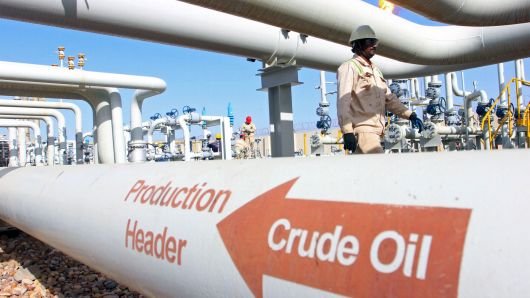
Yet, amid these challenges, Nigeria remains one of the most blessed nations on earth. Its natural resources alone position it for unprecedented prosperity if properly managed. Nigeria possesses some of the largest oil and gas reserves in Africa. The oil sector has historically been the backbone of the economy, generating billions of dollars in revenue annually. With improved governance, transparency, and investment in refining capacity, this sector could drive industrialization and economic diversification.
Beyond oil and gas, Nigeria is richly endowed with solid minerals. These include gold, limestone, iron ore, coal, bitumen, and rare earth elements. Many of these resources remain underexplored and underutilized. For instance, Nigeria’s gold deposits, if fully developed, could generate billions in export revenue and create thousands of jobs. The country’s bitumen reserves are among the largest in the world, offering significant potential for infrastructure development and export.
Agriculture is another area of immense potential. With vast arable land and diverse climatic conditions, Nigeria can become a global leader in food production. Crops such as cocoa, cassava, rice, and palm oil have both local and international market potential. Investment in modern farming techniques, storage facilities, and value-added processing could transform agriculture into a major source of wealth and employment.
Nigeria’s human capital is equally significant. With a population exceeding 200 million people, the country has one of the largest workforces in the world. Its youth population, if properly educated and empowered, could drive innovation, entrepreneurship, and economic growth. The success of Nigerians in technology, entertainment, and business across the globe demonstrates the potential that exists within the country.
When these resources are viewed collectively, the scale of Nigeria’s potential becomes clear. The country has the capacity to generate hundreds of billions of dollars annually across various sectors. Such wealth could fund infrastructure, education, healthcare, and social services, significantly improving the quality of life for citizens.
However, this potential also explains why Nigeria is a target for both internal exploitation and external interest. Wealth attracts attention, and without strong institutions and national unity, that attention can become predatory.
The consequences of Nigeria’s current trajectory are severe. Continued instability will deter investment, weaken economic growth, and exacerbate poverty. It will also undermine national sovereignty, making the country increasingly dependent on external actors. Social cohesion will continue to deteriorate, increasing the risk of large-scale conflict.
Moreover, the loss of national identity and patriotism will have long-term implications. A nation that does not believe in itself cannot sustain progress. Without a shared vision and collective commitment, even the most abundant resources will not translate into prosperity.
The way forward requires a fundamental shift in mindset. Nigerians must begin to see themselves first as Nigerians, not as members of ethnic or religious groups. National interest must take precedence over sectional interests. Citizens must become more critical of narratives that promote division and more vigilant against manipulation.
There must also be a renewed commitment to accountability and good governance. Leaders must be held responsible for their actions, and institutions must be strengthened to resist corruption and inefficiency. At the same time, citizens must recognize their role in shaping the nation’s future.
Education and awareness are crucial. Nigerians must understand the global dynamics that influence their country and learn from the experiences of other nations. Knowledge is a powerful tool against manipulation, and an informed population is less likely to be exploited.
Finally, there must be a revival of patriotism—not as blind loyalty, but as a conscious commitment to the nation’s well-being. Patriotism means criticizing constructively, contributing positively, and defending the country against both internal and external threats.
Nigeria stands at a crossroads. The choices made today will determine the future of generations to come. The nation can either continue on its current path of division and vulnerability or embrace unity, self-awareness, and strategic action.
The truth is simple but profound: no external force can destroy Nigeria without the cooperation—whether intentional or unconscious—of Nigerians themselves. And no external force can save Nigeria if Nigerians do not first choose to save themselves.
The time has come for Nigerians to rise above tribalism, reject manipulation, and reclaim their national destiny. The wealth of the nation is undeniable, the potential is immense, and the opportunity is still within reach.
But time is not unlimited. If Nigeria fails to act now, the consequences will not just be economic or political—they will be existential.
And history will not be kind to a people who had everything, yet lost it all because they could not stand together.