
By Joy Baba-Yesufu
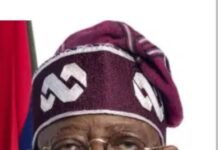
President Bola Ahmed Tinubu has described the proposed Integrated Gas, Power, and High-Speed Rail Project as a bold and visionary step that will redefine Sub-Saharan Africa’s economic and infrastructural landscape.
Speaking at the 2nd international railway conference held in Abuja on Monday, President Tinubu, who was represented by vice president Kashim Sherima commended Sub-Saharan Africa Limited and its partners, China Lankai Petroleum Investment Holdings Limited, for their commitment to the project, which has already secured a $60 billion financial support package from the Asia Development and Investment Bank.
According to Tinubu, the initiative aligns with his administration’s Renewed Hope Agenda, which prioritizes transformational infrastructure, economic diversification, job creation, and sustainable national development.
“This project is more than infrastructure—it is about building the future of Africa. It is about connecting communities, unlocking industries, creating jobs, and powering growth,” the President stated.
He noted that significant milestones had already been achieved, including the approval of the Outline Business Case, a certificate of no objection from the Infrastructure Concession Regulatory Commission (ICRC), and the completion of environmental and social impact assessments.
The President assured that government would continue to encourage genuine partnerships that deliver tangible results, with the Office of the Secretary to the Government of the Federation coordinating cross-sectoral engagements for seamless implementation.
In his address, the Minister of Transportation, Senator Said Ahmed Alkali, highlighted the administration’s progress in repositioning the railway sector as a driver of commerce and national unity.
Key achievements under the Tinubu administration he said include; the Kaduna–Kano rail modernization project, advanced from 15% to 53% completion, and the Kano–Maradi corridor with Dutse extension, which rose from 5% to 60%. The Kaduna–Kano line is expected to be completed by December 2026, while the Kano–Maradi project will reach Katsina by December 2025 and be fully commissioned by March 2027 amongst others.
The Minister stressed that railways remain more than a mode of transport. Globally, they have powered industrial revolutions, fueled urbanization, and driven regional integration. For Nigeria, he said, railways symbolize unity, commerce, and opportunity—“linking Maiduguri to Abuja, Kaduna to Lagos, and Port Harcourt to Kano.”
He added that with the African Continental Free Trade Area (AfCFTA) in view, the Kano–Maradi corridor would serve as a gateway to West African markets, expanding opportunities for Nigerian goods.