


Health experts have urged Nigerians to voluntarily donate blood regularly because the national blood bank is gradually drying up.
They said people should not wait until emergencies to donate blood.
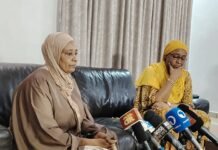
This was the consensus in Abuja on Tuesday at a press briefing organised by the National Blood Transfusion Service in collaboration with the Trauma Care International Foundation (TCIF).
An online news source, PremiumTimes said the event was held to educate Nigerians by debunking myths associated with blood donation and transfusion.it said the organisers also intend to recruit 10,000 new voluntary blood donors across the country.
Speaking at the event, the senior executive officer of TCIF, Olajumoke Akisanya, said Nigerians need to cultivate the habit of voluntarily donating blood and discard the various myths surrounding blood donation.
“Many Nigerians need to be aware that blood donation saves lives, both for the donor and the receiver. Currently Nigeria needs at least 1.8 million units of blood in the blood bank, but the country is far behind,” she said.
Ms Akisanya said it is important to have surplus blood in the blood bank, especially for pregnant women and people with sickle cell anemia who often need blood transfusion.
“A sickle cell patient on an average receives 10 to 12 pints of blood per year. There are also others who need urgent blood transfusion.
“In order to play our part in saving lives, we are organising a voluntary blood donation drive in multiple locations around Nigeria on June 30 from 10a.m to 6p.m.
“The locations are NBTS offices in Abuja, Port Harcourt, Enugu, Lagos, Oyo, Maiduguri, Benin, Owerri and Kaduna.
“We are also advocating for the institution of a regulatory body that will not only support and promote voluntary blood donation but will be able to enforce and even prosecute those who have made blood and its product a commodity beyond the reach of those in need for commercial gains,” she added.
Also speaking at the event, the Director, Monitoring and Evaluation NBTS, Olusola Idowu, called for rigorous campaign for voluntary blood donation in the country.
Mrs Idowu who represented the National Coordinator NBTS, said the statistics of voluntary blood donors in the country has drastically declined.
She said NBTS has 17 centres across Nigeria but the highest unit of blood collected by the centres was in 2015.
“The highest unit of blood ever collected in NBTS was in 66,799 in 2015. Since then there has been a drop. In 2016, 51, 331 unit were collected and in 2017, 31,896 was collected.
This is a far cry from the 1.8 million units needed for emergencies and medical interventions every year in the country,” she said.
Blood and blood products are vital in medical treatment.
According to the World Health Organisation, a large proportion of people require transfusion during the first 24 hours of their treatment.
This includes over 234 million major operations performed worldwide every year and 63 million people undergoing surgery for traumatic injuries.





© 2026 PeoplesDaily Nigeria. All Rights Reserved.