

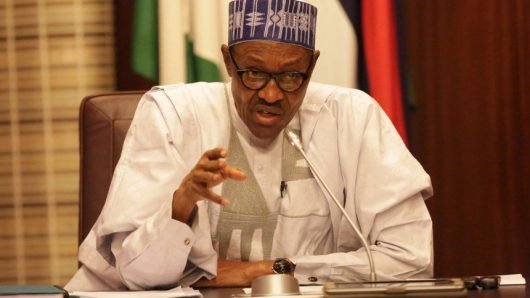
 For the fourth time President Muhammadu Buhari has declined his assent to the Electoral Act 2018 Amendment Bill. Senator Ita Enang, Senior Special Assistant to the President on National Assembly (Senate), over the weekend, only said that the President had communicated his decision to the National Assembly. In the President’s letter to House Speaker, Yakubu Dogara, Buhari said he withheld his assent “Principally because I am concerned that passing a new electoral bill this far into the electoral process for the 2019 general elections which commenced under the 2015 Electoral Act could create some uncertainty about the applicable legislation to govern the process”.
The first time the President vetoed the bill was 2018. He objected the lawmakers’s reordering of the 2019 general elections schedule, saying they usurped the constitutional powers of the Independent National Electoral Commission (INEC). Again in September, he turned down the bill for the second time, asking the National Assembly to revise some clauses.
The National Assembly passed the bill on July 24 and sent it to the President on August 3.
Though the President’s letter to the National Assembly did not say it, his communication might have been based on regional body, ECOWAS’ protocol on elections which says that for an electoral law to be tenable, it must come six months before the election under which they would be conducted take place. As it is, next year’s polls are only two months away. Also Buhari must have taken into account reservations made by top INEC officials about some provisions of the Electoral Act 2018 Amendment Bill with regard to their applicability to the 2019 elections.
Constitutionally, the National Assembly has the power to overturn the President’s veto after 30 days. This is what the opposition is urging the lawmakers to do. Led by one time governing People’s Democratic Party (PDP), the opposition accuses Buhari, who is a candidate in the 2019 elections, of stalling the bill to favour himself and his party, the All Progressives Congress (APC). Buhari, on his own part, has repeatedly promised a transparent vote. One proof of his sincerity is the hefty budget he has approved for INEC.
On the three previous occasions the President failed to assent to the bill, the National Assembly wisely held back from invoking its power to override the veto and make the bill law. There is no reason to believe the lawmakers will listen to the opposition and invoke that power this time around. For one, both parties are guilty of time wasting on the bill. The Senate passed the bill some time last year but the House of Representatives did not March this year. It took another 5 months for the National Assembly to unify the two versions into a single bill, ready for the President’s assent.
It’s regrettable that the bill has become a victim of thoroughly avoidable circumstances. A little bit of bipartisanship would have cleared up this mess. However, there is no cause for alarm. The 2019 polls can still hold under the subsisting electoral law which allows INEC discretion over usage of the card reader in an election even though it’s use in 2015 was not backed by an act of the National Assembly. This has been done in the amendment. Unfortunately, the bill has come too late to apply it to polls only two months away.
Never miss a moment! Get the stories shaping Nigeria, delivered straight to your phone. Follow Peoplesdaily Newspaper on WhatsApp for breaking news, exclusive reports, and the headlines everyone will be talking about, before anyone else.


