
By Egena Sunday Ode
The Federal Government Wednesday said it is not planning different payment table for the trade unions in tertiary institutions.
Recall that the Academic Staff Union of Universities (ASUU) is insisting on the adoption of University Transparency and Accountability Solution (UTAS) it created for payments, claiming that the Integrated Payroll and Personnel Information System (IPPIS) is short changing them.
But government said in March that UTAS has failed three integrity tests conducted by NITDA.
The Senior Staff Association of Nigerian Universities (SSANU) and Non-Academic Staff Union of Allied and Educational Institutions (NASU) also prescribed Universities Peculiar Personnel Payroll System (UPPPS), as their own payment platform.
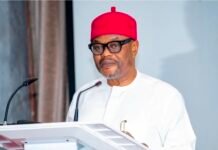
Minister of Labour and Employment Chris Ngige while responding to questions from newsmen at the end of the weekly Federal Executive Council, FEC, meeting chaired by President Muhammadu Buhari at the Presidential Villa, Abuja, assured that efforts were on to resolve the ongoing faceoff between it and ASUU and other university based unions over payment platforms.
He said contrary to insinuations that the government was not engaging with ASUU, there had been series of meetings between all parties with the next one coming up on Thursday.
Ngige said: ‘ASUU went on strike by 14th of February, what people call Valentine’s Day lovers day by 21st, I cut short my trip to an African session now conference holding in Botswana. And we held a conciliation between on the 21st of February with the employers, the Ministry of Education and the National University commission.
“When the issue bordered on money remunerations welfare, we did another conciliation meeting inviting the Ministry of Finance budget office or the Federation, national salaries, incomes and wages commission and again, with their employers on the first of March after that, it became clear that two cardinal things were still keen: the issue of renegotiation of their welfare package, as in the 2009 agreements, that agreement says you can review every five years. So that issue stuck out like a sore thumb.
“Then another issue arose in that agreement on the payment platform of University Transparency Accounting Solution, UTAS which they say they’ve invented,. They said they don’t want to be on IPPIS, that IPPIS was amputating their salaries and taking off certain allowances. And so that it is not capturing their peculiarities. So two agencies are involved. The direct employer and University Council, on one side. Salaries, incomes and wages, and finance. Because the remuneration, the welfare package we’re talking about involves more fund. That’s on the side of government, two broad agencies are involved.
“There is also on the payment platform, Ministry of Communication and Digital Economy, and they are parastatals, the NIDTA, which approves every new portal or any digital platform we want to use in Nigeria now, especially in public service. So NITDA has undertaken to look at that platform, and see if that platform can be useful and beneficial to government. No employee or worker can dictate to his employer how he or she will be paid. There are principles at work. But government gave this privilege in consonant with executive orders three and five, for local content development, and I support it.
“So NITDA on their own was doing their test. And when NITDA gave their preliminary results, they said user acceptance was the one that they passed. But the whole tyhing is a total package of vulnerability, and stress test. Vulnerability, whether this platform or this system that can be hacked into, without difficulty or difficulty. Stress, how many people can it carry? So this add it as the left for them. So we now have to ask them to go back to these places, form committees with them. Education took them on the issue of 2009 agreement, which is renegotiation of your condition of service emolument their remuneration allowances, therefore, salaries, income and wages Ministry of Finance that produces the money are involved. So they went back. So that’s where they are we called what we call tripartite clause meeting, based on presidential directive that the Chief of Staff, myself, finance, education, find the solution.
“That meeting held in the banquet hall. The labour correspondents, you were all there, and we gave an instruction again for them to go back and come ack with terms. So as I speak to you, as the arbitrator or conciliator in Chief, I have not gotten back any of the reports from education, from salaries, incomes and wages, nor from ASUU. Because they’re supposed to report to me. I have not gotten any report.
“But on the government side, we’re calling up a meeting tomorrow so that everybody in government side can report if he has a problem, so we know how to address it.
So it is not true that nobody is talking to ASUU, as this labour correspondent has alluded. He knows we are talking to ASUU. He also knows that other unions are accusing us of preferential treatment, and I’m happy he said so by himself. This is because these other the unions have also claimed that they have developed their own payment platform. And they will not use you UTAS even if it is good.
“And they are putting down in writing and saying they have developed their own platform.
So what government has done at the last meeting was to say, NITDA, tests and three platforms and rate all of them and give us back reports. Their term expired last Friday, the time they were given.
“That’s why we’re calling them all up to come tomorrow and brief us. So from your question even, you can see that the situation like the Minister of Information told you two weeks ago is very complex, but we are navigating it, we are taking it step by step. So that we don’t ruffle feathers, we are interested in our children going back to school. And if ASUU and other unions in the university system want to comply with the labour laws of the country.
“Once I have apprehended a dispute and brought it to my table, you return to what is called staus quo antebellum. You go back from war and start teaching your student while this is work in progress. So even as the they have abandoned their jobs, a lot of them and their children at home discussions and work is still going. It is work progress. So they should have stayed back to work while we are doing all this. So this is the solution with the ASUU and other union pallava.
“We have not given any preferential treatment to anybody.
The remuneration being looked at if government decide to raise, which government is ready to do, it will be holistically done of all university unions because they’re all in the same environment. And we know also that once you do it in universities, the polytechnics will come. The colleges of education will come. They are all educational sector. And once you finish with the educational sector, we also know that health system will come. So it’s complex, like you said, and so we are not afraid of handling it because government to do the needful. They have to do within the available resources they have.
But for me as conciliator, I will sit there, if government does the one that is not proper, and not very good, I will say. If the union do the one that is also not good, I will tell them.”