The Nigeria Centre for Disease Control and Prevention (NCDC) on Thursday opposed a proposed bill seeking to establish the National Institute for Public Health and Infectious Diseases, warning that the move could create a rival disease control agency and weaken Nigeria’s public health response system.
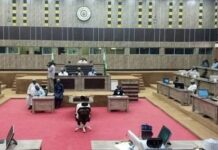
The agency made its position known during a public hearing on the National Institute for Public Health and Infectious Diseases (Establishment) Bill, 2025 (HB 2629), organised by the House of Representatives Committee on Infectious Diseases in Abuja.
Presenting the NCDC’s memorandum, the Director-General, Dr. Jide Idris, said the proposed institute would duplicate responsibilities already assigned to the NCDC under the NCDC Establishment Act, 2018.
According to him, Nigeria already has a legally recognised National Public Health Institute through the NCDC, whose mandates include disease surveillance, outbreak detection and response, laboratory coordination, emergency preparedness, public health research and implementation of the International Health Regulations (IHR).
“The core responsibilities proposed for the new institute are substantially the same as those currently assigned to the NCDC,” Idris said.
He warned that creating another institution with overlapping functions could trigger governance conflicts, institutional rivalry and uncertainty over leadership during disease outbreaks.
Idris argued that public health emergencies require a single national authority and cautioned that a parallel agency could fragment coordination efforts during crises.
He further noted that the bill seeks to designate the proposed institute as Nigeria’s National Focal Point for the International Health Regulations and empower it to coordinate responses to infectious disease outbreaks—functions currently performed by the NCDC and recognised by the World Health Organization.
According to him, overlapping mandates could create confusion among state governments, development partners and international organisations that already recognise the NCDC as Nigeria’s official public health authority.
Drawing lessons from the country’s responses to Ebola, COVID-19, Lassa fever, cholera, meningitis, diphtheria and Mpox outbreaks, Idris said Nigeria’s disease control system has been built around a unified command structure.
He also raised concerns over the financial implications of establishing a new federal institution with headquarters, zonal offices, governing councils and staffing requirements amid competing national priorities.
The NCDC boss expressed reservations over proposals to allocate part of the Basic Health Care Provision Fund to the proposed institute, warning that it could further strain already limited healthcare resources.
He said the Federal Government had invested heavily over the years in strengthening the NCDC’s laboratory network, surveillance systems, emergency operations centres, genomic sequencing capacity and outbreak response infrastructure.
“Creating another institution with similar responsibilities would duplicate existing investments and undermine government’s efforts to streamline public institutions,” he said.
The agency urged lawmakers to strengthen existing public health structures instead of establishing what it described as a parallel public health command system.
However, the NCDC backed plans to upgrade the National Tuberculosis and Leprosy Training Centre in Saye, Zaria, into a tertiary institution dedicated to teaching, clinical services and research.
Earlier, Speaker of the House of Representatives, Rt. Hon. Tajudeen Abbas, described the proposed institute as a strategic investment in Nigeria’s health security.
Represented by Hon. Bashir Zubair, the Speaker said Nigeria’s experiences with Ebola, COVID-19 and other infectious disease outbreaks exposed weaknesses in the country’s health system and highlighted the need for stronger institutions capable of preventing and responding to emerging health threats.
“A country of Nigeria’s size and strategic importance can no longer afford a reactive approach to disease outbreaks,” Abbas said.
He maintained that the proposed institute would provide a comprehensive framework for disease prevention, surveillance, diagnosis, research and management while promoting home-grown solutions to public health challenges.
Also speaking, Chairman of the House Committee on Infectious Diseases, Hon. Amobi Godwin Ogah, represented by Hon. Mark Esset, said the proposed legislation was inspired by the enormous but underutilised capacity discovered during an oversight visit to the National Tuberculosis and Leprosy Training Centre in Zaria in October 2025.
He disclosed that the Presidency had already approved the upgrade of the facility into a public health institute and expressed confidence that the legislation would strengthen Nigeria’s capacity to prevent and manage infectious diseases.
The committee also received submissions on the proposed Tuberculosis Anti-Discrimination Bill, which seeks to protect the rights of persons living with or affected by tuberculosis and eliminate stigma associated with the disease.
Stakeholders from the Federal Ministry of Health and Social Welfare, development partners, civil society groups and professional bodies also presented memoranda as lawmakers continued deliberations on the two bills.