

By Haruna Salami
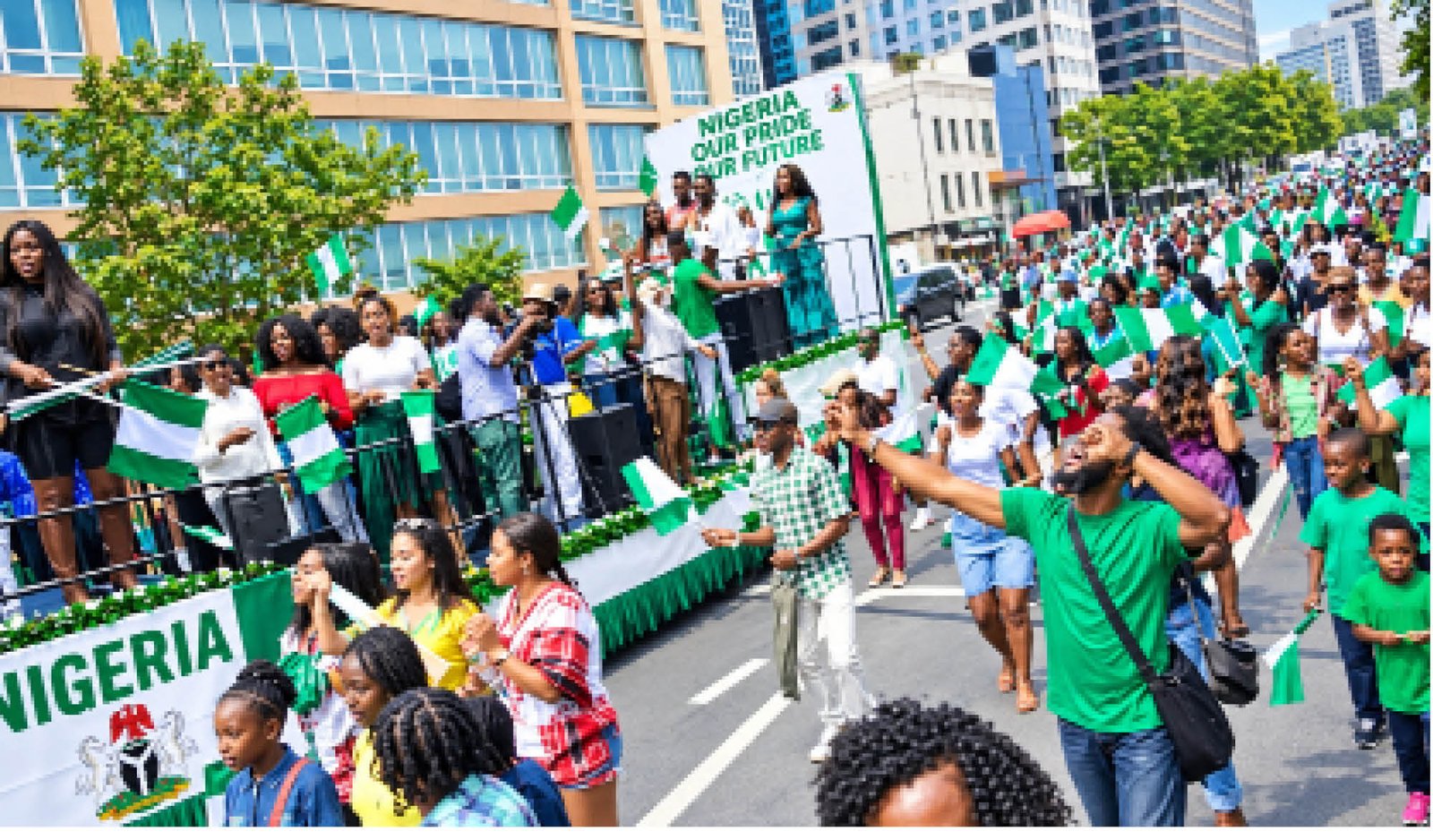
Sixty-six years after Nigeria lowered the Union Jack and raised the green-white-green flag on October 1, 1960, the country once again stands at a familiar crossroads—looking back with pride at how far it has come, while confronting the challenges that continue to test the promise of independence.
Nigeria became an independent and sovereign nation on October 1, 1960, with a federal system built around three regions. Six decades and six years later, the country has evolved into a federation of 36 states, with a vastly expanded infrastructure network, a larger economy, a more complex political system and a population that has grown enormously.
But Independence Day is more than a commemoration of the transfer of political authority from colonial Britain to Nigerians. It is also a moment of national reflection: What has Nigeria achieved? Where has it fallen short? And what should the next generation inherit from the country that was born with enormous expectations in 1960?
For Senator Peter Nwaebonyi, representing Ebonyi North, the story of Nigeria since independence is one of considerable progress.
Looking at the country’s journey from three regions to 12 states, then 21 and eventually 36 states, Nwaebonyi said the transformation reflected the country’s steady development.
He pointed particularly to infrastructure, arguing that successive administrations had contributed to the country’s development, while describing the infrastructure programme under President Bola Ahmed Tinubu as significant.
According to him, the ongoing construction and rehabilitation of major highways, including the Abuja-Kaduna-Kano road, Abuja-Kogi road and Sagamu-Ore road, demonstrate the scale of current infrastructure investment.
He also highlighted projects across the South-East and South-South, including sections of the Onitsha-Enugu, Enugu-Aba and Aba-Port Harcourt corridors, as well as the Calabar-Ebonyi-Benue-Kogi-Nasarawa-Abuja corridor.
For Nwaebonyi, such projects have particular significance for the South-East, where he said roads remain crucial to commerce and movement.
“As an Igbo man, we love the road more than any other thing because we need the road to go about our business because we are business people,” he said.
The senator also linked Nigeria’s progress to the country’s ability to rise above ethnic and religious divisions.
He urged Nigerians to study the lives of earlier nationalists and leaders, including Nnamdi Azikiwe and Obafemi Awolowo, whom he described as examples of Nigerians who transcended ethnic boundaries.
For him, patriotism must come before ethnic identity.
“We should imbibe that spirit of oneness, unity and patriotism, putting Nigeria first, irrespective of your religion, culture and ethnicity,” he said.
Nwaebonyi, who disclosed that he is working on a PhD thesis examining the relationship between ethnicity and corruption in Nigeria, argued that national character should be judged by what individuals contribute to society rather than by their ethnic origins.
“If your character is good, you’ll be my friend. I don’t want to know whether you’re a Fulani man, or you’re an Igbo man, or you’re a Yoruba man. What comes first is you are a Nigerian,” he said.
That call for unity resonates with the broader historical significance of Independence Day. Nigeria’s independence was achieved within a federal arrangement designed to accommodate its diverse regions and peoples, while the country’s early political leaders had to grapple with the challenge of building a common national identity.
Unity: Nigeria’s enduring achievement
For Mr Louis Eromosele, Special Adviser to Senator Joseph Ikpea, representing Edo Central, Nigeria’s continued existence as one country remains one of the major achievements worthy of celebration.
He congratulated Nigerians on 66 years of independence, describing the country’s ability to remain together despite its enormous diversity as significant.
Nigeria is home to hundreds of languages and numerous ethnic and cultural groups, yet the country has retained its territorial unity through decades of political transitions, military rule, civil conflict and democratic governance.
“For us to have been together, despite our differences, we come from different cultures; we speak almost 400 languages, if I’m not mistaken. So, you can see with all of this, we are still together as one,” Eromosele said.
But he also identified insecurity as one of the country’s most troubling challenges.
According to him, the security situation remains an area where more needs to be done to guarantee the safety of citizens and protect their ability to go about their daily activities.
He cited recent action against kidnappers in Edo State, including death sentences handed down by the courts, as an example of a firm response to criminality.
“For me, the security issue has been the lowest point for us and I think we need to do more on that. The presidency needs to do more on that,” he said.
Eromosele also pointed to economic hardship as another major concern.
While acknowledging the reforms undertaken by the Tinubu administration, particularly in the foreign exchange market and other areas of the economy, he said Nigerians were yet to fully experience the benefits of those measures.
“The president is trying his best but I cannot tell you for certain that we are there yet,” he said.
He urged Nigerian youths to remain patient and resist crime, pointing to the example of former Head of State Yakubu Gowon, who assumed office at about 30, as evidence of the responsibility young Nigerians can shoulder.
‘Nigerians are hurting’
But if Nwaebonyi’s assessment is one of progress and Eromosele’s combines celebration with concern, Senator Abba Moro of Benue South offered a more sobering assessment of the country’s present condition.
For Moro, Independence Day provides an opportunity not only to celebrate the longevity of the Nigerian state but also to ask whether ordinary citizens are receiving the benefits expected from independence.
“October 1st is approaching, and Nigerians are watching with expectations as to what actually is on the ground for them,” he said.
While describing the addition of another year to Nigeria’s national existence as a reason for celebration, Moro said the celebration must also be measured against the everyday experiences of citizens.
“Nigerians are hurting from infrastructural deficits. Nigerians are hurting from poverty. Nigerians are hurting from insecurity,” he said.
His assessment captures the tension at the heart of Nigeria’s 66th Independence anniversary: the country has survived and evolved, but millions of citizens continue to judge national progress by the realities of their daily lives.
For Moro, the gap between national potential and citizens’ experience remains a major challenge.
He said there was still considerable room for improvement in governance, expressing hope that the economic difficulties being experienced by Nigerians would eventually give way to better conditions.
“I want to give him the benefit of doubt that something good might happen to Nigerians in the coming years,” Moro said, referring to President Tinubu.
But he added that, at present, Nigerians still face serious difficulties.
The unfinished business of nationhood
The different perspectives from the lawmakers reveal the complexity of Nigeria’s Independence story.
At 66, Nigeria is no longer the country of three regions that emerged from colonial rule in 1960. The country has undergone constitutional changes, military interventions, a civil war, successive democratic transitions, economic transformations and the expansion of its political and administrative structures.
The National Library of Nigeria records that the 1960 Independence Constitution established a federal system with a Governor-General as head of state, a Prime Minister as head of government and a bicameral Federal Parliament. Nigeria became a republic three years later, in 1963.
Yet the fundamental question of nation-building remains as relevant today as it was at independence: how can a country as diverse as Nigeria transform its enormous human and material resources into broad-based prosperity, security and a stronger sense of common citizenship?
Senator Nwaebonyi believes the answer begins with patriotism and a deliberate rejection of ethnic division.
Eromosele believes security and economic stability must receive greater attention.
Moro points to poverty, insecurity and infrastructure deficits as evidence that the gains of independence have not yet translated sufficiently into improved living conditions for Nigerians.
For Senator Amos Yohanna of Adamawa North, the assessment is also one of progress mixed with unfinished work.
He congratulated Nigeria on attaining 66 years of sovereignty, describing the period as both long and short depending on the stage of national development against which it is measured.
But like Eromosele and Moro, he identified insecurity as one of the major challenges confronting the country.
According to Yohanna, Nigerians should be able to move freely, conduct their businesses, farm, travel through the waterways and feel secure in their homes.
He acknowledged that no country can completely eliminate crime, but argued that insecurity should be reduced to isolated incidents rather than remaining a widespread concern.
“The government is doing its best, but I think we need to do much more in achieving that for our citizens,” he said.
From independence to responsibility
Perhaps the most important lesson of Nigeria’s 66 years is that independence did not mark the end of the country’s struggle; it marked the beginning of the responsibility of self-government.
The generation that celebrated independence in 1960 inherited the task of building a nation out of diverse peoples and regions. Today’s generation has inherited a much larger and more complicated country, together with the responsibility of deciding what kind of nation the next generation will receive.
The voices of the lawmakers interviewed for this Independence Day reflection differ in emphasis, but they converge on several realities: Nigeria has made progress; the country remains remarkably diverse; unity remains important; insecurity continues to threaten citizens; economic hardship remains a major concern; and the promise of independence is still a work in progress.
The anniversary, therefore, is both a celebration and a reckoning.
It is a celebration of the journey from colonial rule to sovereignty and of a country that has endured for 66 years despite enormous challenges.
It is also a reminder that the true measure of independence is not merely the number of years a flag has flown over a sovereign territory. It is the extent to which citizens can live securely, pursue their livelihoods, enjoy opportunity, participate meaningfully in governance and feel that the country belongs equally to them.
Nigeria’s founding generation dreamed of a country capable of determining its own destiny. More than six decades later, that dream remains alive—but its fulfilment depends on the choices made by today’s leaders and citizens.
As the green-white-green flag flies again on October 1, the question before Nigerians is therefore not simply how far the country has travelled since 1960.
It is whether the nation can convert its vast potential, diversity and resilience into a future in which independence is experienced not only as a historic event, but as a daily reality of security, dignity, opportunity and shared prosperity.
That, ultimately, is the unfinished business of Nigeria at 66.I kept the political comments attributed to the individual speakers rather than presenting them as independently verified conclusions, and used historical sources only for the background on Nigeria’s independence and constitutional development.
Never miss a moment! Get the stories shaping Nigeria, delivered straight to your phone. Follow Peoplesdaily Newspaper on WhatsApp for breaking news, exclusive reports, and the headlines everyone will be talking about, before anyone else.

