

By Femi Oyelola, Kaduna
In Nigeria of today, the walls of correctional centers are groaning under pressure. According to the Nigerian Correctional Service (NCoS), as of late 2025, custodial centers across the country are holding 86,486 inmates against an installed capacity of 68,486, representing an overpopulation of about 18,000 inmates.
Figures released by the Minister of Interior, Dr. Olubunmi Tunji-Ojo, in June 2026, paint a picture of constant movement. In May 2026 alone, 15,632 persons were admitted to custody nationwide, while 14,190 inmates were released through various legal and administrative processes.
More revealing is the data on recidivism. The federal government announced that the number of repeat offenders dropped from 11,616 in 2023 to 3,156 in 2024, and further to 1,382 in 2025, attributing the 88 percent decline to ongoing rehabilitation and reformation programs.
However, behind these statistics are human faces. More than 14,000 Nigerians leave correctional centers every month to return to a society that is often not ready to receive them, and many of them leave with no money, no accommodation, and no clear path to reintegration.
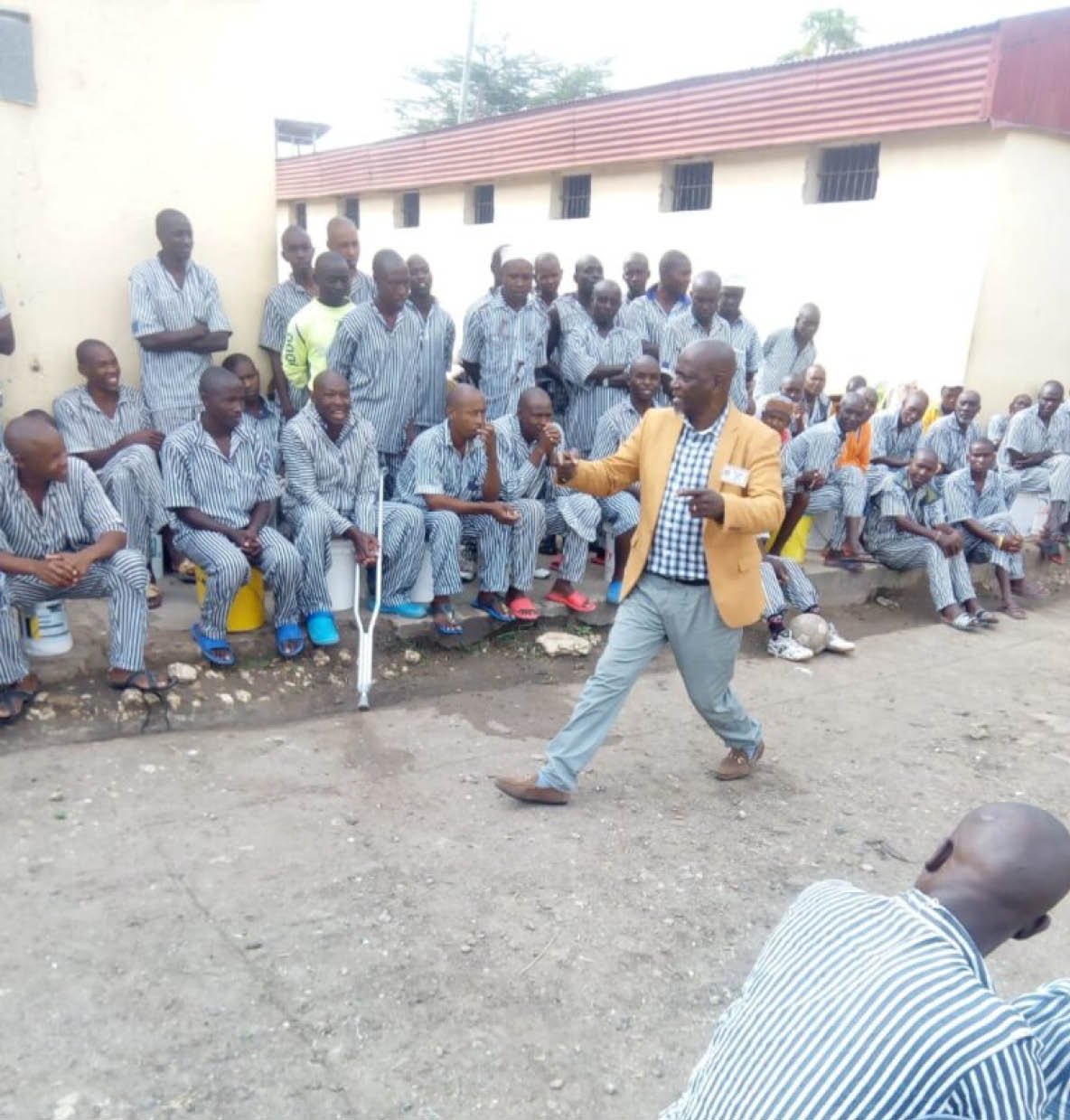
For these thousands, freedom from prison does not mean freedom from punishment. The second prison—stigmatization—begins the day they step out of the gate.
Who exactly is an ex-inmate? Simply put, an ex-inmate is a person who has been lawfully confined in a correctional facility, either as an awaiting-trial inmate or as a convict, and has completed his or her term, been granted bail, pardon, or amnesty, or otherwise been legally released from custody.
Being an ex-inmate does not make a person a lesser citizen. Under the Constitution of the Federal Republic of Nigeria 1999 (as amended), ex-inmates remain full citizens with inalienable rights guaranteed under Chapter Four.
Section 34 guarantees the right to the dignity of the human person and provides that no person shall be subjected to inhuman or degrading treatment. In contrast, Section 35 guarantees the right to personal liberty and Section 41 guarantees freedom of movement anywhere in Nigeria. Section 42 protects every citizen from discrimination, and Section 17(3) provides for equal opportunity to secure an adequate means of livelihood.
In law, they are free. In reality, they are still in chains. The stigmatization of ex-inmates in Nigeria is deep, cultural and systemic. The moment neighbors, landlords and employers learn that someone has been to prison, their attitude changes, no matter how minor the offense was.
Many ex-inmates interviewed in Kaduna, Kano and Abuja share similar stories. Musa, not his real name, who spent three years in Kaduna Correctional Center for theft, said his own family rejected him. “My father told me not to come close to his house because people will say he trained a criminal,” he said.
Findings revealed that the Nigerian Correctional Service itself admits that former inmates face unemployment, discrimination, family rejection and difficulties securing accommodation and start-up resources after release.
Reacting, a landlord in Barnawa, Kaduna, was blunt when asked if he would rent his house to an ex-inmate. “I cannot. Other tenants will leave. Nobody wants to live with an ex-convict,” he said.
This reporter observed that employers are not different. A background check that reveals a prison record often ends the chance of employment. Many organizations have a policy of not employing anyone with a criminal record, pushing ex-inmates into the informal labor market.
The most painful is community labeling. Names like “dan gidan yari,” “ex-con,” “area boy wey don enter” follow them everywhere. Women who have been incarcerated face double stigma, rejected both as ex-inmates and as women who have “brought shame.”
When society closes all doors, the old doors reopen. Psychologists say stigmatization creates frustration, hopelessness, and low self-esteem, which are major triggers for recidivism. It is therefore not surprising that many ex-inmates return to crime, not because they are inherently criminals, but because crime becomes the only community that accepts them.
It is in the midst of this hopelessness that a new ray of hope is emerging from a Kaduna-based non-profit organization that has decided to look beyond the crime and see the human being. That organization is Hope for Ex-Inmates Initiative.
The organization will be officially unveiled in December 2026, but its vision and roadmap are already generating hope among stakeholders in the justice and correctional sector.
At the heart of the initiative is its Chairman, Mrs. Comfort Musa, a humanitarian and gender advocate who believes that no one is beyond redemption and that society is safer when ex-inmates are supported than when they are abandoned.
According to Mrs. Musa, the idea was born after a visit to a correctional center, where she saw young men and women in custody, who had learned tailoring, carpentry, and shoemaking, but had no hope for what to do after release.
“We saw that the government is doing its best inside the centers, but after release, there is a vacuum. These people come out, and nobody is waiting for them. We decided to bridge that gap. Our work is to tell them that being in prison is not the end of their lives,” Mrs. Musa said.
The organization’s approach is holistic and practical. It plans to follow ex-inmates from the gate, providing counseling, family mediation and reconciliation services, and a halfway support scheme in which those without homes will receive temporary shelter, food and clothing.
For those who acquired vocational skills while in custody, the Initiative under Mrs. Dauda plans to provide starter packs, sewing machines, barbing kits, carpentry tools and small grants to enable them to start a trade and become employers of labor.
Under its proposed Entrepreneurship Reintegration Plan, it projects that in its first year alone, it will facilitate the reintegration of at least 50 ex-inmates in Kaduna State, with over 80 percent expected to run small businesses and not reoffend.
Experts agree that what Hope for Ex-Inmates Initiative plans to do is exactly what Nigeria needs. Dr. Sheyin Madaki, a medical expert, said the mental health of ex-inmates is often neglected and stigma worsens post-incarceration trauma.
Barrister Ibrahim Suleiman, a human rights lawyer based in Kaduna, emphasized that continuous stigmatization violates the constitution.
“Once a person has served his sentence, he has paid his debt to society. Any further punishment by society through denial of employment or housing is extra-judicial,” he said.
A criminologist at Kaduna State University, Dr. Kabir Ahmed, noted that the Nigerian Correctional Service Act, 2019, changed the name from Prison Service to Correctional Service to emphasize correction. Still, the law alone cannot achieve reintegration without community acceptance.
Mrs. Dauda believes the biggest challenge is mindset. “The biggest prison is in our minds. Nigerians must learn to forgive. An ex-inmate needs a job, not a sermon about his past,” she said.
She therefore called on government, religious organizations and philanthropists to support the December unveiling, not out of pity but out of enlightened self-interest.
Experts suggest a formal aftercare system, funded by NCoS and state governments, to track and support ex-inmates for at least one year, to scale starter packs, to enact laws that prohibit discrimination in employment and housing, and to provide incentives to companies that employ ex-inmates.
They also recommend engaging traditional rulers and religious leaders as reintegration champions, institutionalizing family mediation, and amplifying success stories to change public perception that once a criminal, always a criminal.
As Nigeria battles overcrowding, it must realize that the gate that leads out of prison must lead into hope, not into another prison of stigma, rejection, and hunger. The plan of Mrs. Dauda shows that with a little compassion, a sewing machine, and a word of encouragement, a former inmate can become an entrepreneur, and society can become safer.
Never miss a moment! Get the stories shaping Nigeria, delivered straight to your phone. Follow Peoplesdaily Newspaper on WhatsApp for breaking news, exclusive reports, and the headlines everyone will be talking about, before anyone else.

