
By Mashe Umaru Gwamna
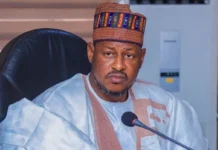
The Minister of State Environment Iziaq Salako said access to cooking gas for 28.8 million households in Nigeria will save 30,000 lives per annum.
He said this, will also improved biomass cook-stoves for 7.3million, representing 48% and 13% respectively by 2030.
Salako made this known recently at the National Clean cooking Fair in Abuja, recently.
He said when the intervention of the cooking gas takes place in Nigeria “It will build a domestic clean cooking industry and create new jobs, reduce deforestation and assisting the government in meeting its climate change commitments like the pledge to reduce Short Lived Climate Pollutants (SLCP) and improve the lives of women and girls in general”.
He said to achieve this clean cooking targets, a strong regulatory framework is needed.
“The Federal Ministry of Environment has therefore developed a National Clean Cooking Policy which was recently approved by the Federal Executive Council to provide a clear direction and specified pathway for Nigeria to achieve clean cooking outcomes”, He said . The Minister emphasized that clean cooking is therefore not merely a matter of convenience; it is a matter of public health concern, a fundamental human right which is an essential component of sustainable development.
He explained that by this transitioning to cleaner and more efficient cooking technologies, we can improve air quality, protect public health, and mitigate the impacts of climate change in our communities.
He noted that traditional open fire cooking is a silent killer, causing over 77,000 deaths in Nigeria annually through lung and heart diseases.
“Open fire cooking also causes vision impairment, low birth weight and put people at a higher risk of suffering burnt injuries while the gathering of firewood exposes women and girls to gender based violence, snake bites and other physical injuries. Cooking with firewood in “Open fire is a major driver of deforestation in our country and contributes to the loss of nearly 400,000 hectares of forests annually, while emissions from residential cooking represent about 55 million metric tonnes of CO2e and about 700,000 metric tonnes of harmful fine particulate matter (PM2.5) emissions. This constitutes a significant proportion of Nigeria’s total greenhouse gas emissions”, he noted.
The Minister recalled that upon approval by the Federal Executive Council, President Bola Ahmed Tinubu has directed the immediate implementation and domestication at the sub-national level.
“This prompted the Ministry through the Department of Climate Change to constitute a National Implementation Committee to drive the process, and seek for support to develop a comprehensive Implementation Plan and Monitoring and Evaluation Framework for the Policy”,. He also thanked Mr. President for his consistent passion for environmental sustainability and climate actions.
The Minister recalled that upon approval by the Federal Executive Council, President Bola Ahmed Tinubu GCFR directed the immediate implementation and domestication at the sub-national level.
“This prompted the Ministry through the Department of Climate Change to constitute a National Implementation Committee to drive the process, and seek for support to develop a comprehensive Implementation Plan and Monitoring and Evaluation Framework for the Policy. Let at this juncture thank Mr. President for his consistent passion for environmental sustainability and climate actions.”he stated.
He said the National Clean Cooking Policy when fully implemented will improve public health by reducing health risks associated with traditional cooking practices, enable environmental sustainability through the use of clean cooking technologies and solutions by reducing deforestation, GHG emissions, and enhance energy access and affordability whilst encouraging gender equality and empowerment for economic development.
“In addition, the policy is expected to drive investments into the sector thus supporting the job creation agenda of the Federal government of Nigeria”.