

By Mashe Umaru Gwamna
Environmental Health Council of Nigeria (EHCON) has declared a Public Health Emergency over the rising concerns of environmental-related diseases linked to greenhouse gas (GHG) emissions and combustion-engine pollution across Nigeria .
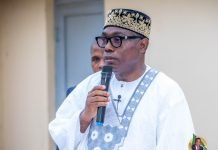
The Registrar and Chief Executive Officer of EHCON, Dr Yakubu Baba, announced the declaration yesterday in Abuja at a press briefing .
Baba mentioned that the declaration works in line with the renewed hope agenda of president Bola Ahmed Tinubu’s which is to strengthen environmental public health governance and protecting the citizens from preventable public health risk.
He said EHCON is formally raising a national alarm on the silent but rapidly escalating burden of diseases arising from greenhouse gas emissions and combustion pollution across Nigeria.
He said that declaring the state of emergency is not an exaggeration it is a necessity.
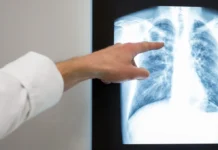
While stressing that air-pollution-related illnesses now pose a greater long-term public health threat than the COVID-19 pandemic.
He also
announced the activation of the National Emergency Response Initiative on Environmental Public Health Impacts of Greenhouse Gas Emissions (NERI-EPHIGGEL).
“The initiative will be implemented in collaboration with the Federal Ministry of Environment, National Environmental Standards and Regulations Enforcement Agency (NESREA), National Council on Climate Change (NCCC), and other relevant Ministries, Departments, and Agencies (MDAs), including the Nigerian Ports Authority (NPA), Federal Road Safety Corps (FRSC), state Ministries of Environment, Environmental Protection Agencies, and Local Government Environmental Health Departments.
The Registrar mentioned some Key emergency actions and measures to follow for effective immediate responses which includes :
“ Declaration of a National Environmental public health emergency to formally recognize air pollution related disease as a national public health threat requiring urgent , coordinated action .
Intensified regulatory inspections of high-emission facilities and transport corridors, mandatory environmental public health compliance audits, sanctions for non-compliance under the 2024 Environmental Health Practice Regulations, and the introduction of emission-reduction technologies,” he stated.
Others are community exposure assessments in high facilities of EPHR LGR , grass roots engagement assessments through local government environmental public health officers , public awareness and stakeholders engagement within the next few weeks, national sensitization on the dangers of air pollution .
He further stressed that Council is also working on a mandatory emission testing for generators and heavy-duty vehicles, phased restrictions on highly polluting engines, strengthened environmental health surveillance “through the deployment of over 70,000 Environmental Public Health Officers nationwide.”
According to him, “Our investigations field surveillance and environmental intelligence reveal an alarming trend, environmental related diseases linked to air pollution are increasing at a scale that now surpasses the long-term public health impact of the COVID-19 pandemic”.
He said, “these pollutants are largely emitted from fossil-fuel generators, heavy-duty vehicles, industrial machinery, marine engines, mining operations, and petroleum sector activities.”
He warned that Nigeria is facing a convergence of critical risk factors, “including:
Rising preventable deaths from pollution-induced illnesses, excessive and unregulated reliance on combustion engines, Weak emission controls in high-risk sector. Escalating healthcare costs and loss of productive human capital, failure to act decisively, the Council cautioned, would overwhelm Nigeria’s healthcare system and significantly undermine national development goals.”
He noted that many affected Nigerians have never smoked or consumed alcohol, yet are increasingly diagnosed with chronic and acute respiratory infections, lung and other environmentally induced cancers, cardiovascular diseases, and systemic inflammatory conditions. “Climate-change-driven increases in dust and particulate matter have further worsened the situation.”
He also identified unregulated reliance on combustion engines, weak emission controls in high-risk sectors, rising healthcare costs, and the loss of productive human capital as key drivers of the crisis.
He said that this emergency declaration comes with expected impact that Nigeria will achieve, it would reduced morbidity and mortality from air pollution related diseases, provide stronger environmental public health governance, increase compliance with emissions standards and improved air quality across industries and residential zones .
He gave an assurance saying that EHCON stands fully prepared along our partners , to lead this urgent national response.
“The health of Nigerians, today and in the future depends on the actions we take now.
“EHCON calls on government stakeholders, industry, communities and the media to support the life saving initiative for the national health development of the country”, he added.