

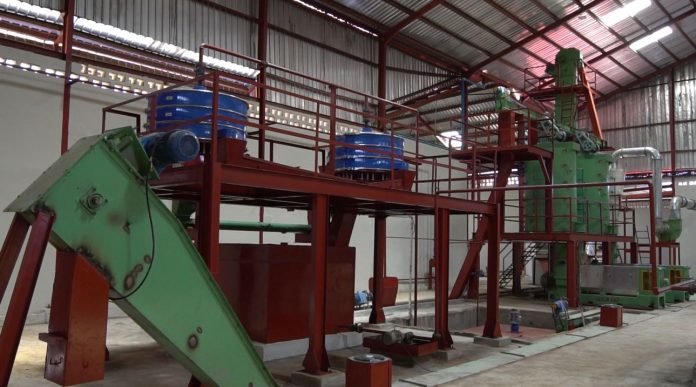
In line with the Federal Government’s ban on the export of raw shea nuts, the Kwara State Government has taken a bold step toward strengthening local value addition with the establishment of a new shea butter factory in Kaiama, Kwara North.
The project is expected to boost local industries, create jobs, and significantly increase the value of shea products before they reach international markets.
Key focus areas of the Kaima Shea Butter Factory project are as follows
On production capacity and scale, the factory has an annual processing capacity of 20,000 metric tonnes, positioning Kwara as a major player in Nigeria’s shea butter value chain.
Phase Two expansion is already in the pipeline, featuring a 50-tonne daily solvent extraction plant, which will raise the factory’s total capacity to 40,000 metric tonnes annually.
Kaiama’s strategic location—being a hub for shea nut activity—makes it ideal for the factory. It also roots the investment directly within the heart of Kwara North’s shea economy, reinforcing local identity.
The shea butter produced in Kaima is said to meet international export standards, positioning Kwara as a trusted source for the global cosmetics, pharmaceutical, and food industries.
On empowering women farmers and pickers, Kwara North is home to some of the largest clusters of women involved in shea nut collection. The factory will provide stable income and improved livelihoods for these rural women.
The project also harnesses Kwara North’s natural endowment—with over 250,000 mature shea trees spread across 6,000 hectares. This ensures a reliable, sustainable, and cost-effective raw material base.
The region’s strong reputation for producing high-quality shea butter adds a competitive edge in both local and international markets.
The factory follows a community-centered development model. Unlike traditional industrial setups located in urban centres like Ilorin’s industrial park, this model brings economic benefits directly to Kaima—creating jobs, reducing post-harvest losses, and retaining value locally.
The statement also noted that the project represents a closed value chain loop—linking raw material sourcing, processing, and market access within a single locality, for greater efficiency and impact.
Finally, the initiative is poised to boost regional economic development—stimulating trade, expanding agro-processing, and attracting related businesses across Kwara North.
With this development, Kwara State is not only aligning with national agricultural policy but also setting a precedent for rural-based industrialization that empowers local communities and drives long-term economic growth.