

By Barr Olori-Aje Adam
All praise is due to Allahu (SWT), The Lord of all the Worlds, Who has once again counted us among those privileged to witness this sacred month of Ramadan. Many longed for it but did not reach it.
Ramadan is not merely a passage of days marked by hunger and thirst; it is a divine invitation of the faithful. It is a season of nearness to Allah, forgiveness, elevation of the soul, and renewal of our spirits. It is the month in which the doors of mercy are flung open, a session when the rewards of deeds are multiplied beyond measure, and a period when hearts are given the opportunity to return to their Lord with sincerity.
The Messenger of Allah (SAW) reminded us that:
Whoever draws near to Allah during the month of Ramadan with a single voluntary act of goodness is like one who performs an obligatory act at other times. And whoever performs an obligatory act during it is like one who performed seventy obligatory acts at another time.
What an extraordinary opportunity. In no other month does Allah (SWT) place such immense value on our efforts. A small step taken towards Him in the month of Ramadan carries the weight of great devotion. A simple act of charity, a whispered dhikr, a sincere du‘ā in the quiet of the night, ascends to Him with multiplied worth.
Yet, beyond the multiplication of rewards lies a deeper question: What is Ramadan doing to our hearts?
The Prophet (SAW) taught us that:
Fasting is not merely abstaining from food and drink, but from vain speech and improper conduct. If someone abuses you or seeks to provoke you, say: ‘I am fasting’.
This guidance is profound. It teaches that fasting is not confined to dealing with the stomach, rather it is a discipline of the soul. It is a training of the heart. It is a conscious restraint of anger, arrogance, jealousy, gossip, impatience, and every baser impulse that seeks to dominate our character.
“When irritation rises, Ramadan says: be patient. When pride whispers, Ramadan says: be humble. When selfishness calls, Ramadan says: be generous. When resentment grows, Ramadan says: forgive.
True fasting softens what has hardened within us. It weakens the hold of ego and strengthens the light of taqwa in us. It replaces harshness with compassion, indifference with empathy, stinginess with generosity, and heedlessness with remembrance.
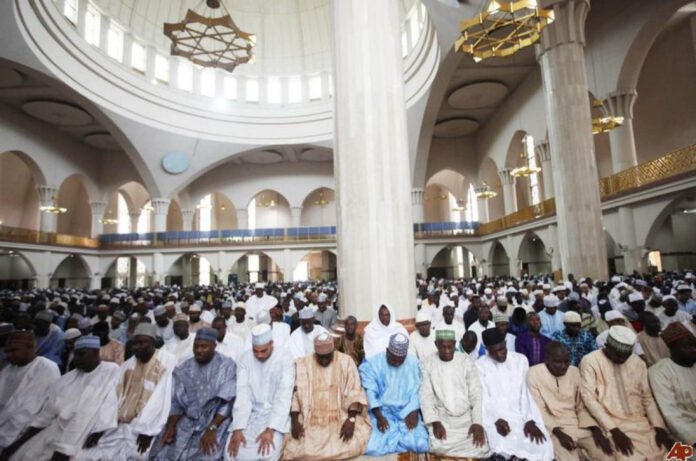
As we gather on this blessed Jum‘ah in Ramadan, let us pause for sincere reflection. Each day and night are an examination of our sincerity. Each prayer, each restraint, each quiet struggle against our own weaknesses is a mark on our spiritual script.
We are, in truth, both the students and the examiners of our own hearts.
If Ramadan leaves us more conscious of Allah (SWT), more mindful of our speech, more compassionate to others, and more disciplined in our character, then we are succeeding. If it humbles us, reforms us, and draws us closer to Him, then its purpose is being fulfilled.
May He purify our intentions, reform our character, and accept every act of our ibadah from us. May this Ramadan be a turning point in our lives. May it be a month that transforms us long after its days have passed.
Guard Your Fasting
Fasting, as a Muslim, is far deeper than abstaining from food and drink. It is the quiet emptying of pride, the gentle silencing of the noise of worldly struggles, and the conscious return of the soul to the One who gave it life and continues to sustain every breath.
The true goal of fasting is the purification of the heart, to forgive completely, to swallow anger patiently, and to stand before Allah in sincere and humble prayers.
It is often said that life is 10% what happens to us and 90% of how we take it. Therefore, always choose to receive life with positivity and optimism. Remember always that, people are like trucks of garbage moving through the world with the refuse of disappointment, frustration, anger, and hurt, always searching for somewhere to unload when the truck is full.
At times, you may either become the victim of their dumping or the unintended recipient of that burden. At such point, do not take it personally. Rise instead to the noble station of the ‘Ibādur-Raḥmān, the servants of the Most Merciful, whom Allah (SWT) describes in Suratul-Furqan (25:63) thus;
“And the servants of the Most Merciful are those who walk upon the earth gently, and when the ignorant address them harshly, they reply with words of peace.”
My subtle reminder this morning is this: please, guard your fasting. Do not allow the “garbage” of others to stain your spiritual elevation. Sometimes the strongest response to people’s garbage is a calm wave, a sincere smile, and a quiet prayer for their well-being. Nothing preserves your dignity and unsettles negativity more than dignified restraint.
In this sacred month of Ramadan, when the winds of negativity blows, remember the guidance of the Messenger of Allah (SAW) when he (SAW) said: When provoked while fasting, simply say: Indeed, I am fasting.
Guard your fasting by beginning your day with deep remembrance of Allah (SWT) and ending it the same way. When the beginning and the end of your day are anchored in Allah (SWT), everything in between finds its proper place. You will move through your day with a heart that is lighter, calmer, and filled with quiet fulfilment.
During this blessed period of Ramadan and beyond, may Allah draw you closer to Him. May He better your lots, bless your coast, expand your provision, ease your affairs, and fill your heart with enduring peace.
Four thieves who never sleep…
Do you know that in your heart there are four thieves who never sleep? They carry no weapons and break no doors, yet they quietly steal your light.
Imam Abu Hamid al-Ghazali explains that the corruption of the heart begins from within, not from outside.
The first is desire
Desire promises pleasure but is never satisfied. The more you give it, the more it demands, until a person becomes a prisoner of their own cravings.
The second is anger
Anger is a small spark. If it is not extinguished quickly, it burns your heart before it harms anyone else.
The third is love of status
Love of recognition is subtle. You may perform a righteous deed, yet your heart waits for people’s praise. If you are not complimented, your chest tightens.
The fourth is love of wealth
Wealth especially money is a tool. But when it becomes the ultimate goal, it enslaves the heart without you even realizing it.
These four steal your inner clarity. They make worship feel heavy, intentions mixed, and the heart restless.
Al-Ghazali teaches that their cure is constant self-accountability: Watch yourself before you watch others. Resist your desires when it calls you. Break anger with patience. Make status belong to Allaĥ (SWT) alone. Hold wealth (money) in your hand, do not let it hold your heart.
Culled