
By Abubakar Yunusa
The Supreme Council for Shari’ah in Nigeria has opposed any tax reform that imposes undue hardship on ordinary Nigerians, insisting that fiscal policies must be equitable, humane and socially responsible.
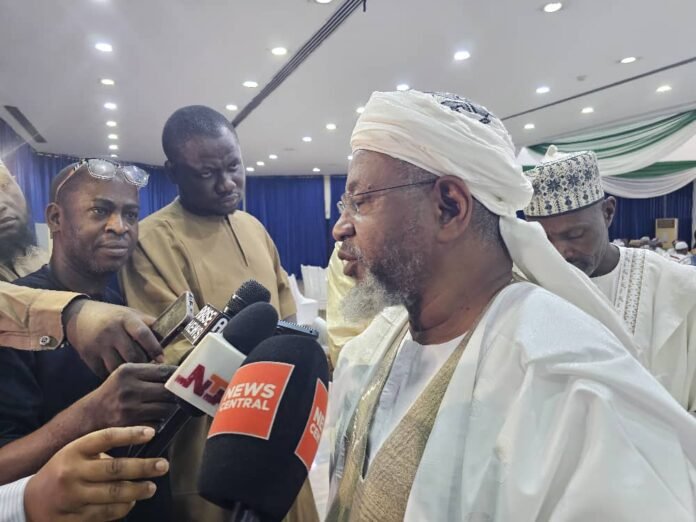
The council’s President, Sheikh Dr Bashir Aliyu Umar, stated this on Wednesday in Abuja at the council’s annual pre-Ramadan lecture and general assembly.
Umar said the council would resist reforms that worsen the burden on citizens already grappling with rising living costs, stressing that taxation must be fair and people-centred.
“The council firmly opposes any tax reform that imposes unjust hardship on ordinary Nigerians and insists that all fiscal policies must be equitable, humane and socially responsible,” he said.
The council also criticised what it described as attempts by some executive officials to substantially alter a bill duly passed by both chambers of the National Assembly, calling the action criminal and unconstitutional.
It urged the National Assembly to convene a public hearing and undertake a comprehensive forensic review of all laws passed since the inauguration of the 10th Assembly to safeguard legislative integrity.
On security, the council unequivocally condemned terrorism in all its forms and demanded that the Federal Government fulfil its constitutional responsibility to protect lives and property.
It called for a mix of decisive security action and peaceful reconciliation, particularly for communities affected by violence.
The council rejected what it described as premeditated and inflammatory propaganda of a “Christian genocide” narrative, warning that such claims fuel division, mistrust and national instability.
It cautioned against foreign interference in Nigeria’s internal affairs and opposed the establishment of any foreign military base in the country, insisting that Nigeria’s sovereignty must be respected.
The council further affirmed that the religious freedom of Nigerian Muslims is constitutionally guaranteed and non-negotiable.
On the electoral process, the council demanded the immediate removal and prosecution of the Chairman of the Independent National Electoral Commission, declaring that elections conducted under compromised conditions cannot be regarded as credible.
It maintained that public confidence in democracy depends on transparent institutions and ethical leadership.
The council also condemned what it described as genocide in Gaza, decrying global silence and calling for unhindered humanitarian access and justice for Palestinians.
On public finance, it criticised poor budget implementation, mis-prioritisation and the underfunding of critical institutions, urging the government to adopt fiscally responsible and people-focused budgeting that addresses national vulnerabilities.
The council described the imbalance in federal appointments as a serious breach of constitutional equity and called for urgent correction in line with the federal character principle to preserve national cohesion.
It reaffirmed that the implementation of Shariah is a constitutional right of Muslims, applies only to them and does not threaten peaceful coexistence.
The council also defended the Halal economy and Islamic finance, describing them as ethical and inclusive development tools, and warned against denying Nigerians access to instruments such as Sukuk on the basis of religious rivalry.
“As the nation approaches another electoral cycle, the council stresses the need for credible institutions, ethical leadership and responsible civic engagement,” Umar said, adding that democracy can only thrive where integrity, competence and service guide leadership.