
By Abubakar Yunusa
The Securities and Exchange Commission (SEC) has emphasized the critical role of a vibrant capital market in achieving the Federal Government’s ambition of a $1 trillion economy.
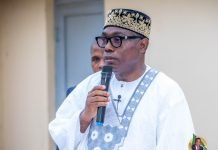
Speaking at the 2024 SEC Journalists Academy in Lagos on Tuesday, the Director-General of the SEC, Dr. Emomotimi Agama, highlighted the collective responsibility required to achieve this economic milestone, urging policymakers, businesses, and journalists to align efforts.
“Achieving a $1 trillion economy is not merely an aspirational goal; it is a necessity for the prosperity and resilience of Nigeria,” Agama said.
“The capital market, as the financial backbone of our economy, is poised to drive this transformation.”
Agama identified limited investor participation, regulatory hurdles, and macroeconomic uncertainties as key challenges constraining the market’s potential, emphasizing the need to address these issues.
Despite challenges, he noted that the capital market has contributed significantly to Nigeria’s economic development, citing the Federal Government’s use of innovative instruments such as sovereign bonds and Sukuk to fund critical infrastructure projects.
“Nigeria has already demonstrated how the capital market can fund these needs through innovative instruments,” he said, adding that such funding reduces external borrowing and drives job creation and regional integration.
He pointed to the growing adoption of green bonds, which align with Nigeria’s transition to a low-carbon economy, and highlighted the listing of major firms like Dangote Cement and BUA Group as proof of the capital market’s role in driving industrial growth and job creation.
“The total market capitalisation of the Nigerian Exchange Limited stood at N60 trillion by December 13, 2024,” Agama said, attributing this growth to increased private sector participation.
He noted that the capital market democratizes wealth creation through collective investment schemes, retail bonds, and exchange-traded funds, enabling Nigerians across income levels to participate in the economy.
“The rise of the retail bond market and fintech platforms has simplified access to investments, driving financial inclusion and literacy,” he said.
Agama also underscored the role of the capital market in supporting state governments through bond issuances, citing Lagos and Ogun states as examples of sub-national entities leveraging this mechanism for infrastructure, education, and healthcare.
“Expanding this model across more states could unlock development at unprecedented scales, especially when paired with public-private partnerships,” he noted.
To bolster confidence, Agama outlined initiatives such as improving market liquidity, simplifying listing requirements, and fostering innovation through fintech.
He urged journalists to amplify the capital market’s value and its role in achieving Nigeria’s economic targets.
“Your ability to present accurate, insightful, and engaging narratives about these developments is crucial in educating the public and inspiring trust,” Agama said.
He concluded by reiterating that the capital market remains a cornerstone for sustainable economic growth, calling for continued collaboration among stakeholders to achieve a dynamic and inclusive economy.