
By Egena Sunday Ode
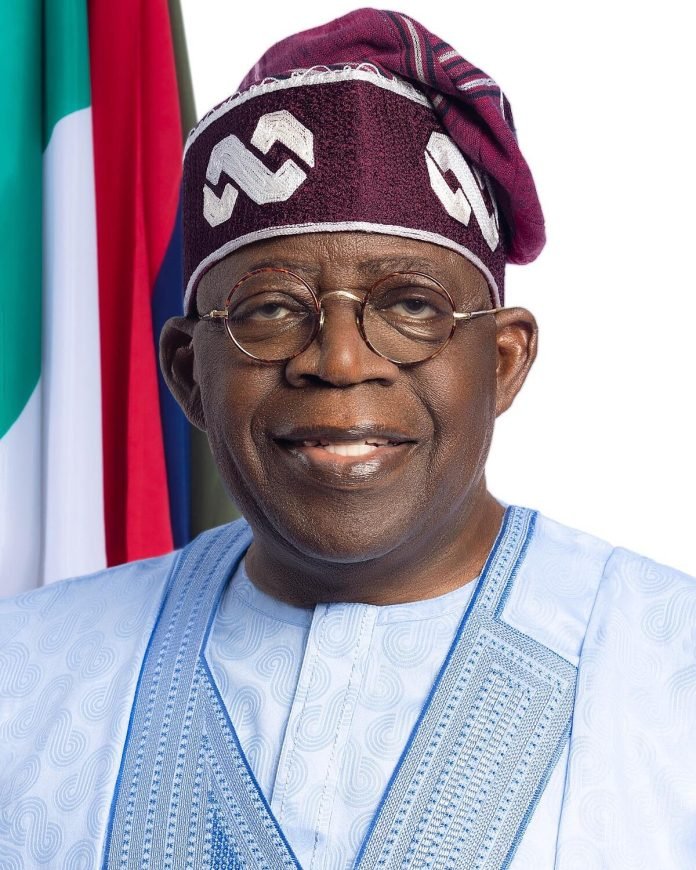
Many people did not understand why President Bola Tinubu pronouced his reforms at the presidenrial inauguration ceremony on May 29, 2023. He simply wanted to break away from the experiences of the past. As a governor in Lagos where his governance style and achievements still remain a reference point 27 years after, his take-of became a subject of controversy and discontent. His first one year in office as governor earned him the not so complimentary sobriquet of “Baba Go Slow.” Lagosians generally felt that he did not move with the speed exepected of him, not knowing that he was swinging his arms in order to gather the necessary momentum to deliver a devastating blow on the monster of poor governance that had ruined the state.
Interestingly, it”s being said that the foundation he laid in Lagos has catapaulted Nigeria’s mega city to an enviable height, ranking among Africa’s best. Tinubu started slowly, but ended impressively. This lends credence to the popular maxim that the end justifies the means.
Nevertheless, a huge lesson he may have probably learnt from the Lagos experience was never again to delay inevitable decisions thereby creating suspence and anxiety among the governed.
That was, perhaps, what he meant when he said in one of his speeches that “Going by experiences of the past and the need to depart from old ways, our reforms have been hard. I made tough decisions so that we could grow. We are gradually seeing the light at the end of the tunnel.”
Yes, the reforms were tough, very tough and suffocating, but there’s no doubt that things are beginning to ease off. From throat-curring transportation cost to the skyrocketing prices of foodstuffs orchestrated by the removal of fuel subsidy to the continuing fall in the value of Naira triggered by its floating in the FX market, things are indeed, unbelievably, beginning to look up thereby dousing the lingering anxiety and fury of indigent Nigerian citizens, according to analysts.
They have argued that two years into the reforms, nobody can deny the fact that the story is changing for good. The argument by critics has, therefore, dramatically shifted to “it can be better,” a fact nobody, not even the President would contest. Tinubu has publicly admitted that the modest achievements recorded by his administration in just two years cannot translate to an eldorado.
An iconoclastic leader and one who knew where he was headed, Tinubu was undaunted by the criticisms of his reforms. Rather than buckle in to the loud and distracting complaints and abandoning the cause, he has soldiered on like the Trojan, churning out even more reforms to strengthen the economy. For instance, while Nigerians were still shouting angrily over the petrol subsidy removal and floating of the Naira, the President introduced tax reforms, triggering yet another round of intense opposition and public debate.
In the midst of all these public distractions, governance business was progressing with incredible speed as legacy infrastructure projects were being initiated across the country.
And come to think of it. These projects which aimed to provide the much needed enabling environment for investments and trigger economic growth have themselves turned to another subject of controversial public debate with stout opposition. The Lagos-Calabar Coastal Highway is a classical example. The argument was that the project is ambitious especially in the face of the economic travails facing the country. But to the credit of the Tinubu administration, about 30km of the 750km has been delivered and commissioned within a year.
Interestingly, Tinubu’s administration’s road legacy infrastructure also dot the country’s landscape from Abakiliki to Abuja cutting through the North Central; Sokoto to Badagry, linking the North West to the South West; and Akwanga in Nasarawa State to Jos-running through Bauchi and Gombe.
The question to ask again is whether President Tinubu’s reforms are yielding the desired outcomes. Answering this question would require a copious reference to figures.
Now let’s go!
Following the petrol subsidy removal, government’s earnings have shored up with increased revenues to undertake government businesses both at the national and the subnational levels. Accordingly, statistics has shown that in the past two years over 900,000 have benefited from the Presidential Loan and Grant Scheme, over 300,000 beneficiaries of Students’ Loan Scheme;over $10 billion FX debt cleared and over 440 ongoing road projects, including over 2,700km of superhighways3.84% GDP growth in Q4 2024, highest in 3 years.
Also, N70,000 minimum wage payment was achieved; over 13,500 terrorists eliminated; over $50 billion in new FDI commitments;
Net Foreign Exchange
Reserves up from $3.99
billion (2023) to $23.11
billion (2024); over $8 billion in new oil and gas investments unlocked.
Tinubu, within the period under review also introduced 4 new landmark Tax Bills, which have been passed by the National Assembly; created 5 new Regional Development Commissions and over $800 million realized in processing investments in solid minerals in 2024 alone.
Economy?
The economic condition of the average Nigerian is not yet what President Tinubu would wish to leave as a legacy, but juxtaposed against what it was prior to 2025, especially in view of the reforms, it can be argued that enough ground has been prepared to usher in the desired eldorado.
What else would anyone say with over $50billion in new Foreign Direct Investment (FDI) commitments; 2X-3X increase in federal allocation to State and Local Governments; 5X growth of Net FX reserves from 2023 to 2024, to $23.11bn, despite repayment of over $10 billion in debts and highest GDP growth in three years: 3.84% in 2024 Q4
Security?
There’s currently a resurgence of terrorist activities especially in the North East which many have attributed to the current wave of politicking. However, Nigerians would not be overshadowed and unable to appreciate the enormous and significant strides of the Tinubu administration in taming the monster of terrorism in the past two years.
These efforts included neutralising 13,543 terrorists/criminals, arresting 17,469 and rescuing 9,821 hostages; purchase of 2. 11,118 weapons and recovery of 252,596 assorted ammunitions; and procurement of 25+ helicopters/aircraft and 4+ vessels for the military.
Education and Heathcare?
Apart from the over 300,000 beneficiaries of Students’ Loan Scheme across Nigerian tertiary institutions, the Tinubu has also disturbed over N80 billion disbursed to revitalize over 8,000 primary health centres across the 36 states and FCT, recruited over 2,500 health workers and retainibg 60,000 others as well as the the introduction of zero tariffs and excise duties VAT on imported pharmaceutical inputs and APIs.
Agriculture?
The current signi cant drop in food prices across markets is an open secret, be it rice, beans or garri, Nigeria’s major staples. The price drops happened so rapidly that those who had stocked food items during harvest periods with a view to selling at high profits are already counting their losses.
Besides falling prices, however, the Tinubu administration’s is boosting the agric sector with recapitalization of Bank of Agriculture (BoA) underway; distribution of fertilizers and other farm inputs to farmers nationwide; release of 42,000MT of grains across the 36 states and FCT as well as the establishment of Livestock Development Ministry.
And only recently, President Tinubu announced a policy to stimulate the consumption of made-in Nigeria goods, a deliberate decision aimed to encourage production and manufacturing as well as reduce spending on importation of foreign goods.
While all the dragons besetting the country may not have been slain in two years, President Tinubu is staying the cause and frontally engaging them.