


US–Iran ceasefire: The truce everyone needs, no one trusts
This ceasefire should be seen as a tactical exit ramp that each party walked onto for very different reasons. Understanding those reasons is the key to forecasting whether the pause hardens into peace or dissolves back into war.
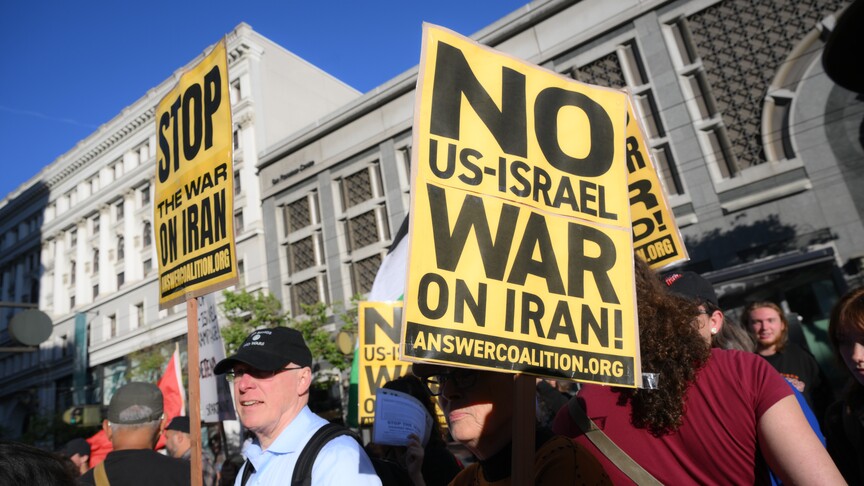
At the current moment, this arrangement should be seen as a tactical exit ramp that each party walked onto for very different reasons. Understanding those reasons is the key to forecasting whether the pause hardens into peace or dissolves back into war.
Reasons for the ceasefire
For Washington, the ceasefire is a potential off-ramp to translate military achievements into political gains. After five weeks of strikes, Iran had suffered significant losses in most of its important nuclear, military, industrial, energy, human, and critical assets and infrastructure, and the Pentagon had begun facing a reduced number of high-value military targets and was expanding its target set to include the electric grid, power-generating plants, transportation logistics and infrastructure. As Trump was going to execute his biggest threat yet, Pakistan provided him with a de-escalation option without crossing that threshold.
For Tehran, the ceasefire is a critical necessity. Iran has witnessed extensive damage on all levels. Its retaliatory capacity, while real, has been unable to halt the cycle of attacks or prevent further escalation. The prospect of having Iran’s electrical grid and bridges systematically destroyed was a serious economic risk. Equally important, the government needed to demonstrate that diplomacy was possible without the appearance of capitulation. Routing the announcement through Araghchi and the SNSC — rather than the IRGC or Supreme Leader directly — maintains Ayatollah Khamenei’s political flexibility and gives Tehran room to walk away if terms harden.
For Israel, the ceasefire is an unwelcome imposition dressed up as cooperation. Israeli Prime Minister Benjamin Netanyahu agreed to suspend strikes on Iran but immediately denied that any ceasefire applies in Lebanon, where Israel has been conducting an invasion. This is the most dangerous fault line in the entire arrangement. We should expect Israel to test the boundaries of the agreement repeatedly over the next fourteen days.
For Pakistan, this is a genuine diplomatic triumph and the most consequential foreign policy moment for Islamabad in decades. Pakistan being a Sunni-majority nuclear power on speaking terms with Tehran, having a military leadership Trump personally trusts, and enough distance from the Israeli–Palestinian file to be acceptable to Iran; stood out.
For the Gulf States, the ceasefire is a relief tinged with anxiety. The pause averts an immediate energy catastrophe. However, just as the GCC states were not consulted or notified on the war, they were not consulted on the ceasefire framework, and Gulf capitals know from experience — particularly the Iran nuclear deal, formally known as the JCPOA — that deals negotiated over their heads tend to produce security architectures they cannot live with.
Will the ceasefire hold?
That said, the ceasefire will partially hold for now while everyone is trying to spin the narrative to suit their audience. The ceasefire might be tested by Israel. Additionally, it is highly unlikely to convert into a comprehensive agreement on that timeline. If it holds enough, the more probable outcome is a series of rolling extensions punctuated by violations, gradually evolving — over months, not weeks — into either a managed stalemate or a renewed conflict.
Three factors make a clean comprehensive agreement nearly impossible in fourteen days. First, the gap between the circulated so-called 15 and 10 points plans is enormous, and that gap will have to be closed in a written text that both leaderships can sell domestically. The 2015 JCPOA, by way of comparison, took roughly twenty months from interim framework to final document.
Second, Israel is not a signatory and retains both the capability and the political motivation to spoil. A single high-casualty Israeli strike on Iranian soil during the pause — easily framed as “self-defense” or “intelligence-driven” — would likely collapse the arrangement. Third, the hardline ecosystems on all three sides (the IRGC hawks, the Israeli right, and the American neoconservative bloc) have aligned incentives to undermine the deal before it can be codified.
Yet, outright collapse within two weeks, although possible, lacks motivation at the current moment for a simple reason: none of the three primary parties actually wants to be the one who pulls the trigger on resumed war. Trump has banked political capital on the announcement and would face significant blowback if it fails on his watch. IIran has secured a much-needed pause to assess damage on all levels and explore possible ways forward. Even Netanyahu, for all his coalition’s preferences, will hesitate to be seen as openly defying a Trump-brokered peace.
Whether that ambiguity eventually crystallizes into a durable agreement will depend less on the diplomats than on whether Israel can be brought inside the tent, whether the Gulf states are given a meaningful seat, and whether the Iranian government can deliver without appearing to surrender. None of those conditions is currently met. All three are achievable.
Ali Bakir is an assistant professor of international affairs, security, and defense at Qatar University.
Culled from Anadolu