
Zakat payment, divine injunction to solve societal challenges – Maidoki
From Bashir Rabe Mani in Sokoto
The Chairman of Sokoto State Zakat and Endowment Agency, Malam Muhammad Lawal Maidoki, has enjoined Muslims to ensure proper payment of Zakat, which is a divine injunction meant to support the poor and needy people in the society.
“This is key to addressing most of the challenges currently facing the society, especially the rising poverty, unemployment and insecurity, among others,” he added.
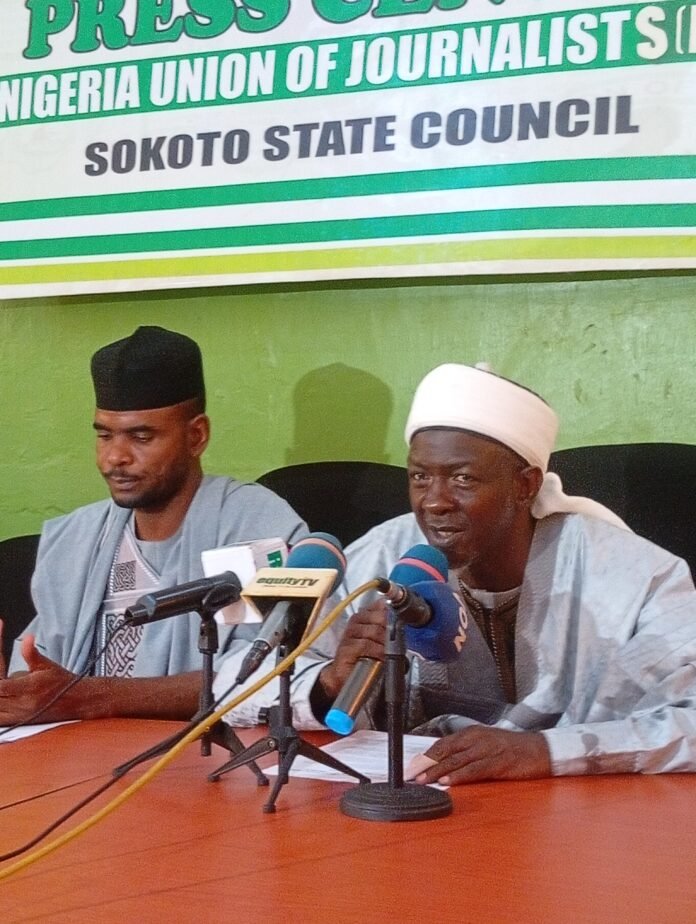
Our Correspondent in Sokoto reports that the Chairman spoke on Saturday in Sokoto when he delivered a paper during the congress of the Sokoto State Council of the Nigeria Union of Journalists (NUJ).
His paper was titled, “The Role of Zakat and Waqf in Poverty Alleviation and Humanitarian Service: The Responsibility of the Media.”
Maidoki said it is compulsory for eligible Muslims to give out Zakat and charity to not just Muslims but also adherents of other religions.
He explained that Zakat plays significant role in the development of the society, including poverty reduction.
Meanwhile, Malam Muhammad Lawal Maidoki said that Nigeria has been ranked as the world’s most generous country in the newer World Giving Report (WGR) 2025.
According to the report, Nigerians donated an average of 2.83% per capita of their income, the highest globally.
Declaring the congress open, the state Commissioner for Information and Orientation, Alhaji Sambo Bello Danchadi, commended the leadership of the NUJ for creating a platform that promotes constructive dialogue on issues that directly impact the lives and welfare of the people.
Represented by the Permanent Secretary of the Ministry, Alhaji Bashir Muhammad Maigari, the Commissioner said the topic under discussion is significant because poverty alleviation and economic empowerment remain key priorities of the administration of Dr. Ahmad Aliyu.
“Since assuming office, the Governor has demonstrated an unwavering commitment to improving the living conditions of the people through various social and economic intervention programmes.”
According to him, the administration has invested heavily in agriculture by providing farmers with improved inputs, fertilizers, and modern farming equipment to boost food production and enhance rural livelihoods.
He added, “It has also empowered thousands of youths and women through skills acquisition programmes, entrepreneurship support, and various economic empowerment initiatives aimed at creating jobs and reducing poverty.
“In addition, the government has expanded access to education and healthcare, rehabilitated critical infrastructure, improved water supply, and implemented social welfare programmes targeted at vulnerable groups across the state.
“These interventions are designed not only to provide immediate relief but also to create sustainable pathways for economic growth and self-reliance.
“It is in this regard that institutions such as the Sokoto State Zakat and Waqf Commission play a complementary role by supporting the less privileged and extending humanitarian assistance to those in need.
” Their efforts align perfectly with the vision of the present administration to build an inclusive society where no one is left behind.
“The media, on its part, has a critical responsibility in promoting awareness of these initiatives, educating the public on the importance of Zakat and Waqf, highlighting success stories, and encouraging greater participation in programmes that contribute to social and economic development.
In a welcome address, the Chairman of NUJ, Sokoto State Council, Usman Muhammad Binji, said that the gathering transcends the routine statutory meeting.
“It is an intellectual forum for reflection, professional reawakening, and constructive engagement on issues that bear directly upon our society and the indispensable responsibility of the media.
“The Congress remains our foremost platform for critical evaluation of our professional calling, strengthening of unity within our ranks, and engagement with salient socio-economic and governance issues that demand informed, ethical, and responsible journalism.
“In an age defined by the rapid and often unregulated flow of information, the responsibility of journalists as custodians of truth and credibility has become more demanding than ever before.
“The theme of today’s presentation, “The Role of Zakat and Waqf in Poverty Alleviation and Humanitarian Service:
“The Responsibility of the Media,” speaks directly to one of the most persistent challenges of our time: poverty and social inequality.
” It also draws attention to the enduring relevance of Islamic social finance instruments, zakat and waqf, which have historically served as powerful mechanisms for social welfare, redistribution of wealth, and community upliftment.”
Binji said that as the duty practitioners of the media, extends beyond mere reportage.
He continued, ” We are called upon to provide context, deepen public understanding, and highlight initiatives that promote human dignity and social progress.
“In doing so, we serve as a vital bridge between institutions of welfare and the citizens who stand to benefit from their interventions.”
Binji expressed appreciation to Governor Ahmed Aliyu for his continued support and commitment to the welfare of journalists in the state, including the donation of vehicles to the union.