
***Says text lacks requisite power to operationalize equity
By Tobias Lengnan Dapam
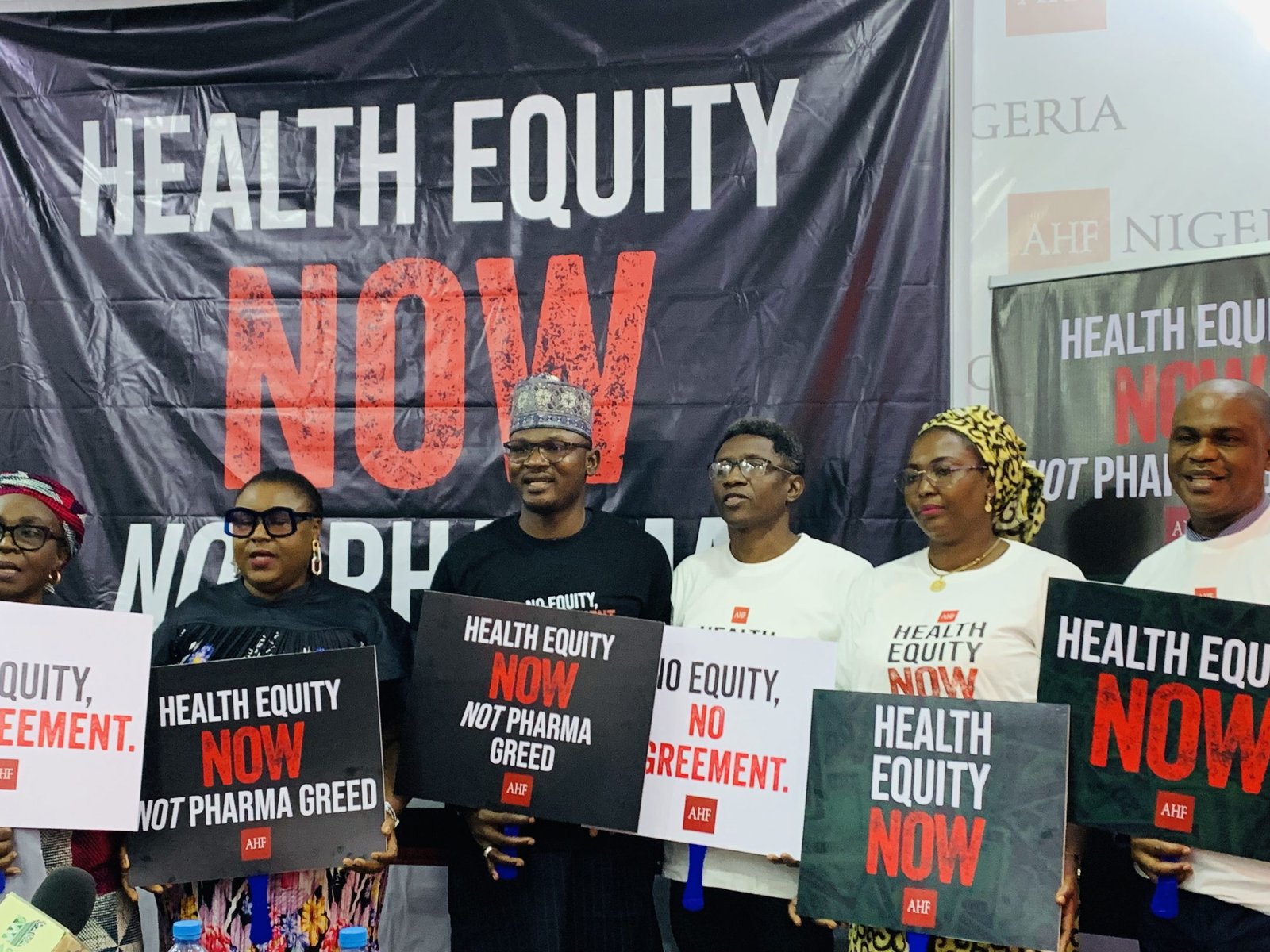
Worried by the lack of health equity contained in the text released by the Intergovernmental Negotiating Body (INB) meeting of the WHO Pandemic Agreement, the AIDS Healthcare Foundation the AHF Global Public Health Institute, and several Civil Society Organizations (CSOs) have called
for strengthening of Pandemic Agreement.
They said the April 16, 2024 proposal for the WHO pandemic agreement did not address salient issues.
Dr. Echey Ijezie, AHF Nigeria Country Director who read the position of the NGO during a press briefing on Thursday in Abuja, said the latest iteration of the text, which has been significantly watered down through the negotiation process, is filled with platitudes, anemic in obligations, and devoid of any accountability. “Falling victim to least-common-denominator policymaking in Geneva, this text now lacks the requisite power to operationalize equity and achieve its intended objectives.
“We express profound concern that developed nations have vehemently defended the private interest of pharmaceutical companies over the collective common interest of achieving global health security in a sustainable and equitable manner. Such disregard has been observed in the proposed compromise for the WHO Pathogen Access and Benefit-Sharing System, which the Lancet has described as not only “shameful, unjust, and inequitable” but also “ignorant.”
“Under the present terms of the agreement, a mere 20% of pandemic-related health products are guaranteed to the WHO in the event of a pandemic. As the Lancet points out, such an arrangement will effectively leave 80% of crucial vaccines, treatments, and diagnostics “prey to the international scramble seen in COVID-19.” Have we learned nothing from the COVID-19 Pandemic?
“While the INB and delegates have undoubtedly been working diligently to reach an agreement, a simple fact remains: Equity will not be operationalized without effective mechanisms for accountability and enforcement. Despite warnings by technical experts, the INB has persistently failed to incorporate tangible provisions for accountability and enforcement. In the current proposal, Article 8 language regarding Preparedness Monitoring and Functional Reviews has been withered to nothing; Article 19, Implementation and Support, contains no reporting or verification requirements; previously proposed mechanisms for an accountability committee have been deleted instead of strengthened, and the text now moves forward without any effective means for timely and accurate verification of party compliance.
“Calls for strong mechanisms of accountability in the pandemic agreement are widespread but have not been heeded. They have been made by the United Nations General Assembly and prominent international bodies, including the Global Preparedness Monitoring Board (GPMB) and the Independent Panel for Pandemic Preparedness and Response (IPPPR). In addition to the GPMB and the IPPPR, the Panel for a Global Public Health Convention and Spark Street Advisors have also emphasized the critical need for independent monitoring.
“The absence of any form of independent oversight is concerning because proven and practical experience confirms that relying solely on state self-reporting mechanisms does not work. Yes, instead of learning from the widespread delays and incomplete self-reporting experience of the International Health Regulations (IHR), the pandemic agreement promotes more of the same practices that have compromised global health security in the past. To ensure its objectivity and effectiveness, the agreement should, at minimum, consider establishing an independent oversight body that is “politically, financially, technically and operationally independent of the WHO and donors.”
“In addition to oversight, accountability also requires a clear enforcement framework with incentives and disincentives for compliance. The two major treaties under the authority of the WHO – the Framework Convention on Tobacco Control and the IHR – are described in the literature as having been “plagued by incomplete compliance.” Incomplete compliance with the IHR, for example, “contributed to COVID-19 becoming a protracted global health pandemic.”
“Compliance, however, has been largely ignored by all parties and brushed under the rug throughout the negotiations. This is reflected in the current text, which does not mention the word compliance even once. To this end, we echo the concerns of the Panel for a Global Public Health Convention that the idea of a Compliance and Implementation Committee should not have been dropped from the text.
“We also support the Panel’s assessment that an independent and autonomous Conference of the Parties (CoP) is critical because pandemics are not just a health issue but a “societal and governmental priority” that requires a whole-of-government and whole-of-society approach. We are, thus, concerned that modifications to the proposed text now call for the WHO to function as the Secretariat for the entire agreement, as opposed to hosting an independent secretariat.”
He said AHF strongly encourages member states to commit the necessary financial resources to establish a fit-for-purpose pandemic prevention, preparedness, and response (PPPR) architecture. “One of the central failings of the IHR has been that its requirements for states to collaborate, including with respect to mobilizing financing, lacks specificity,” and that “without benchmarks, formulas, or other such details . . . the requirements have. Here, the same mistakes are being repeated – most notably through the lack of binding financial commitments in the letter of the agreement. Furthermore, the removal of language from Article 20, calling for the development of a five-year financial implementation strategy, is a step backwards because establishing a cohesive, long-term financing strategy for PPPR is fundamentally critical.”
Also speaking, the Vice President, Zone D, of the Nigeria Association of Women Journalists (NAWOJ), Chizoba Ogbeche, called for continuous partnership with journalists to address various issues.
She said the role of the media is sacrosanct in championing advocacies and revealing various issues of concern.
She urged AHF and CSOs to partner various media organizations in to country so as to ensure wide coverage of activities.