

By Mashe Umaru Gwamna
The fourth edition of the Africa Media Festival (AMF) officially opened in Nairobi, drawing participants from over 200 organizations and 31 nationalities into a high-stakes dialogue on the future of African storytelling.
Under the theme “Resilient Storytelling: Reimagining Media Freedom,” the festival has pivoted from merely diagnosing industry crises to actively wiring a sustainable foundation for a sector seemingly under siege.
As newsrooms across the continent face a perfect storm of shrinking revenues, mass retrenchments, and sophisticated state-led internet shutdowns, AMF serves as a strategic working platform for shaping the future of African media.
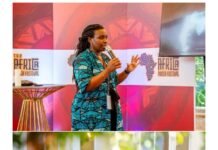
“We are here to facilitate the collaborations that strengthen our ecosystem, connecting creators in finding solutions to these many questions. Our priority is to ensure we move forward together so no newsroom, media house, journalist or creative has to navigate these periods alone,” Said Martie Mtange, Curator, Africa Media Festival.
To wire a sustainable future, Mtange clarified that African stories must remain rooted in local contexts, focusing on social justice, the rule of law, and decolonization of minds in how we propagate African narratives.
Organized by Baraza Media Lab, the convening highlighted a stark new reality where AI-generated summaries are wiping out traffic-based news business models, with governments also utilizing new technologies to tighten information control.
Speakers described the tendency by African governments of clamping down on media freedom as an ‘own goal’ that destroys the essential feedback loops required for stable socio-political and economic governance.
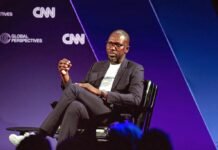
“We are seeing a growing restlessness among young Africans that is reshaping public discourse. To wire a sustainable future for Africa’s media, journalists must move beyond being mere participants to becoming contestants in the market economy by owning our media houses, our intellectual property, as well as homegrown AI tools,” said Daniel Kalinaki, Chair, Baraza Media Lab.
The next generation of African media practitioners were challenged to move beyond being mere participants in the digital economy to becoming owners of media infrastructure as one form of defence against political capture and corporate consolidation.
In addition to integrating mental health and psychotherapeutic support as a core component of professional sustainability, speakers urged for collaborative resilience among media practitioners as opposed to taking a lone ranger approach journalism.
“In these moments of uncertainty, we fail as media when we work in silos. By talking to each other and understanding the geopolitical superstructure, we can create systems that produce resilience in these fast-changing times instead of driving journalists toward self-censorship,” said Christine Mungai, News Editor, The Continent.
The convening includes diverse representation from legacy media, independent creators, funders, and global partners such as DW Akademie, Thomson Reuters Foundation, Bloomberg, the Australian High Commission, Afripods, The African Editors Forum, RNW Media and Journalists for Human Rights among others.
The festival will culminate on Thursday with the inaugural Africa Media Awards, featuring the newly introduced ‘Creator for Good’ award to recognize individuals who have maintained excellence and spoken truth to power despite the prevailing economic and political headwinds across the continent.
As day one concluded, organisers reiterated that AMF 2026 is not just a convening, but a critical backup and reflective tool for an ecosystem currently being redefined by Artificial Intelligence and shifting geopolitical power.