

Common Errors In English With Samuel Alimi
On Thursday, I posted the undeniable distinction between the aforementioned nouns on my WhatsApp status for all English language learners to study for their future use in writing and oral conversations. Listening to proficient speakers of the language also helps one develop strong and excellent communication skills, which capture attention and captivate one’s audience, especially during public speaking. However, it is not advisable to strive for perfection when you can attain excellence and achieve resounding success.
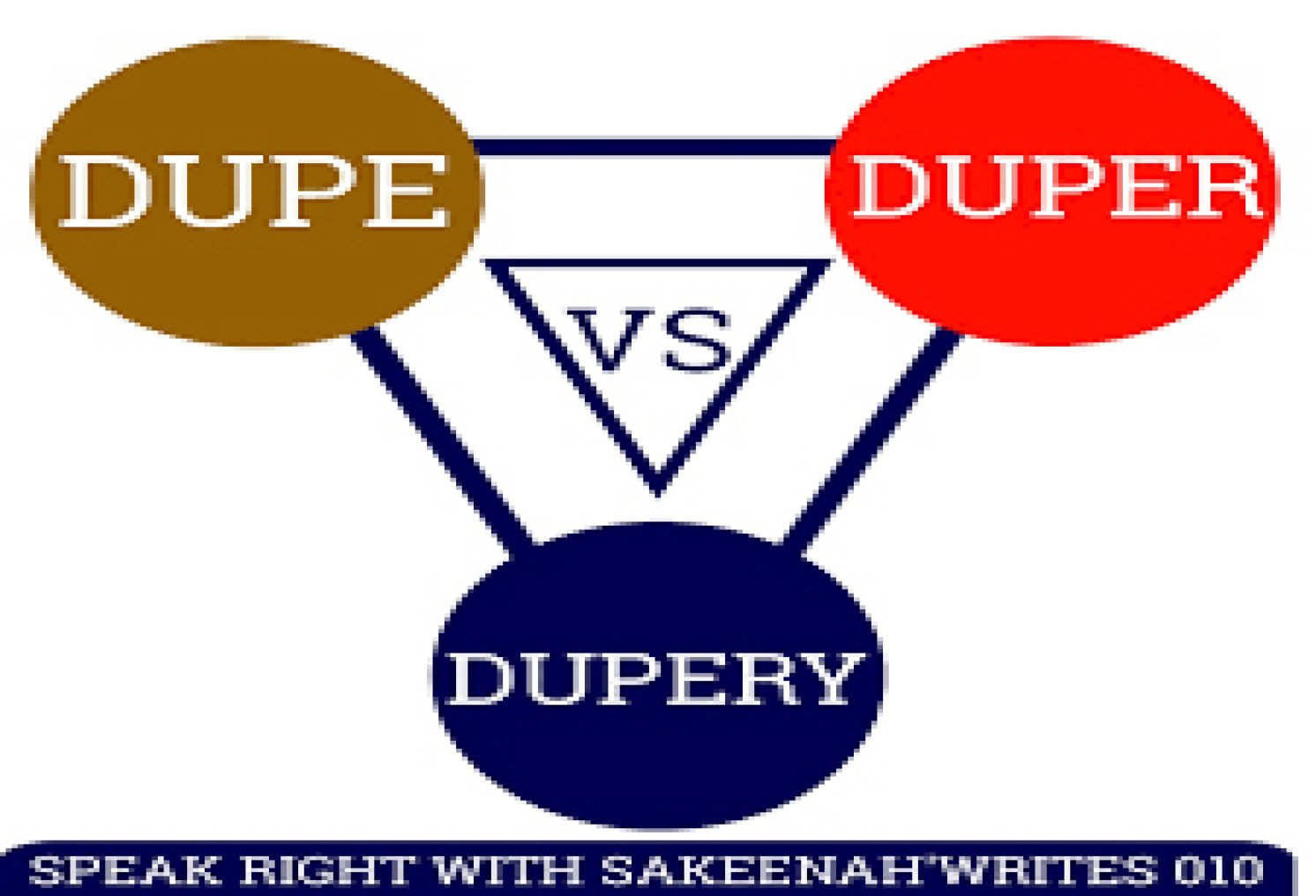
This lesson was inspired by content written by a professional editor on the subject. A dupe is someone who is the victim of deception, being deceived, scammed, or swindled. One common mistake is that many have been wrongly taught that the word is used for the deceiver, which is incorrect and misleading. To support this lesson, I conducted a quick search in the Cambridge Dictionary for the meaning of the word and noted down its example phrase:
Dupe: Someone who has been tricked.
An innocent dupe
Let us study the definition of ‘duper’. According to the Oxford Advanced Learner’s Dictionary, it means ‘a person who dupes’.
Study the following example sentences:
Professor Bola is a dupe. He was defrauded of the sum of one million naira in his attempt to flee the country.
The dupers were arrested by the Economic Financial Crime Commission (EFCC). Several incriminating pieces evidence were found in their jointly-owned mansion in Abuja.
I hope you have gained enough clarification on the key difference between the words. Henceforth, use them appropriately in your expressions. Educate those who are ready to learn and continue to improve your proficiency in the language because the value of the language can not be underestimated. Being our official language, learning the steps to improving one’s pronunciation and vocabulary is imperative.
Lay
During the last JAMB class I held with over 60 students on the Use of English, I taught them that the past tense of lie (for a sleeping position) is ‘lay’, while the past participle is ‘laid’.
The baby decided to lie down after crying profusely for over an hour due to the absence of his mother. After he lay down, his Dad hurridly prepared the family’s meal because he could not do it when he was awake. Before the arrival of the woman, the baby and her beloved husband had laid down.
Did you notice the change of tenses in the above expressions? The highlighted tenses have been used correctly. Remember that ‘have’, ‘has’, and ‘had’ are always used for the past participle.
We have come to discuss the prevalent issues bewildering the country.
She has realized her mistake and apologized sincerely for it.
COVID-19 has disrupted the organization’s plan to celebrate its members of staff for their high level of professionalism, excellence and innovation.
The above sentences use the past participle of ‘come’, ‘realize’, and ‘disrupt’ accurately. If you are struggling to know them, kindly study regular and irregular verbs from reliable sources.
BROADCAST
The media organization broadcasted the resignation of the board chairman last week.
Have you cut the wedding cake?
The purchase of building materials for the king’s palace has cost us over fifty million naira.
I was emotionally hurt by her remark on my service. It was too injurious and negative.
OPPORTUNED
While listening to a female speaker on air, she said, ‘I was opportuned for the global scholarship’. ‘Opportune’ is an adjective, and has never been used as a verb, so adding ‘ed’ to it is wrong. It simply means ‘a convenient time’.
It was an opportune moment to meet with the president to discuss the negative effects of fuel subsidies on the lives of Nigerians, especially the poor masses.
WORTH
As an adjective, it always comes after ‘to be verbs’. It either functions as a noun or a predicative adjective as seen in the following sentences:
The house is worth seventy million naira. (not: This house worths seventy million naira)
The armed robbers stole five hundred thousand worth of generation.
In the last sentence, it functions as a noun, not a predicative adjective.
Assignment
The beggar __ because he was tired.
lay
laid
© lain
The governor has __ down the cost of governance.
cut
cuted
cutting
The suspected ___ has been arraigned in the court of law.
dupe
dupers
(c) duppers
Kindly forward your answers to samueltolulopealimi@gmail.com or 07049203179 via SMS.
Names of those who answered the last questions correctly
Larry Daniel, Yusuf Bala, Adeniji Mattew, Alade Charity, Alimi Olive, Genesis Johnson, Sultan Musa, Banjo Victoria, Victor Bawa, Ahmed Roqeeb, Bello Sulaimon, Okere Chigozi, Adebayo Bukola, Daniel Adewale, Eze Uche, Okpara Nmenosa, Ezegwu Slyvester, Lipson Precious, Adeyemi Abigeal, Adedigba Emmanuel, Babatunde Esther, Fiyinfoluwa Olawale, Yahyah Aishat, Fakore Olawale, Genesis Bolaji, Adaeze Okpala, Solomon Miracle, Aderinsola Ireoluwa, Victory Diamond, Gold Precious and Akinola Abisola.