


The curse of economic recession which afflicted the country last year may have become a blessing in disguise after all. The nation had been a monolithic economy since the discovery of oil resources in the post colonial era.
Fortunes were made from oil revenue, running into trillions of dollars in the past, were frittered away. The former administration of ex-President Goodluck Jonathan luxuriated in oil windfall when the it sold at over $100 per barrel. Unfortunately, the windfall was not well managed as there were no savings for his successor, President Muhammadu Buhari, whose tenure witnessed a dramatic plummet in the price of crude, falling as low as $30 per barrel.
A country dependent on oil money with sophisticated taste for imported products had no buffer. It inevitably tipped into recession making it imperative for the leaders to think out of the box to revamp the economy.
The President was at this unenviable situation with hunger and poverty staring his citizens in the face when he coined his ‘grow-what-you-eat’ slogan to encourage diversification of the economy by prioritizing agriculture in the land.
Importation of certain ostentatious items and food products that could be produced locally were banned while local farmers of rice, millets, wheats and other food items were encouraged.
The strategy has paid off with Nigerian youth taking to farming and smiling to the banks in return. The nation has now attained greater mileage in rice cultivation and there are indications that the price of the commodity may soon begin to fall with increase in its production.
Already, the President had promised further investments into the agricultural sector as a means of ensuring diversification of the economy and creation of jobs for the nation’s teeming youth population.
Buhari at the launch of the Economic Recovery Growth Plan (ERGP) Laboratories recently assured that his administration had saved millions of foreign exchange with local production of rice alone. He hinted that his administration would further encourage farmers by building upon the success of the Presidential Fertilizer Initiative to double the 500,000 metric tons of fertilizer delivered to States, agro-dealers and farmers in 2017, by achieving production output of 1 million metric tons this year.
Buhari had also directed financial institutions, including the Central Bank of Nigeria (CBN), Bank of Agriculture (BOA) and other commercial banks in the country to provide affordable funds to farmers for there to be increase in production.
But, while the government may be trying its best to reposition the economy by investing in agriculture, the menace of smuggling of cheaper farm products into the country must be tackled.
Neighbouring countries, including Republic of Benin, Chad and Cameroun are smuggling routes for contraband products into Nigeria. Millions of tonnes of rice, chicken and dairy products not fit for human consumption are daily being dumped on these neighbouring countries with Nigeria as their final destination.
Apart from strengthening the borders, though most of them are porous,the government should engage the leadership of these neighbouring countries with a view to controlling the influx of contraband goods into Nigeria.
As at today, local rice, though higher in quality, can not compete with imported ones and where smuggling is not curtailed, patronage of the commodity may eventually suffer.
Buhari’s agricultural revolution and matters arising

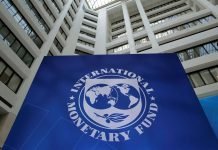
World economy risks recession if US-Israel/Iran war persists – IMF
By Ochiaka Ugwu
International Monetary Fund (IMF) has warned that global economy risks recession if the US-Israel/Iran war continues with high energy prices persisting.
The global...

ADC unstoppable, tackles APC, accuses INEC of partisanship
By Abubakar Yunusa
The African Democratic Congress has declared itself unstoppable, insisting that no force can halt its rise as it positions to challenge...
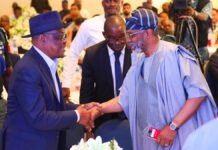
Wike architect of Abuja’s retail revolution -Gbajabiamila
By Stanley Onyekwere
Chief of Staff to the President, Rt. Hon. Femi Gbajabiamila, has declared that Abuja, the Federal Capital Territory (FCT) has solidified...

Malnutrition: Gov. Radda Opens two Stabilization Centres, established mobile court against RUTF
By Abubakar Ahmed,Katsina Governor Dikko Radda of Katsina State has flagged off new Stabilization Centres and Outpatient Therapeutic Programme (OTP) centres as part of...
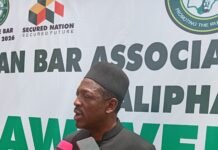
Senior Advocate asks NASS to enact National Internal Security Operations Act
From Bashir Rabe Mani, Sokoto
A Senior Advocate of Nigeria (SAN), Barrister Hassan Liman, on Tuesday urged the National Assembly to urgently enact a National...