

By Vivian Okejeme Abuja
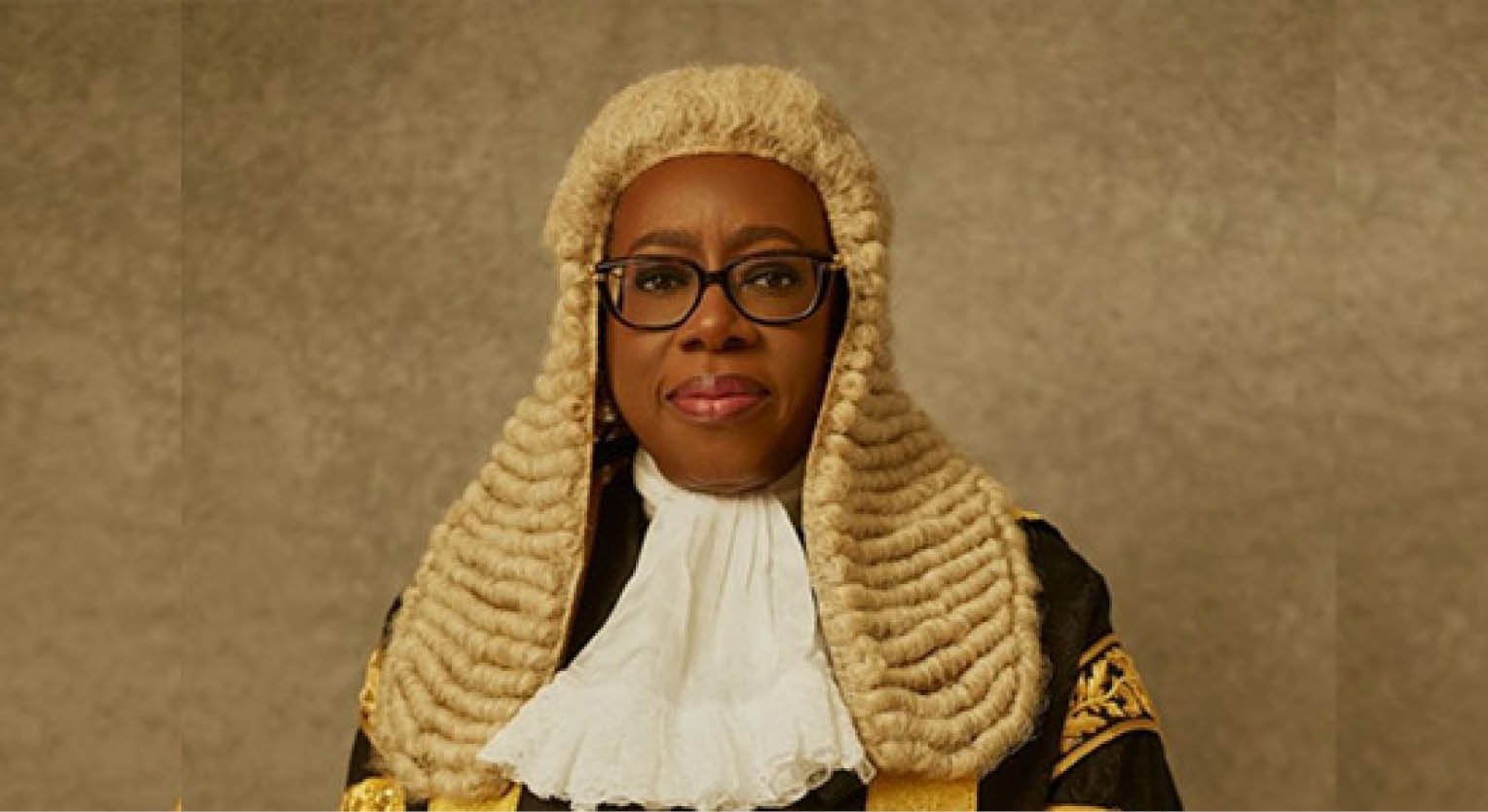
The Chief Justice of Nigeria, Justice Kudirat Kekere-Ekun, Monday, charges justices to challenge the growing negative public perception of the judiciary.
The CJN noted that while the National Judicial Council is readily available to take complaints against judges, the council will also not entertain frivolous complaints against judges.
She ventilated these while declaring open the Court of Appeal 2024 Justices Annual Conference, themed “Judicial Introspection.”
She said, “There is a growing negative perception of the judiciary. We must all individually and collectively work towards changing this negative perception and I must say that at the last meeting of the NJC, we did state when the press release was made, that while the court will look at the complaints, we will look into genuine complaints as we also stand to support our judges and justices.
We are looking at ways to make sure that where frivolous allegations are made, there are consequences.”
Addressing the growing trend of conflicting court orders, the CJN noted that it has become an issue of great concern in the judicial community.
She added that one of the reasons conflicting decisions have become prevalent in the judiciary is due to inadequate conferences held as conferences gives the opportunity for opinions and shared decisions.
The President of the Court of Appeal, Justice Monica Dongban-Mensem, in her speech as the host of the conference, hailed the usefulness of technology in the judiciary and the day-to-day activities of humans.
She, however, noted that while Artificial Intelligence is helpful and encouraged, its adoption in the judicial system should be for adjudication and not for the replacement of judges.
She said, “The emergence of social media has profoundly transformed the dynamics of interpersonal interaction, communication, and information dissemination, yielding significant improvements in the efficacy and scope of human connection. Nevertheless, this technological shift has also generated a range of challenges for the judiciary, including the management of online reputation, cyber-bullying and harassment.
“The preservation of the integrity of digital evidence in the context of legal proceedings is now a thing of concern. To effectively navigate these complexities, it is only appropriate for the judiciary to engage in a process of regular intellectual upliftment. A regular examination of existing practices, procedures, and policies to ensure their efficacy, efficiency, and fairness in the digital age is imperative.