

By Sam Onah
The Senate Committee on Public Procurement recently set up a template to ensure the delivery of reforms by President Bola Tinubu on procurement by federal Ministries, Agencies and Departments(MDAs).
The Committee on 21st of May held an interactive session with Bureau of Public Procurement, the agency responsible for procurement of goods and services in the country.
The interactive meeting was held at the new senate building, National Assembly Abuja.
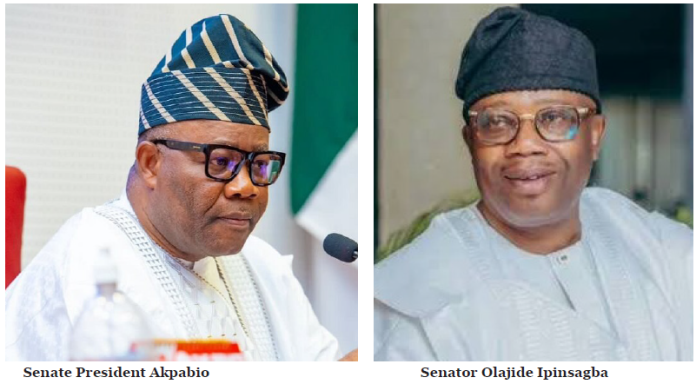
Speaking, the Chairman, Senate Committee on Public Procurement, Senator Olajide Ipinsagba representing Ondo North Senatorial District, explained that the meeting was convened to discuss critical issues shaping the future of public procurement in Nigeria.
He emphasized that Nigeria should know the importance of public procurement as it plays pivotal role in driving national development, promoting transparency and accountability in governance.
Highlighting the role of the committee on procurement, Senator Ipinsagba, said their mandate among others was to oversee and ensure that public procurement processes are conducted with utmost integrity, transparency andaccountability, adding that the President Tinubu’s administration has
introduced an initiative to rejig the procurement process by introducing the policy that would prioritize local goods and services as well as approving public procurement thresholds for Ministries, Departments and Agencies.
The Chairman listed the benefits the President’s initiative will bring to the country, which include; boosting local industries by prioritizing locally made products in government procurement.The policy(B) fosters a culture of self-reliance, increase in internal productivity and promotes economic growth.
“Enhance job creation, improve technical competence and strengthen Nigeria’s industrial base, reduce dependency on foreign products and enhancing local content which will invariably stabilize the country’s foreign exchange and improve balance of trade.
“Boost Nigeria’s Gross Domestic Products (GPD), injecting life into the economy by creating jobs-and stimulating innovation that will lead to sustainable economic development.”
Other benefits include increase in government investment in local industries that will build a more diversified, resilient and prosperous economy to the citizens, as well as developing entrepreneurship orientation through innovation, autonomy, competitive aggressiveness, risk taking and proactiveness.
The Chairman, Senator Ipinsagba ,stressed the zeal of the Senateled by Senator Godswill Akpabio to ensure that the President Tinubu initiative succeeds. As it is aimed at job creation, industrial growth and sustainable economic development, ultimately strengthening Nigeria’s domestic economic growth.
He said the liberal efforts of President Tinubu’s policy also extends to the approval of contract threshold for Ministeries, Departments and Agencies where procurement processes have been streamlined.
He explained that contracts above10billion Naira for services go to the Federal Executive Council (FEC) for approval reducing bureaucratic delays and improving budget execution timelines, adding that the new threshold will enable faster project implementation and reducing the frequency of procurement related memos reaching the FEC.
He said it would also promote transparency, value for money in government spending aligning procurement practices with prevailing economic conditions.
It will reduce inefficiencies and improve services delivery by allowing MDAs to focus on strategic policy matters crucial to national development.
The committee Chairman also added that the policy aligns with theb‘’Nigeria First policy’’ promoting local content and potentially boosting local industries and consumption of local products.
However,with the sweeping reforms by President Tinubu, the task to implement these new policies are fully in the hands of the Bureau for Public Procurement (BPP). For instance, the BPP draws its power from the Public Procurement Act of 2007, especially in section5(A-S) which, interalia, states that it supervises the implementation of established procurement policies, monitoring the process of tendered items and keeping national database of standard prices as well as publishing the details of major contracts in the procurement journal.
It is also expected to publish proper and electronic editions by the procurement journals and maintain an archival system for the procurement journals,” maintain national database of the particulars and classification and categorization of Federal contractors and service providers.
It will also undertake research and surveys as well as procurement audits and submit such reports to the National Assembly bi-annually.
The question then is, how has the BPP complied with the above sacred and statutory functions in maintaining its integrity?
How has it aggregated its functions with particular references to sections17,18 and 19 of the Public Procurement Act?
Of specific reference in section 58 of the Procurement Act which stipulates punishment for the offenses like bid rigging which contravenes the Procurement Act? In this case offenders are liable to imprisonment or debarment from all public procurement for a period of not less than five calendar years.
These are the issues the BPP will be dealing with and giving account to the National Assembly statutorily as the years gonby.
Sam Onah is Personal Assistant to the Clerk, Senate Committee on Procurement.