
By Abubakar Yunusa
The Nigeria Data Protection Commission (NDPC) says it plans to resolve the lingering data breach dispute with Meta Platforms Inc. through dialogue and collaboration.
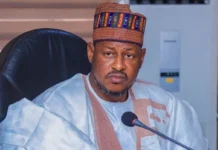
Vincent Olatunji, chief executive officer and national commissioner of NDPC, spoke on Monday at a one-day intensive workshop for data protection officers (DPOs) in Abuja.
Olatunji said the commission’s approach was to engage organisations and seek amicable solutions rather than escalate matters unnecessarily.
“Our new approach is partnership. We are working with them to see if we can resolve the issue,” Olatunji said.
“We don’t throw the baby out with the bathwater. What we do today is to look at the issues — what do we need to resolve, and are they willing to do what is right?
“We have to look at political ways of solving it.”
In 2024, the Federal Competition and Consumer Protection Commission (FCCPC) imposed a fine of $220 million on Meta, the parent company of WhatsApp, Facebook, and Instagram, for multiple data privacy violations.
The FCCPC said the penalty followed a joint investigation with the NDPC into Meta Platforms’ conduct, privacy policies, operations and practices between May 2021 and December 2023.
In response, WhatsApp said it would appeal the fine and threatened to exit the country.
On April 25, the competition and consumer protection tribunal upheld the $220 million fine the FCCPC imposed on Meta.
However, the tech company responded with another threat to shut down the Nigerian operations of Facebook and Instagram.
Further speaking on the issue at the event, the data commission boss said plans are in place to resolve it and calm public anxiety.
“Even when you go to work, you see that there’s a right way to resolve issues. So, I’m sure we’re going to resolve it,” he added.
Also, at the workshop, the NDPC signed a memorandum of understanding (MoU) with Mastercard to consolidate data protection capacity in Nigeria.
Olatunji also said the federal government was committed to increasing the number of certified DPOs with the required skills to manage data protection.
He said the workshop would be beneficial to both Nigeria and Mastercard, adding that the country had tech-savvy youths who are digital natives ready to explore.
“The government can further support these efforts by de-risking major barriers for business investment, such as in the solid minerals industry, making it more attractive for private capital and boosting sectoral growth.
“Expanding social safety nets, which include unemployment benefits and healthcare access, will provide much-needed relief to those facing financial distress and support their pathways to recovery.
“Targeted awareness campaigns are crucial to ensure that vulnerable populations are informed about the various government programmes and services available to assist them.”
Speaking further, he said the worsening security crisis, ranging from insurgencies to armed groups disrupting agricultural activities, remains a major factor in rural poverty and food insecurity.
“It is vital for government to act swiftly and decisively to restore peace and security, especially in rural communities, thereby creating a stable environment for agricultural productivity and investment,” Oye said.
Furthermore, the NACCIMA president said Nigeria must maximise the opportunities presented by the African Continental Free Trade Area (AfCFTA) to boost intra-African trade, which holds huge potential for poverty reduction.
“Nigeria should reduce its reliance on raw material exports and instead prioritise adding value through local manufacturing. AfDB President Dr. Akinwumi Adesina aptly points out that industrialising via local manufacturing is fundamental to breaking the cycle of poverty and achieving genuine development,” he said.
“While much of Africa’s raw materials are exported, less than 2% are processed locally. Nigeria must reverse this trend to build a resilient, inclusive economy.
“It is essential to establish and maintain a robust, transparent framework for monitoring and evaluating all poverty-reduction initiatives, ensuring their effectiveness and enabling real-time improvements where necessary.”
On Nigeria’s debt profile, the NACCIMA president, citing the Debt Management Office (DMO), said “Nigeria’s total public debt soared to N144.67 trillion ($94.23 billion) as of December 31, 2024—an increase of 48.58% compared to N97.34 trillion ($108.23 billion) at the end of December 2023”.
“The report also noted a quarter-on-quarter increase from N142.32 trillion ($88.89 billion) in September 2024, underlining the growing challenge of debt sustainability,” he said.
“As the Honourable Minister for Finance and Coordinating Minister for the Economy, Mr. Wale Edun, has observed, Nigeria needs a minimum annual growth rate of 7% to effectively reduce poverty.
“Government must act decisively and without delay, pursuing a multifaceted strategy that combines immediate relief measures with long-term, strategic planning.”
By implementing the short-term interventions, Oye said “we can help shield Nigeria’s vulnerable populations and make meaningful progress in the fight against poverty”.