

By Femi Oyelola
In a staggering turn of events, Nigeria has surpassed war-torn Sudan to become the leading country in Africa for malnutrition among children.
This disturbing development was made public during the presentation of the 2025 Lean Season Multisectoral Response, organised by the United Nations Office for the Coordination of Humanitarian Affairs (OCHA).
This grim reality, as highlighted by the United Nations Children’s Fund (UNICEF), marks a devastating shift in the region’s health crisis and presents an urgent challenge for the international community and local leaders alike.
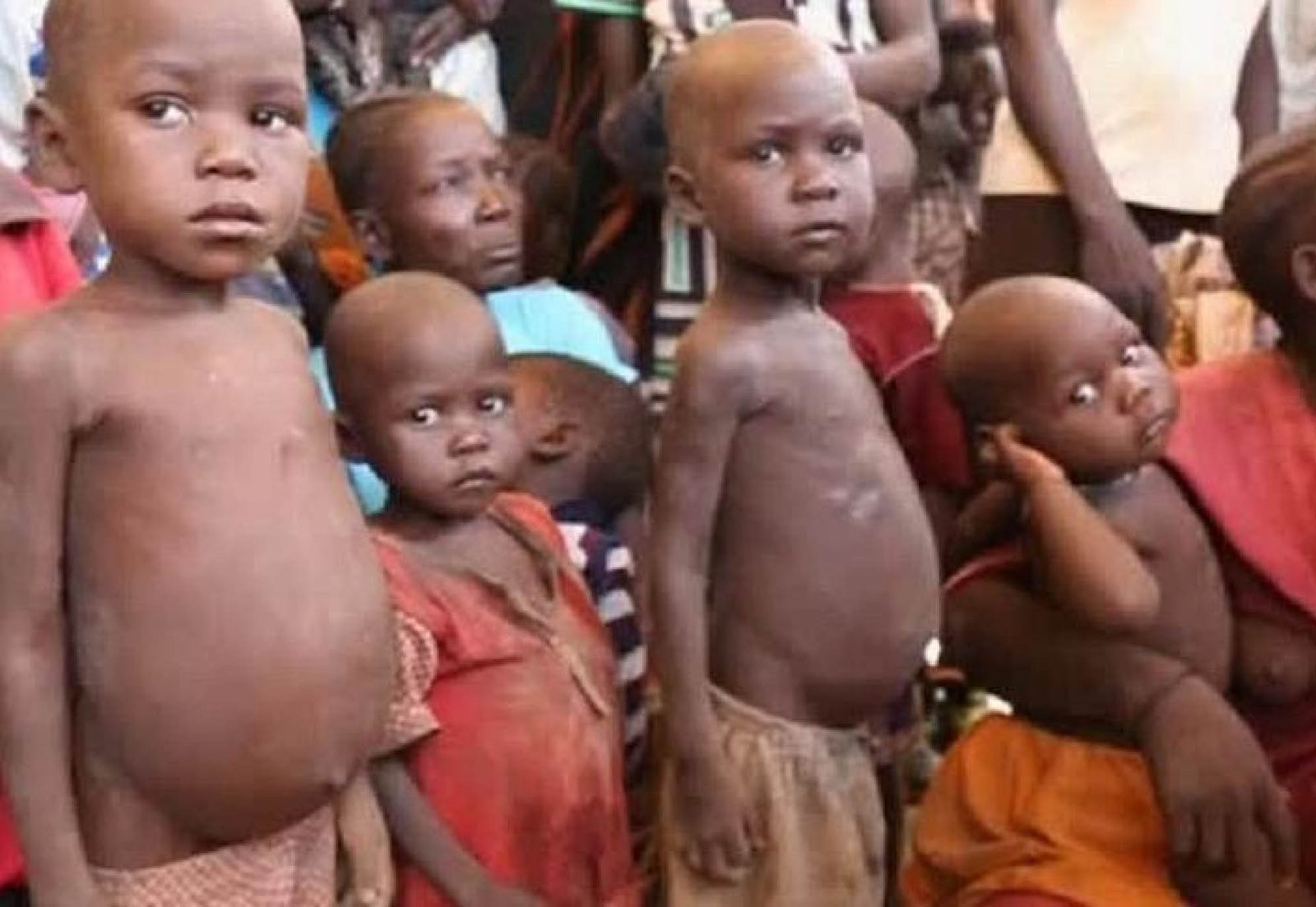
According to UNICEF’s latest report, Nigeria now holds the dubious distinction of having the highest number of malnourished children in Africa.
The report revealed that more than 13 million Nigerian children are currently suffering from malnutrition, with many facing severe stunting, wasting, and long-term health consequences.
The crisis in Nigeria is multifaceted, influenced by a combination of economic instability, regional conflict, limited access to nutritious food, and climate change.
However, the sheer scale of the issue is compounded by the country’s large population, which accounts for a significant portion of Africa’s malnourished children.
Malnutrition doesn’t just impact a child’s physical growth—it hampers cognitive development, limits learning abilities, and undermines prospects.
Even more alarming is the fact that the situation is only worsening. According to UNICEF’s data, millions of Nigerian children face acute malnutrition, with many more at risk as food prices continue to rise and agricultural production suffers.
In the face of ongoing economic and security challenges, local communities struggle to provide sufficient and nutritious food for their children.
Speaking on the reports, Nemat Hajeebhoy, UNICEF’s Chief of Nutrition in Nigeria, revealed that approximately 600,000 children in Nigeria are currently suffering from acute malnutrition, a condition that poses life-threatening risks if not urgently addressed.
“Nigeria has the highest number of malnourished children in Africa and ranks second globally,” said Hajeebhoy.
She added that half of the affected children are at immediate risk of developing severe acute malnutrition, leaving them extremely vulnerable to illness and death.
WFP Confirms Nigeria’s Food Insecurity Ranking. Adding to the grim outlook, Serigne Loum, an official with the World Food Programme (WFP), stated that Nigeria also tops the chart for the highest number of food-insecure people in Africa.
UN OCHA Seeks $300 Million to Address Nigeria’s Nutrition Crisis. The UN’s humanitarian arm, OCHA, is seeking $300 million in emergency funding to combat the country’s worsening food and nutrition crisis, particularly in the North-East region.
According to Trond Jensen, Head of OCHA’s Office in Nigeria, “$160M is urgently required to respond to issues around food insecurity, nutrition, water, and sanitation. This is the bare minimum.”
Jensen described a paradoxical situation where, despite the doubling of severe acute malnutrition cases, humanitarian response capacity has reduced by half due to underfunding.
Targeting Two Million Nigerians in Need.
The UN agency said its goal is to reach two million people in 2025, prioritizing children, pregnant women, and internally displaced persons in crisis-hit areas like Borno, Yobe, and Adamawa states.
Jensen called on state governments, donor nations, and international NGOs to urgently step in and assist, warning that failure to act could worsen already dire conditions.
This humanitarian alert comes as the World Bank’s April 2025 Africa’s Pulse Report ranks Nigeria as the country with the highest number of extremely poor people in Sub-Saharan Africa: Nigeria: 19%, Democratic Republic of Congo: 14%, Ethiopia: 9%, Sudan: 6%.
The Bank warned that Nigeria’s poverty levels could deteriorate further by 2027 if decisive action is not taken to address economic hardship, conflict, and weak social support systems.
Comparative Global Hunger and Poverty Data. In 2024, the Global Hunger Index ranked Sudan, Burundi, Somalia, and Yemen as the most hunger-stricken nations.
However, Nigeria’s worsening humanitarian indicators now place it among the most vulnerable countries globally, despite its oil wealth and population size. Urgent Action Needed to Avert Catastrophe.
The UN’s latest assessments make it clear that Nigeria is at a critical juncture. With millions at risk of starvation and child malnutrition reaching historic levels, international solidarity, domestic political will, and sustained funding are urgently required to avert a looming humanitarian catastrophe.
Never miss a moment! Get the stories shaping Nigeria, delivered straight to your phone. Follow Peoplesdaily Newspaper on WhatsApp for breaking news, exclusive reports, and the headlines everyone will be talking about, before anyone else.

