

By Femi Oyelola
Nigerians joined other citizens across the Globe to celebrate the 2024 World Humanitarian Day(WDH) with the theme #ActForHumanity, aimed to build public support to help pressure parties rise to the conflict and world leaders to take action to ensure the protection of civilians including humanitarians in conflict zones.
Findings revealed that 2023 was the deadliest year on record for humanitarian workers, and 2024 could be even worse. These facts lay bare a glaring truth: the world is failing humanitarian workers and, by extension, the people they serve.
Despite universally and domestically accepted laws to regulate the conduct of armed conflict and limit its impact, violations of these laws continue unabated, unchallenged, and unchecked. And while civilians, including aid workers, pay the ultimate price, the perpetrators continue to evade justice.
In Nigeria, there are a lot of conflict zones created by Non-State Actors and natural and man-made disasters, which is worrisome.
Over 7.1 million people are said to require urgent assistance this year. 1.8 million people are internally displaced; 80 percent are women and children.
Women and girls are the most vulnerable. Thousands have been abducted since the crisis began in 2009. Many more face gender-based violence, including sexual violence, trafficking, and forced survival sex in exchange for food and basic items.
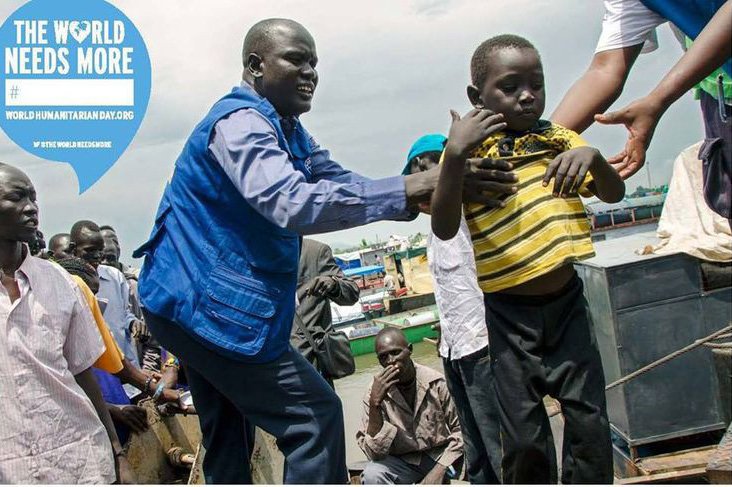 Reacting to this, Mr. Yusuf Isiyaku Goje, an active Citizen, opined that the humanitarian crisis in Nigeria is alarming and disturbingly on the rise without a proactive and comprehensive response from both the State and Non-state actors.
According to him, the persistent insecurity caused by Boko haram, bandits, and kidnappers continues to exacerbate the crisis.
“We are experiencing widespread displacements contributing to the rise in food insecurity, malnutrition, disease outbreak, sexual violence, delinquency, and promiscuity. Unfortunately, the most affected are women, children, and persons with disabilities without comprehensive and well-funded social protection and psycho-social programs targeted at them.
“They are at the mercy of hope, with the humanitarian interventions by international organizations and philanthropists grossly inadequate to address their increasing needs. In many ways, their government has continued to fail them.
‘We therefore call on the government to fulfill its constitutional mandate of meeting the security and welfare needs of these categories of disadvantaged citizens facing humanitarian crises.
“The government needs to review its current approach to better provide urgent assistance, including food, shelter, and healthcare to this group of people. Furthermore, importantly, ensure the living conditions are safe and dignified for internally displaced persons.
“Not to forget the need to plan long term by addressing the root causes of the crisis, including poverty, inequality, and lack of access to education and healthcare.”
Similarly, CO-Chair OGP TWG Social Protection Sumayya Abdullahi Hussaini explained that conflict is only part of the humanitarian crisis; climate change, according to her, exacerbates more crises by intensifying environmental challenges.
According to her9 the 2023 report by the Nigerian Meteorological Agency (NiMet) and the United Nations Environment Programme (UNEP) documents how erratic weather patterns, flooding, and desertification have severely impacted agricultural productivity, forcing entire communities to relocate. This is particularly devastating in a country where millions rely on agriculture for their livelihoods.
“Compounding these challenges are widespread poverty and unemployment. The World Bank’s 2023 economic assessment of Nigeria reveals that even in areas not directly affected by conflict, economic conditions remain dire.
‘Many Nigerians are trapped in a cycle of poverty, with limited access to education, healthcare, and economic opportunities. This systemic poverty fuels the humanitarian crisis, making it not just a symptom of conflict and climate change, but a reflection of deep-seated structural issues.
“Addressing this humanitarian crisis requires a comprehensive approach that goes beyond immediate relief. The Nigerian government, alongside international partners, must prioritize restoring peace and security in conflict-affected regions. As emphasized by the African Union Peace and Security Council’s 2023 report, sustained peace negotiations and reintegration programs for former combatants are crucial.
“In the long term, building resilience through education and economic empowerment is key. The Global Partnership for Education’s 2023 strategic plan underscores the importance of ensuring access to quality education for all children, particularly girls, to break the cycle of poverty.
“Additionally, climate resilience strategies, such as those outlined in the 2023 report by UNEP and the Green Climate Fund, must be implemented to prevent future displacement and protect vulnerable communities from environmental shocks.”
Authenticating this, the Executive Director of Hope for Children Initiative, Hajiya Hadiza Umar, lamented that the Humanitarian Crisis in Nigeria remains a great concern given its impact on women, girls, children, persons with disabilities, and other vulnerable populations.
She observed that the causes of this disturbing situation can be traced to mismanagement of resources, poor level of education and prioritization of needs as it affects the citizens, low level of citizens engagement of prioritization of their needs, increasing level of poverty especially in poor, rural and hard to reach communities, lack of accurate data to inform life-changing interventions among many other issues.
Hajiya Hadiza Umar observed that the impact has led to a deepening of gender-related issues such as violence in homes, communities, and institutions (workplace and schools), the widening of the poverty gap, especially for women, rural populations, etc.
“The solution to this situation requires a wide stakeholder and multi-sector intervention committed to genuinely addressing the issues mentioned above.
“There should be prioritization of spending to address genuine poverty issues, the institutionalization of workable reforms that have impacted positively to the issues identified, and the non-politicization of sensitive concerns and issues identified. Insecurity and conflict should be dealt with from the bud because the financial burden of maintaining these concerns has eaten into valuable funds that could have taken care of a great chunk of humanitarian concerns.
“Importantly, every Nigerian citizen also needs to be proactive and honest in identifying genuine concerns and workable solutions that are in the best interest of the larger population, we need to be selfless, patriotic, and morally upright as our contribution towards making a better society since it is evident our government cannot turn things around on its own.”
Corroborating this assertion, Acting Executive Director of Legal Awareness for Nigeria Women ( LAWN), Mrs Hanatu Ahuwan, said humanitarian crises in Nigeria are worsening, and more people are struggling to feed, not only those affected and displaced by situations of conflict or insecurity.
Mrs. Ahuwan stressed that the United Nations had projected that about 4.8 Million in Nigeria would face hunger in mid-2024. In situations of humanitarian crises, women, girls, children, persons with disabilities and the aged suffer more.
She expressed dismay that Women not only have themselves to think of but also the little ones under their care noting that in the event of internal displacement, these demographic groups suffer more.
“They also face the unfortunate situation of taking up responsibilities of heads of households if they lose their husbands as a result of the prevailing situation or the family is separated as a result of displacement.
“It would be unfair not to recognize that government, especially at national and state levels, make some damage control efforts in such situations but those efforts can be said to be generally more reactionary than pre-emptive.
“Government efforts with support from international partners can be seen in the development of policies such as the National Policy on Internally Displaced Persons (2022) and the Nigeria Humanitarian Response Plan 2023.
“However, the government in collaboration with all humanitarian intervention partners working in Nigeria, needs to improve its coordination mechanisms across all levels to provide effective assistance.
“Working beyond the provision of emergency relief in times of crises, the government should be seen to be more strategic in the prevention of future crises and as well as improving its preparedness to handle any impending or potential emergencies
“There is a deliberate refusal to put in place structures to accommodate displaced persons which is not helpful and ends up overburdening communities where people run to for refuge when displaced. This heightens the inability to sufficiently address the needs of affected persons. The government also needs to be more intentional in its recovery and rehabilitation efforts.
“This will help affected populations on their journey to recovery and rebuilding their lives. People affected by traumatic experiences need to have access to psychosocial counseling to help bring about healing. Having formal structures in place will contribute to ensuring the safety of vulnerable groups and protection from gender-based violence targeting women, girls, and persons with disabilities.”
In his response, the Deputy Executive Director of the African Network for Environment and Economic Justice (ANEEJ), Leo Atakpu, advised that stakeholders, government, the UN, and others should focus more on the root causes of a humanitarian crisis because there seems not to be much progress made in dealing with the root causes.
Mr. Leo opined that whenever there is the issue of terrorism, there are people who are financing terrorism and giving support to terrorists.
“Anywhere in the world, there are people who go underground to finance terrorism and provide all the support to terrorists. It is not the rag-tag people you find in the forest holding AK47.
“Nigeria, even with the anti-terrorism laws, has not been able to deal decisively with terrorism in this Country.
“I recalled some time ago, the UAE government was able to apprehend three or four Nigerians in their own Country who are financing terrorism in Nigeria, but I’ve not read where the law enforcement agencies in Nigeria apprehended terrorist financiers.
“There are some people that host terrorists in their homes, they go and operate at night in the forest and come back in the morning to hide in their homes.
“So, the government must take drastic action to make the anti-terrorism law work in Nigeria; get to the root and ensure that those who are fueling terrorism and banditry are apprehended and dealt with accordingly.
“Going around with aircraft and pursuing ragtag enemies in the forest is one measure but it’s not enough. You must go to the root cause and deal with the problem.
“I’m also aware that the triple Lexus, the humanitarian-development and businesses in Lake Chad region, and this was made possible by various Countries working with the UN to put in place some measures to deal with the issues of Boko Haram and religious extremism in the Country.
“There’s this UN and UNDP report that was released in 2018 that described many of the underlying causes of the Lake Chad base crisis, which includes high inequality, social injustice, lack of social service provision, historic marginalization, inadequate economic opportunities, high level of poverty, rapid demographic growth and impacts of climate change and land degradation.
“The Nigeria authority needs to look at all of these used holistically and find ways to address them, to scale up support, development interventions in all of those areas to improve efficiency to address the structural deficiency that is critical.
“It is important that we also look at what I call the triple Nexus, which is being implemented in the Lake Chad region, and it involves the government of Cameroon, Lake Chad, Nigel, and Nigeria.
“I recalled that in June of 2016, they had the Abuja action statement which was still towards protecting civilians from violation and abuse.
“These Countries have made some significant steps towards implementing the agreement but the implementation of the agreement must be taken a little further.
“One, to save lives by providing timely and integrated multi-sector assistance and protection interventions to the most vulnerable people in the region.
“It’s also important to enhance timely, unhindered, and equitable access to multi-stakeholder assistance and protection intervention through principled humanitarian action.
“Thirdly, to strengthen the resilience of the affected population to promote early recovery and voluntary, safe, durable solutions to displacement and support social cohesion.
“This is very important in addressing these issues, and for me, the triple Nexus approach to succeed in that region, the whole of the North-East, the North-West, and now the North-Central, needs improved coherence and coordination.
“Effective mechanisms exist in these Countries mentioned to coordinate humanitarian response, but they do not exist for longer-term development programming.
“So it is important that improved coordination is put in place for it to be effective, efficient, and targeted resident programming to ensure that lessons are learned and shared across the entire region.
“Secondly, it is important that new practical ideas for economic transformation be put in place. There’s this universal recognition that economic opportunity is essential to recovery and resilience and to avoid further political instability.
“So it is important to address some of the economic crises in this Country and deal with issues of host communities, internally displaced persons, refugees, returnees, vulnerable groups, gender, women and children, people of all ages. We need to address their economic needs in broader terms.
“A more critical concern is the large number of young people in the Lake Chad region, where almost two-thirds of the rapidly growing population is under 25 years old.
“Addressing this problem requires an urgent local, national, and sub-regional vision of practical strategies involving the private sector as a central actor alongside the government, the community international agencies, the civil society organizations, and the UN, and everybody has to be on board.
“There’s also the issue of Traditional roles in terms of prescription in the way forward. There should be non-traditional approaches to peace.
‘It is important to explore the use of nontraditional peace broadcasts by promoting the participation of women in peace negotiations and rebuilding processes that capitalize on their nonalignment in conflict situations.
“The other is the need not to leave anyone behind. The UN humanitarian program needs to be implemented in areas affected by conflict as well as areas that have not been affected.
“Some buffer zones need to be created to ensure that people who are being moved are safe and don’t spread to other safe areas.
“In Nigeria at some point, the problem spread from North-East to North-West and then to North-Central. If the government had taken some proactive steps, such wouldn’t have happened, and that is the point here.
“There’s also the need for investment, enabling conditions for a current response at the Country level, in Nigeria, Cameroon, and other Countries where these things happen.
“There’s a need for Country-level actors who lead prioritization processes and coordination efforts that currently have limited influence and tools to mobilize stakeholders and resources behind collectively agreed priorities.
“It is also important to restructure the Country teams, people who are leading some of these processes like the Military.
“Sometimes, you hear those at the forefront who deal with Military efforts, and you find that they don’t have sufficient encouragement to do their job.
“The UN system, the Civil Society, the volunteers have to be properly restructured and provided with the needed technology, equipment, the needed funding to carry on their duties.”
Never miss a moment! Get the stories shaping Nigeria, delivered straight to your phone. Follow Peoplesdaily Newspaper on WhatsApp for breaking news, exclusive reports, and the headlines everyone will be talking about, before anyone else.


VEHICLES AND THE AUCTION PRICES ARE:-
Golf2=₦350,000
Golf3= ₦450,000
Golf4= ₦550,000
Toyota Camry Tiny light= ₦750,000
Toyota Camry big Daddy= ₦1.2M
Toyota muscle= ₦1.8m
Toyota Corolla= ₦1.2M
Toyota Yaris= ₦650,000
Toyota Matrix= ₦850,000
Toyota Picnic= ₦1.1M
Toyota Sienna= ₦1.3M
Toyota Rav4= ₦1.5M
Toyota Highlander= ₦2.2M
Honda Baby Boy= ₦780,000
Honda Accord EOD= ₦950,000
Honda City= ₦750,000
Honda Crosstour= ₦2.8M
Honda CR-V= ₦1.4M
Honda Odyssey= ₦850,000
Honda Pilot= ₦1.3
Lexus GX460=₦6.6M
Lexus GX470=₦8.4M
Lexus GX570=₦13.8M
Lexus IS-250=₦2.1M
Lexus ES-330=₦1.5M
Lexus ES-350=₦2.6M
Lexus RX300= ₦1.5M
Lexus RX330= ₦2.8M
Lexus RX350= ₦3.2M
Acura RDX=₦3M
Acura RSX=₦2.8M
Acura TSX=₦2.6M
Acura ZDX=₦3.2M
Acura MDX= ₦2.4M
Mercedes-Benz C-Class= ₦950,000
Mercedes-Benz E-Class= ₦1.1M
Mercedes-Benz GLK= ₦4.5m
Mercedes-Benz ML320= ₦850,000
Mercedes Benz ML330= ₦1.8M
Mercedes-Benz ML350= ₦5.2M
Nissan pathfinder= ₦1.9M
Nissan Altima= ₦820,000
Nissan Armanda= ₦3.2M
Nissan Maxima= ₦600,000.e.t.c.
NOTE�: YOU ARE ALLOWED TO PAY FOR THE CUSTOM DUTIES AND CLEARANCE BEFORE THE DELIVERY, WE DO NATIONWIDE DELIVERY. KINDLY CONTACT THE SALE’S DEPARTMENT IN-CHARGE VIA CALL ON O8O__7163__9728 WHATSAPP ON O8O__7163__9728
THANKS FOR PATRONIZING US.