

BY BAMISE DAVID
The exit of global consumer goods giant, Procter & Gamble (P&G), from local manufacturing in Nigeria has continued to raise critical questions about the future of the nation’s industrial sector, manufacturing engineer, Engr. Olaniyi Adebajo has said.
According to Adebajo, the decision, driven by economic challenges, offers valuable lessons for indigenous manufacturers seeking to thrive in the country’s volatile business environment. The engineer, who played a key role in P&G’s Nigerian operations, has outlined critical takeaways for the industry.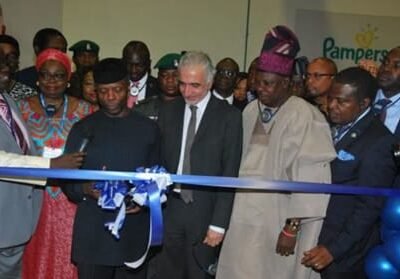
Adebajo, a Nigerian-Canadian with a background in engineering from the University of Manitoba, worked at P&G between 2009 and 2012, rising from Process Engineer to Project and Start-Up Manager.
According to Adebajo, one of the key lessons is the importance of flexibility in plant design. While the Agbara facility was a state-of-the-art plant, it lacked the adaptability to adjust production volumes or switch between products as market conditions changed.
He compared this with his work on the $415 million American Falls Expansion Fry Line Project for Lamb Weston Inc. in the United States. That project was deliberately designed with modular infrastructure and flexible systems to accommodate shifts in consumer demand. Nigerian manufacturers, he argued, must incorporate similar scalable designs to remain competitive.
According to Adebajo, unreliable public infrastructure undermined P&G’s Nigerian operations. The Agbara plant struggled with erratic power supply and water shortages, forcing the company to invest heavily in backup systems.
He stressed that future plants must integrate off-grid power solutions, such as gas turbines or solar hybrids, and independent water treatment facilities into their original designs.
He also identified overreliance on complex imported machinery as a problem. When exchange rates fluctuated and spare parts became scarce, costs soared. He advised that local manufacturers should invest in information-driven factories, localised supply chains for spare parts, and training of Nigerian technicians.
He recommended that companies adopt total cost of ownership (TCO) analysis and break-even models that account for worst-case economic scenarios. Additionally, maintenance strategies must be proactive, with plants built to allow for in-country support rather than dependence on foreign expertise.
Adebajo also noted that success in emerging markets is not about having the most sophisticated plants but about running lean, cost-effective operations tailored to local realities.
At P&G, he oversaw production teams, introduced cost-saving measures that saved the company $250,000, and improved production line reliability. He also managed the start-up of the Pampers Baby-Dry line at the $300 million Agbara plant, which at its peak created over 2,000 direct jobs and generated millions in tax revenue. Since leaving P&G, Adebajo has contributed to engineering projects across Canada and the United States, including large-scale manufacturing expansions. Drawing from these experiences, he emphasised that Nigeria’s manufacturing sector must rethink its strategies in hopes of avoiding similar pitfalls.
According to Adebajo, “While multinationals such as P&G have scaled back, local players still have opportunities to dominate the market if they adopt resilient, cost-efficient, and flexible strategies. The government has a role in creating a more stable business environment by improving infrastructure, stabilising the foreign exchange market, and supporting policies that reduce the cost of doing business. The exit of P&G serves as a stark reminder of the challenges and opportunities facing Nigeria’s manufacturing sector. As companies like Dangote, BUA Foods, and Nestlé Nigeria push forward, the hard lessons from P&G’s departure may prove invaluable in shaping a more sustainable P&G.”
P&G, which was founded in 1837 by William Procter and James Gamble, is renowned globally for brands such as Pampers, Gillette, Olay, Tide, Oral-B, and Mr Clean. The company ceased its Nigerian manufacturing operations in 2023, opting instead for an import-only model. The exit was attributed to rising inflation, foreign exchange shortages, and an increasingly unfavourable business climate.
Never miss a moment! Get the stories shaping Nigeria, delivered straight to your phone. Follow Peoplesdaily Newspaper on WhatsApp for breaking news, exclusive reports, and the headlines everyone will be talking about, before anyone else.

