

 By Mashe Umaru Gwamna
Public service trade unions and allied civil society organisations
in Nigeria, Kenyan and Uganda have expressed concern on how
privatisation has failed to serve Africa’s public interest.
They said it has led to escalating user fees and shrinking service coverage, restricting access only to those who can afford to pay.
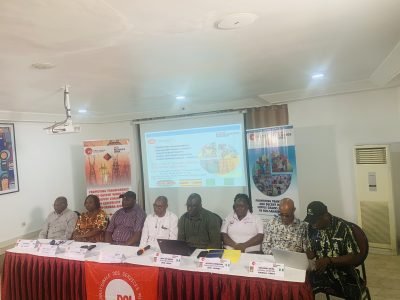
The union members made this known in a communique issued at the end of a two day’s engagements under the PSI–DGB BW project titled; “Promoting Transparency and Decent Work in Supply Chains in Electricity, Water and Waste Services in Sub-Saharan Africa – Phase II.”
The gathering which was the PSI-DGB BW Value Chains 2025 Regional Meeting, served as a critical platform for stakeholders to share national experiences, analyse the impact of privatisation on public services, and formulate collective strategies to promote decent work and reclaim public control over essential services.
The communiqué indicated that the widespread adoption of Public-Private Partnerships (PPPs) and privatisation models in the electricity, water, and waste sectors continues to undermine access to quality, affordable, and accountable public services across the continent.
The communique Rejected all IFI-driven initiatives that promote the commodification of essential public services, including through PPPs, corporatisation, concessions, and other profit-driven models that undermine universal access and human rights.
“Adopt and scale up Public-Public Partnerships (PUPs) as a viable, democratic, and socially just alternative. PUPs have shown proven success in delivering quality public services without profit motives.
“Reinvest in human capital within the public sector. Governments must allocate sufficient resources for the training, motivation, and retention of public sector workers to promote efficiency, innovation, and transparency.
“Ratify and fully implement key International Labour Organization (ILO) Conventions, particularly:
o C.87 (Freedom of Association)
o C.98 (Right to Organise and Collective Bargaining)
o C.151 (Labour Relations in the Public Service)
o C.154 (Collective Bargaining in the Public Sector)
These conventions are essential for upholding decent work standards and ensuring that workers have a voice in shaping service delivery reforms.
“Strengthen social dialogue by restoring and respecting tripartite governance frameworks that enable meaningful engagement between governments, employers, and workers’ organisations in shaping public service policy.”
The communique further
allied on all African governments, particularly those of Nigeria, Kenya, and Uganda, to:
“Put people before profit by halting the privatisation of essential services and reaffirming the public sector as the cornerstone of democratic development, equity, and sustainable livelihoods.
“Public services are not commodities—they are a right, a duty, and a public good. The fight to protect them is a fight for Africa’s future.”
The communique was signed ed by the following organizations in Nigeria, Kenya, and Uganda:
Nigeria
1. Amalgamated Union of Public Corporations, Civil Service Technical and Recreational Services Employees (AUPCTRE)
2. National Union of Electricity Employees (NUEE)
3. Citizens Free Service Forum (CFSF)
4. Renevlyn Development Initiative (RDI)
5. Child Health Organisation
Kenya
1. Union of Kenya Civil Servants (UKCS)
2. County Government Workers Union – Kenya (COGWU-K)
3. Kenya Electrical Trade and Allied Workers Union (KETAWU)
4. Kenya Commercial Food and Allied Workers Union (KUCFAW)
Uganda
1. Uganda Electrical Allied Workers Union (UEAWU)
2. Uganda Local Government Workers Union (ULGWU)
3. Uganda Public Employees Union (UPEU)
Never miss a moment! Get the stories shaping Nigeria, delivered straight to your phone. Follow Peoplesdaily Newspaper on WhatsApp for breaking news, exclusive reports, and the headlines everyone will be talking about, before anyone else.


