

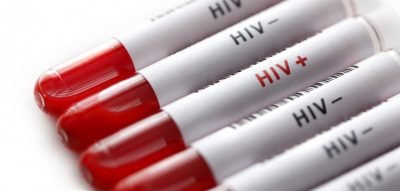
 Many secondary school students in Sokoto State do not know much about HIV and AIDS due to cultural and religious restriction to sex education in schools in the state.
Some of the students, who spoke with the News Agency of Nigeria (NAN) in separate interviews in Sokoto on Sunday, expressed little knowledge about the virus, mode of transmission, prevention and care.
One of them, Abdullrasheed Umar, a Senior Secondary I (SS1) student at Sultan Bello Secondary School, Sokoto, said: “I have heard of HIV, but I have no idea what it really is.
“All I know is that it is a terrible disease and nothing more.”
When asked if there is HIV club or any form of sex education in his school, his response was negative.
“Sex education is not allowed in schools. No one talks to us about that,” he said.
Bello Mohammed, another student at the school, said he was ignorant of the disease and its implication in the human body.
Similarly, Hussaini Abubakar and Abdul Mukaila, students of Community Demonstration Secondary School, told NAN that they had no idea what HIV was, or what it does to infected persons.
Also, Abdullahi Nura, a Junior Secondary School II (JSS II) at Sheikh Abubakar Gumi Memorial College, Sokoto said he only heard of the name HIV, but nothing more.
But Yunusa Mohammed, another JSS II student at the college, said he had some “useful” knowledge about HIV.
Mohammed said: “I heard that the disease is dangerous and one that can be infected through the use of sharp objects or blades used by an infected person. That is all I know,” he said.
Alhaji Umar Alkammawa, Executive Secretary, Sokoto State Agency for the Control of AIDS, Tuberculosis and Leprosy (SOSACAT), confirmed that culture and religion had made it “nearly impossible” to sensitise students on HIV.
“We have not been fair to ourselves by rejecting sex education in schools.
“But there is no way you will bring HIV education in schools without talking about sex and sex education is a no-go area in Sokoto State,” Alkammawa said.
Mohammed Garba, Deputy State Coordinator, Civil Society for HIV/AIDS in Nigeria (CiSHAN), also said that the connection between HIV and sex had made it difficult to carry out HIV sensitisation in secondary schools.
Garba explained that corps members, under the Peer Educator Trainers (PET) programme, used to create awareness on HIV/AIDS among young people in secondary schools.
“The corps members conduct HIV sensitisation campaigns and most importantly train secondary school students as change agents among their peers, immediate families and communities.
“But about 10 years ago, the programme was stopped by the state’s ministry of education on the ground that the corps members were teaching students sex.
“But in the past three years, CiSHAN has been training youth corps members on HIV and reproductive health, after which they go to Churches, Mosques and other public places to sensitise people,” he said.
Never miss a moment! Get the stories shaping Nigeria, delivered straight to your phone. Follow Peoplesdaily Newspaper on WhatsApp for breaking news, exclusive reports, and the headlines everyone will be talking about, before anyone else.


