

By Stanley Onyekwere
In the wake of inadequacies and other setbacks in management of emergencies, the Federal Capital Territory Administration (FCTA) with the support of the World Health Organisation (WHO), will within a two-year timeline develop a robust roadmap of response activities in health emergencies, thereby ensuring timely respite for residents especially affected persons in the Territory.
In particular, the FCTA working together with WHO will develop the roadmap that would bring up responsible officers and establish a monitoring and evaluation framework for emergency response activities to be implemented within the timeframe of two years.
Making this disclosure yesterday, Dr. Kumshida Balami, the Coordinator for the Africa Volunteer for Sustaining Strengthening and Utilising Response Groups for Emergencies (SURGE) in Nigeria, said WHO is giving its technical support and contributions in the areas of supporting the FCT with a digital learning platform for health emergency coordination.
Balami, who is of WHO Nigeria Country Office, who spoke during a disease surveillance refresher training organised as part of the scoping mission programme, in Abuja, added that WHO will train minimum 80 responders in the FCT, who are ready and prepared to respond to health emergencies within 24-48 hours when they occur.
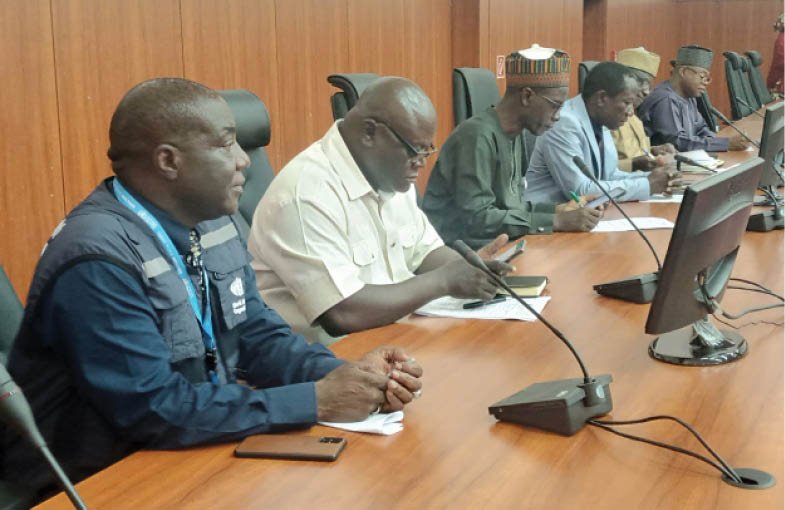
She said, in the course of the week, they are bassically conducting a scoping mission in the FCT, to be able to assess the status of the FCT capacity in response to health emergencies.
She noted that some of the challenges identified are limited human resource in emergency response, which is what most people have observed, adding that there is lack of agility in respond teams, as a lot of responders are fatigue or they are not really motivated to their level of expectation.
“We will be engaging stakeholders in health emergencies response in FCT, to be able to understand what is the capacity of FCT to respond in the event of an emergency. We will together identify the gaps for emergency response, develop the roadmap to be able to implement activities that will close the identified critical gaps.
“During emergency response, we have observed limited or short supply in terms of consumables needed to be able to attend to the high risk groups or those affected. Together with the FCTA, we would develop a roadmap to be able to implement these activity.
“Findings from this workshop, will help us together with the government to develop a roadmap of activities with timeline and responsible officers as well as develop a monitoring and evaluation framework for those activities to be implemented within the timeframe of two years”, she stressed.
Similarly, Director, Port Health Services, Federal Ministry of Health, Dr. Nse Akpan, said the programme of scoping mission is to ensure that we have a robust team that tacles all public health emergencies.
Akpan, who represented the National SURGE Coordinator and Focal Point, Dr. Morenike Alex-Okoh, said : “Our aim is to use the workshop to strengthen the capacity and build robust workforce that would immediately respond to outbreak of any disease in the country.
“In as much as we some infectious diseases and flooding, so we really need to strengthen the capacity of our workforce, that can respond to any public health threat at any point in time.”
Also speaking, the Acting Secretary, FCT Health And Human Services Secretariat, Mr. Malan Noel Haruna, noted that the essence of the scoping programme is to expand the ability of the FCTA to respond to emergences, as over the years, there have been inadequacies especially during the Covid-19 pandemic, which stakeholders are learning from that, so that they will be able to respond in a more coordinated manner to emergencies of healthcare nature.
Haruna explained that the FCT Public Health Department through the Federal Ministry of Health, in partnership with World Health Organisation (WHO) and other partners are implementing the Scoping programme in FCT and the country at large.
He reiterated that the FCTA management headed by the Permanet Secretary, Olusade Adesola, has been very supportive of the cause of the healthcare delivery in the FCT.
He adds:” Today’s engagement will afford us the opportunity to take a holistic view of our activities and challenges during outbreaks and humanitarian crisis to help map out way forward together.
“The scoping mission could not have come at a better time than this, especially this few weeks that we have been responding to diphtheria outbreak in the Federal Capital Territory.
“At present, there is an improved collaboration with external stakeholders, development partners and non-governmental organizations to scale up service delivery and improve health outcomes even during emergencies.
“Preparedness and Response Public health emergency preparedness and response ensures that plans and actions aimed at preventing possible emergencies are put in place while adequate response and recovery if an emergency occurs is also activated. There is a system for containment of public health emergencies.
“To fulfill the HHSS core mandate of meeting the health needs of the FCT residents, adequate funds, a robust human resource for health as well as an enabling law and policy that will guide its operations is imperative.
“Multi-sector collaboration through active and committed involvement of all key health sector stakeholders has the potential to support more integrated service delivery and response to emergencies.”
The FCT operates a 3-tier health system, consequently, there are three levels of health care delivery services: primary, secondary and tertiary. There are a total of thousand, two hundred and forty-nine (1,249) accredited health facilities made up of eight hundred and fourteen (814) primary health facilities, four hundred and thirty two (432) secondary health facilities and 3 tertiary facilities.
Also, a breakdown of ownership of these facilities shows that 580 and 234 primary health facilities are private and public respectively. For the secondary facilities, 409 are private facilities while 23 are public facilities. The 3 tertiary facilities which are public facilities are National Hospital, Federal Medical Centre and the University of Abuja Teaching Hospital.
Never miss a moment! Get the stories shaping Nigeria, delivered straight to your phone. Follow Peoplesdaily Newspaper on WhatsApp for breaking news, exclusive reports, and the headlines everyone will be talking about, before anyone else.


