
By Gambo Ahmed Lafia
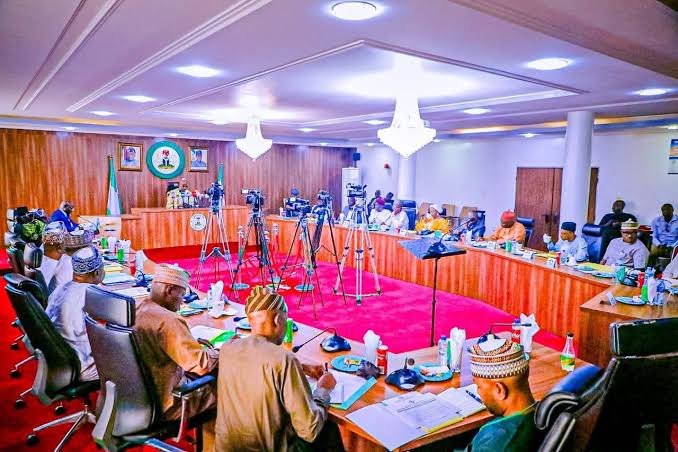
The Committee on Local Government and Chieftaincy Affairs of the Nasarawa State House of Assembly has held an expanded interactive session with Administrators of Area Administrative Councils to address security, governance, political developments and accountability at the grassroots.
The meeting, held at the Assembly Complex in Lafia, focused on the prevailing security situation in local communities, the recently concluded party primary elections in the state, and measures to strengthen good governance across the Area Administrative Councils.
Speaking with journalists after the meeting, Chairman of the House Committee, Hon. Musa Abubakar Ibrahim, said the engagement was aimed at fostering a better working relationship between the administrators, the Assembly and members of the Area Administrative Councils following a petition submitted against some administrators.
According to him, the meeting addressed three major issues, beginning with the petition alleging maladministration by some Area Administrative Council administrators.
He said the committee cautioned the administrators to work in harmony with council members and ensure inclusiveness in decision-making, as stipulated by the law establishing the councils.
“The first phase of the meeting was on the petition written by members of the Area Administrative Councils against their administrators. We advised them to maintain effective synergy and carry all council members along in the discharge of their responsibilities,” he said.
Hon. Ibrahim explained that the second phase centred on political issues arising from the recently concluded primary elections, expressing concern over the conduct of some government appointees during the exercise.
He warned that political appointees must remain loyal to government directives and the principles of the All Progressives Congress (APC), stressing that any official found acting contrary to party directives should face appropriate sanctions.
“This is an APC government, and all appointees must abide by government and party directives. Anyone acting contrary to these directives should be sanctioned in line with party regulations,” he stated.
The committee chairman added that the interface, which also involved Directors of Finance and Cashiers of the Area Administrative Councils, was designed to strengthen accountability and improve governance at the grassroots.
He disclosed that the petition before the committee, titled “Complaint Against Maladministration in the Area Administrative Councils of Nasarawa State and Alleged Actions Capable of Undermining APC Structure and Council Activities at the Grassroots by the Administrators,” raised concerns over financial management, project execution and alleged exclusion of council members from decision-making.
Hon. Ibrahim said the committee directed all administrators to submit within three days detailed records of projects executed, project locations, internally generated revenue, and information on deceased staff, including the status of their salaries.
He noted that the committee would investigate allegations relating to the utilisation of renovation funds, project implementation and other financial transactions to ensure accountability.
He reaffirmed the Assembly’s commitment to its oversight responsibilities and commended Governor Abdullahi Sule for ongoing infrastructural projects across the state.
The committee chairman also urged the administrators to align with the policies of the state government, maintain transparency in financial management and ensure compliance with the law establishing the Area Administrative Councils.
Also speaking, committee member Hon. Muhammad Adamu Omadefu called for a thorough investigation into allegations of financial misconduct, including claims that salaries of deceased staff were still being diverted.
Other committee members, Hon. Ajegena Kudu and Hon. Musa Saidu Gude, also stressed the need for transparency, accountability and proper implementation of projects to ensure that development reaches rural communities.
Omadefu noted that the Area Administrative Councils were established to bring governance and development closer to the people, urging administrators to uphold accountability and transparency in the discharge of their duties.