
GUEST COLUMNIST By S H Abdullah
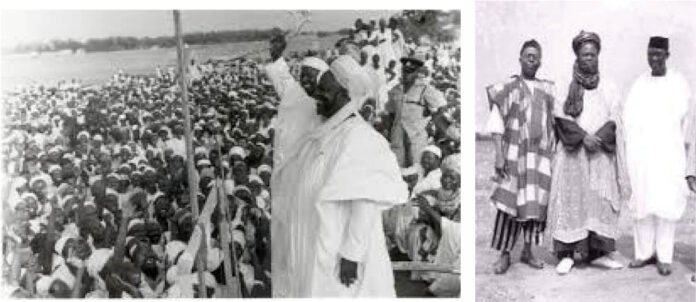
By Thursday (yesterday), 15 January 2026, it was exactly sixty years, by the Gregorian calendar, since Nigeria awoke to a calculated act of political violence that altered the course of its history. On that grim morning in 1966, Sir Ahmadu Bello, the Sardauna of Sokoto and Premier of the Northern Region, along with other leading lights of Northern Nigeria, was assassinated in the so-called January 15 coup led by Major Chukwuma Kaduna Nzeogwu and his collaborators.
Six decades later, no amount of revisionism has succeeded in cleansing that act of its original sin. It was not heroic. It was not corrective. It was not patriotic. It was a grave crime against the Nigerian state and its fragile democracy.
The Sardauna: A Statesman Cut Down
Sir Ahmadu Bello stood among the rare breed of leaders who governed with moral restraint, cultural rootedness, and long-term vision. As Premier of the Northern Region, he presided over the most geographically vast and culturally diverse part of Nigeria with a sense of duty that transcended personal ambition.
His commitment to education, symbolised by the founding of Ahmadu Bello University, Zaria, was revolutionary in both intent and impact. His investments in agriculture, local administration, public service training, and regional planning laid foundations that still sustain millions. Above all, he believed in leadership as trust (amānah)—to be exercised with humility and accountability before God and society.
Though he wielded immense influence nationally, the Sardauna deliberately declined the race for federal power, preferring to consolidate development at home while supporting a balanced federation. Such restraint is rare in any era—and almost unimaginable today.
The Other Fallen Pillars.
The assassinations did not end with the Sardauna. Other senior Northern leaders—men of experience, institutional memory, and stabilising influence—were also eliminated. Their deaths left a vacuum that was neither accidental nor benign. It destabilised the federation, ruptured trust among regions, and introduced violence as a political instrument. This selective decapitation of leadership was not reform; it was recklessness masquerading as idealism.
A Coup Without Moral Defence.
For sixty years, apologists have attempted to cloak the January 1966 coup in the language of anti-corruption, nationalism, or youthful idealism. These arguments collapse under the weight of facts. No reform agenda justifies the unlawful killing of elected leaders and traditional authorities. None.
The coup destroyed constitutional order, enthroned military intervention in politics, and inaugurated a tragic era of coups, counter-coups, and civil war. Nigeria has paid—and continues to pay—a heavy price for that moment of lawlessness.
Those who planned and executed this act must be condemned unequivocally and without euphemism. History does not absolve assassins simply because time has passed or because later events complicated the narrative. Murder does not mature into virtue.
A Nation Wounded Early.
I was about ten years old when this tragedy occurred. The following year, I was enrolled at Sumaila Junior Primary School. Like countless children of my generation, I grew up in a Nigeria already wounded—politically unsettled, socially suspicious, and increasingly militarised.
As maturity brought understanding, it became evident that the Nigeria of broken trust and arrested national cohesion did not arise by chance. Its roots trace directly to January 1966, when violence replaced dialogue and the gun displaced the ballot.
The Enduring Lessons.
Sixty years on, remembrance must not be reduced to ceremonial grief. It must confront uncomfortable truths. That political violence poisons nations long after the blood dries. That selective justice destroys unity faster than open conflict. That the military is no substitute for legitimate governance. Most importantly, we must teach future generations that nation-building is a patient moral enterprise, not a shortcut achieved through force.
Conclusion.
Sir Ahmadu Bello remains a benchmark of principled leadership—measured, rooted, and service-oriented. His assassination deprived Nigeria not only of a leader, but of a moral compass at a critical moment in its infancy. As we mark sixty years since that dark January, let us speak plainly: what happened was wrong, destructive, and unjustifiable. A nation that refuses to name its wounds cannot heal them.
May Allah (SWT) forgive the shortcomings of the fallen, grant them Al-Jannatul Firdaus, and guide Nigeria away from the errors that have cost it so dearly.