For many rural health workers in Taraba State, handling HIV-related cases once came with uncertainty, especially in communities where most women still deliver outside health facilities.
But for Hauwa Yakubu, a community health extension worker in Lau Local Government Area, that reality is beginning to shift.
“I used to feel helpless when pregnant women came late or didn’t come at all,” she said. “Now, I feel more confident because I know how to test, counsel, and help prevent HIV transmission to babies.”
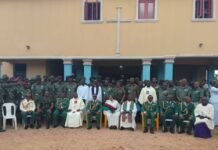
Hauwa is one of 122 frontline health workers trained by the Society for Family Health (SFH), in partnership with the Taraba State Primary Health Care Development Agency (TSPHCDA), to improve HIV service delivery at primary health care level.
The training, held under the Paediatric Breakthrough Partnership (PBP) project, brought together health workers from 37 PHC facilities across all 16 local government areas of the state.
It focused on strengthening skills in Prevention of Mother-to-Child Transmission (PMTCT), Early Infant Diagnosis (EID), and paediatric HIV case identification.
For many participants, the training was not just technical it was practical and urgently needed.
“We now understand how to integrate HIV services into antenatal care, immunisation and other routine services,” said a participant from Gashaka. “It will make a real difference in how we handle patients.”
The intervention comes as Taraba continues to face low facility-based delivery rates. According to the 2024 National Demographic and Health Survey (NDHS), only 33 per cent of women in the state deliver in health facilities, while 67 per cent still give birth at home limiting access to essential HIV and maternal health services.
Project Director of SFH, Dr Aisha Dadi, said the initiative is designed to close that gap by bringing HIV services closer to communities through primary health care centres.
“Every antenatal visit, every immunisation session is an opportunity to reach mothers and children who might otherwise be missed,” she said.
She noted that facilities were selected from high-burden areas such as Zing, Lau, Ardo-Kola, Gashaka and Ussa, where maternal and child health challenges remain significant.
Dadi added that trained health workers are expected to cascade their knowledge within their facilities to expand impact beyond the initial participants.
“This ensures that the skills are not limited to 122 people, but are spread across the entire system,” she said.
Health authorities say the approach is part of a broader shift from donor-supported programmes to a government-led and sustainable HIV response system.
For workers like Hauwa, however, the impact is already personal.
“If we all apply what we’ve learned, fewer children will be born with HIV,” she said quietly.