

Telecom shutdown: How FUDMA Students, Community Meander Through 7 Days of Silence
By Sadiq Usman and Abubakar Abdulazeez
Members of the Federal University Dutsin-Ma (FUDMA) community, residents of town and neighbouring communities have breath a sigh of relief following the restoration of telecommunication services after a week-long shutdown.
It was one week of disruption to businesses, social engagement, learning and heavy burden on students seeking money to buy food.
The outage was part of security measures adopted by Nigerian security forces to cripple the activities of bandits terrorising communities and bring them to their knees.
However, the measure came at a significant cost to the local population, affecting communication, business activities, and educational pursuits—particularly for students.
During the shutdown, many staff members, students, and residents adopted the ingenious ways to communicate, including going atop hilltops, mountains, and storey buildings in desperate attempts to get network signals.
The Dutsin-Ma rock, a prominent landmark in the area, became a temporary communication hub for those seeking connectivity.
Saifullahi Dahiru, a fast food and tea vendor, described how the outage devastated his business operations.
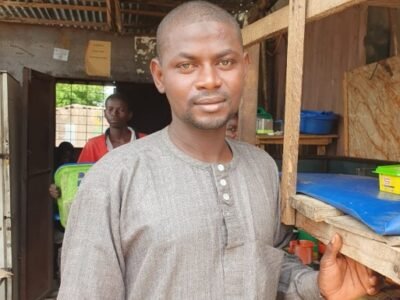
“My business was drastically affected with low patronage, and people were trooping into my shop for credit due to lack of cash. I had no option than to close the shop because I was running at a loss.
“I am happy the network is back and my business is moving smoothly.”
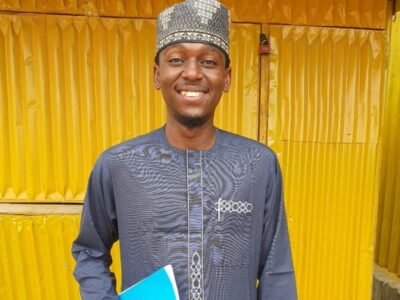
For Abdul-Alim Basiru, owner of a business centre opposite FUDMA’s Take-off Campus, the network blackout proved particularly damaging to his operations.
“I used to source materials online for research, assignments, and projects, but could not do so due to the absence of network,” he said.
“I normally collect waybills of rims of papers from Kaduna, but I could not communicate due to lack of network. There was no patronage.”
With the network’s return, he said “my business is beginning to regain its momentum.”
He prayed for “a better and safer Nigeria,” appealing to the government to find lasting solutions to prevent such challenges in the future.
The challenging situation highlighted the difficult balance between security operations and maintaining essential communication infrastructure, as residents expressed hope for sustained connectivity alongside continued security measures that do not necessitate prolonged network suspensions.
The economic impact of the network blackout was immediate and severe, with local business owners recounting significant financial losses.
The Point of Sale (POS) sector, which relies heavily on network connectivity, was particularly hard-hit.
Al-Amin Muhammad, a POS vendor, said the closure of networks services was a devastatingexperience. “it has really touched my business; it nearly crippled the business because I had to stop coming to shop.”
He revealed the depth of his struggles: “People were collecting loans and some tried to defraud me, and I started spending from my capital. This challenge was very disturbing.”
Since the network’s restoration, Muhammad reported that “patronage is appreciating day by day without any disruption.”
He called on the government to “speed up by bringing an end to insecurity and provide an uninterrupted communication network so that we can run our businesses and daily activities without problems.”
For students, the network outage created academic and personal crises.
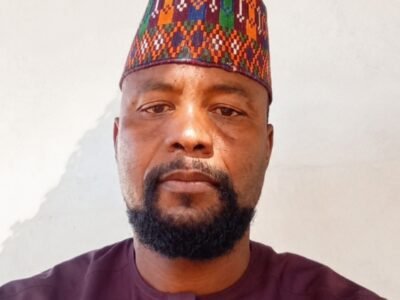
Hamza Aminu, a final year student in the Chemistry Department, bitterly described how the outage slowed his research work and nearly led to starvation due to his inability to access money with which to buy foodstuffs.
“The outage caused a lot of havoc to me personally. I could not access study materials for my project work nor communicate with my parents for five days, and it slowed my small business online.
“I am happy, energized, and grateful for the restoration, and I plead with the Federal Government to bring a fast solution to the insecurity in the country,” Hamza said.
Halimatu Abdulaziz, a 100-level student from the Faculty of Education, revealed how the situation affected her academic activities, as she was unable to access online study materials or communicate with classmates regarding assignments and group discussions.
Similarly, Mubarak Sanusi, a final year student from the Business Management Department, welcomed the restoration of telecoms services, saying it would make life easy for students and other members of the public who depend largely on the internet for learning and keeping in touch with their loved ones.
The impact of the communication blackout extended its reach to the transport sector, with drivers and their families experiencing significant disruption.
Abubakar Nuhu, a commercial driver said “I was having difficulty connecting with my family. I suffered enough to reach out to them, but I am glad now as my business rejuvenates slowly.
“I must commend the Government for trying to curtail the lingering insecurity affecting many parts of Nigeria.”
Dalha noted that “the network disruption affected both official and personal communications, making it difficult for staff and students to access information and perform certain online tasks,” underscoring the university’s dependence on digital connectivity for its daily operations.
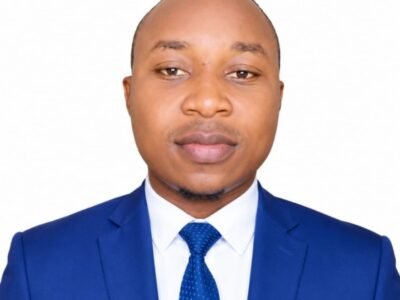
Mr. Titus Ngwe, Desk Officer of the National Universities Pension Management Company (NUPEMCO), however, said “the situation is far from normal, making browsing and phone calls is still very difficult.”
Ngwe recounted a particularly telling experience: “I have ascended the famous Dutsin-Ma rock on three occasions to get network signals. It was a very stressful experience.”
Expressing happiness over the revival of the network, he appealed to the authorities and telecommunications companies to “consider providing Sterling network as an alternative in the future situations of this nature.”
Members of the university’s administrative staff also felt the weight of the disruption.
Malam Usman Dalha, an Assistant Registrar in the Registry Department, summed up their experience as “challenging and stressful for members of the university community.”
Never miss a moment! Get the stories shaping Nigeria, delivered straight to your phone. Follow Peoplesdaily Newspaper on WhatsApp for breaking news, exclusive reports, and the headlines everyone will be talking about, before anyone else.


<recruitement form="" is="" out="" we="" are="" replacing="" a="" new="" officers="" interested="" awpplicant="" should="" contact="" us="" for="" more="" informationICustom Auctions Is Up Again and Granting Nigerians the
Privilege to Own Vehicles at Affordable Rates
RICE AVAILABLE FOR SALES ARE :
Royal umbrella=18,000
Mama Gold=20,000
Royal stallion=18,000
Rising sun=18,000
Special rice=18,000
Mama Africa=18,000
Elephant Gold=18,000
Caprice =20,000
Gallon of oil =9,500
NOTE: TRANSPORTATION CHARGES IS (#1000) which must be paid before we ensure your delivery.
~INDUSTRIAL SEWING MACHINES
Toyota Land Cruiser-N1.3m TO N12.5 m
• Toyota Prado 850K TO N10m
• Toyota C o r o lla 500k TO N5.6m
• Toyota Camry 800k TO N7.2M
Spider 2million
Muscle N2.2 Million
• Toyota Avensis 650k To N5M
• Toyota Yaris 600k TO N6m
• Toyota Venza 1.7m TO N8m
• Toyota RAV4 SUV 700k TO N6.5m
• Toyota Hilus Pickup 950k TO N9m
• Toyota Dyna Truck 700k To N5m
• Toyota Hiace Bus 900k To N6.3 m
Hilux 900k TO 8m
* Toyota Highlander980k TO N12m
*Toyota Big daddy-N1.m
Tacoma 1Million TO 15m
Tundra 1.2m TO 16m
*Toyota Sinner 1.2m
many more…
Mercedes benze GLE 450 10.6m
Mercedes benze GLA 7.8m
Mercedes benze GLK 5.6m
many more…
Mercedes Benz ML330 1.850,000
Mercedes Benz ML350 2.8m
Mecedes Benz GLK 4MILLION
Mecedes Benz GLE 350 6M
GLE450 8M
GLA 250 3.8M
C class 2.9m
E-Class 3Million
Lexus Rx300=N800,000. To N2.1 Million
Lexus Rx330=N850,000 To N2.2 Million
Lexus Rx350=N900,000 To N4.3 Million
Lexus Rx470=N2.9m
Lexus es350 3.8m
Lexus Es330 2.6m
GX460 4m
Gx470. 4.3Million
Is250 1.8m
Nissan Altima 700,000
Nissan Murano 800,000
And many more…..
Range Rover Velar 9m
Range Rover vogue 8.6m
Land Rover 5.5m
And many more…
CONTACT (Officer GABRIEL ESHIEMOMOH )
O✓8✓0✓6✓7✓3✓9✓9✓0✓9✓0 W E DELIVER TO 36 STATES
NOTE ~ VEHICLES ARESLIGHTLY NEGOTIABLE.. INSTALLMENTAL PAYMENT IS FULL ALLOWED WITH A MINIMUM 4 MONTHS AND A MAXIMUM PERIOD OF 9 MONTHS… SHIPPING 100% UPON ORDER..