

In 1960s and 70s Britain, hundreds of black children were labelled as “educationally subnormal”, and wrongly sent to schools for pupils who were deemed to have low intelligence. For the first time, some former pupils have spoken about their experiences for a new BBC documentary.
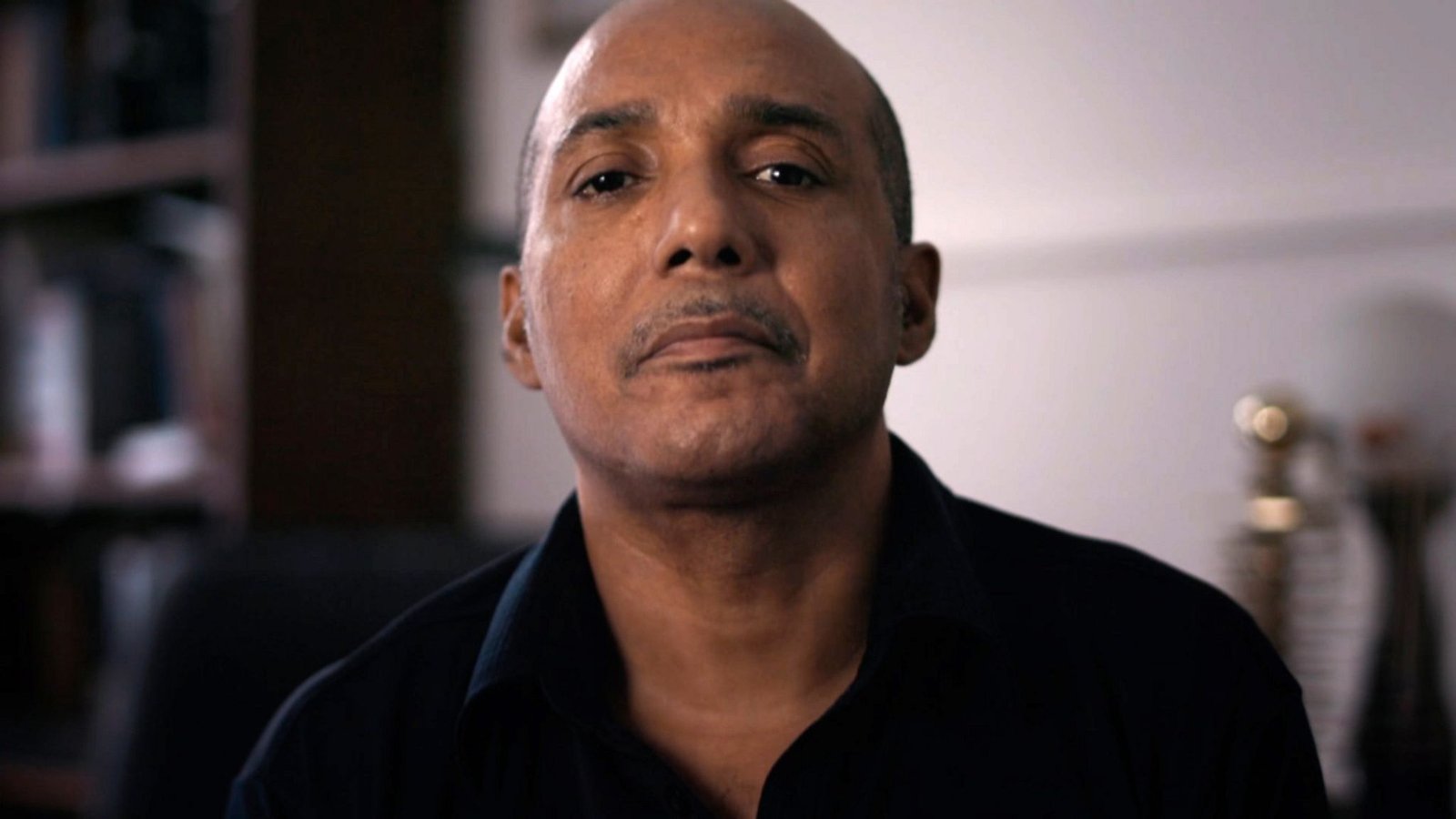
In the 1970s, at the age of six, Noel Gordon was sent to what was known at the time as an “educationally subnormal” (ESN) boarding school, 15 miles (24km) from his home.
“That school was hell,” says Noel. “I spent 10 years there, and when I left at 16, I couldn’t even get a job because I couldn’t spell or fill out a job application.”
About a year before joining the ESN school, Noel went into hospital to have a tooth removed. He was given an anaesthetic, but it transpired that Noel had undiagnosed sickle cell anaemia, and the anaesthetic triggered a serious reaction.
Noel says the resulting health issues led to him being perceived as having learning disabilities and being recommended for a “special school”. Yet no evidence or explanation of his disability was ever given to him or his parents.
“Someone came and said they’d found “a special boarding school with a matron where they’d take care of my medical needs”, says Noel.
During that conversation they also said Noel was “a dunce. Stupid.”
But Noel’s parents were not made aware that his new school was for the so-called educationally subnormal. They had moved to England from Jamaica in the early ‘60s and had high expectations for their son’s education.
During his first night at the boarding school, six-year-old Noel lay alone in bed, crying for his mum. The school felt cold and institutional.
“I can still smell the old wooden flip desks. Oh, and being racially abused on my first day,” he says.
A student hurled racial slurs at him in the classroom but wasn’t reprimanded – the teacher simply told him to sit down.
The school didn’t teach a curriculum. Although Noel was given a book to write in by a teacher, he was never taught basic grammar or how to spell. He did some basic addition and subtraction but during classes, he mainly did crafts and played games.

His parents only realised what kind of school it was when Noel, then seven, was punched by a 15-year-old boy, and his father visited for the first time.
Noel recalls his father saying to the headmaster, “This is a school for handicapped children” – using an outdated term. He says the headmaster replied, “Yeah, but we don’t like to use that word, we call them slow learners.”
The realisation was devastating, but Noel’s father felt powerless to change things.
Noel wasn’t given the chance to take exams and get qualifications. On reflection, he says being labelled educationally subnormal made him feel inferior for the rest of his life, and gave him a lot of psychological problems.
“Leaving school without any qualifications is one thing, but leaving school thinking you’re stupid is a different ball game altogether. It knocks your confidence,” he says.
A new BBC documentary tells the story of how black parents, teachers and activists banded together to force the education system to change.
The term “educationally subnormal” derived from the 1944 Education Act and was used to define those thought to have limited intellectual ability.
“That label made children feel inferior,” says education campaigner Prof Gus John, who came to the UK from Grenada in 1964 as a student, and soon became aware of the issue.
“Students from ESN schools wouldn’t go on to college or university. If they were lucky, they’d become a labourer. The term was paralysing and killed any sense of self-confidence and ambition.”
Primary and secondary ESN schools categorised children as having moderate learning disabilities, severe learning disabilities or being “un-teachable”.
These categories were broad and when students were recommended for ESN schools, robust reasons weren’t always given by teachers and psychologists.
While some ESN schools did have good examples of teaching, for many pupils, their needs were overlooked.
Black students were sent to these schools in significantly higher proportions. The documentary makers have seen a 1967 report from the now-defunct Inner London Education Authority (ILEA), which showed that the proportion of black immigrant children in ESN schools (28%) was double that of those in mainstream schools (15%).
“The percentage of black children in ESN schools relative to black students in normal schools was scandalous,” says Gus John.
But why were so many black children defined as subnormal?
Figures from the 1960s and 70s show that on average, the academic performance of black children was lower than their white counterparts. This fuelled a widespread belief that black children were intellectually inferior to white people.
A leaked local authority report in 1969, written by a head teacher called Alfred Doulton, argued that West Indian children in general had lower IQs. This claim was based on the results of IQ tests that were commonly taken by primary school children at the time.
One of the key proponents of such theories was Hans Eysenck, a former professor at the Institute of Psychiatry at Kings College London. He believed intelligence was genetically determined and cited a US study that seemed to show that the IQ of black children fell, on average, 12 points below white children.
As Gus John says in the documentary: “When people like Eysenck wrote about race and intelligence, what they were actually doing was justifying all those tropes that had been floating around throughout the period of enslavement, where people believed that not only were black people sub-human… but they can’t be expected to perform or to be as intelligent as white people.”
Many teachers saw black children as intellectually inferior, and feared that too many black pupils in a class would depress the attainment of white pupils.
Following a protest by white parents in Southall, in June 1965 the government issued guidance which underlined the social, language and possible medical needs of immigrant children, and suggested maintaining a limit of about 30% of immigrants in any one school.
As a consequence, many local authorities adopted the policy of bussing – sending immigrant children to schools outside their local area in an attempt to limit the number of ethnic minorities in schools. The practice finally ended in 1980.
“The education system fuelled and legitimised the idea that black Caribbean children were less intelligent than other children. This was why so many of them ended up at ESN schools. It was rampant racism,” says Gus John.
Many wrongly equated race with intellectual ability. But as the late educational psychologist Mollie Hunte argued, the generally poor attainment of black students wasn’t because of their intellectual ability. Instead, the tests used to assess pupils at the time were culturally biased.
As Gus John explains, the tests used references and vocabulary that newly-arrived Caribbean children were unfamiliar with.
“A key element was language,” says Gus John. “If you grew up in a Jamaican household, you’d use Jamaican English – patois or creole. The problem most Caribbean students had was that because it was a derivative of standard English, nobody believed that black students needed language support.”
As a result, they were not given the extra help other immigrant children, who spoke no English before they arrived, received.
According to Gus John, teachers didn’t try to understand the cultural barriers black children faced, and the assessments didn’t consider their domestic and socioeconomic circumstances – or the impact of migration. Many children would travel to the UK only once their parents had settled in. They arrived in an unfamiliar country to live with virtual strangers, who they had not seen for years.
“This displacement and movement caused a lot of trauma,” says Gus John. “There was grief and bereavement. Those children would often not see their grandparents again.”
According to the education campaigner, there was a culture of low expectations among teachers. Learning difficulties were mistaken as learning disabilities and black children were simply “written off” and sent to ESN schools.
That is what happened to Maisie Barrett from Leeds, who was sent to an ESN school at the age of seven in the 1960s.
“I initially went to a mainstream school. There, a teacher told my mother that I was ‘backwards’ and couldn’t learn. We were told that I’d be better off at a special school.”
Maisie says that the decision to send her to an ESN school was a mistake that ruined her life chances. Like Noel, she wasn’t taught a curriculum.
“We played games, had discos… I call it a ‘free school’ because the education was so basic and we played a lot more than we worked,” she says.
It was only in her 30s, decades after being sent to the ESN school, that Maisie was diagnosed with dyslexia.
“Rather than help me with my learning difficulties, I was simply dismissed as stupid. Teachers never took the time to find out why I struggled with learning. That messed up my confidence,” she says.
“I was slow, but a teacher should have taken the time to help me learn.”
According to Maisie, the lack of learning and support was only part of the problem.
“I went to a school that was a racist institution,” she says.
Source: BBC