

• Early Origins: Settlement began around Dala Hill in the 7th century BC with iron-working blacksmiths led by Kano. King Bagauda founded the Bagauda Dynasty in 998 AD.
• Rise of Islam & Commerce: Islam arrived under Ali Yaji in the 14th century. In the 15th century, King Muhammadu Rumfa expanded the kingdom, established the famous Kurmi Market as a trans-Saharan trade hub, built the historic Emir’s Palace, and codified Islamic governance.
• Regional Shifts: The Kingdom fluctuated as a tributary or rival to the Bornu Empire, Songhai Empire, and Katsina over the next two centuries.
The Fulani Jihad and Creation (1805)
• The Jihad: Internal dynastic struggles and dissatisfaction with the Hausa aristocracy led to the Fulani jihad launched by Usman dan Fodio.
• First Emir: In 1805, Shehu Suleiman Dan Oma (Suleiman) overthrew the last Hausa ruler (Muhammad Alwali II) and became the first Emir of Kano, swearing allegiance as a vassal of the Sokoto Caliphate.
• The Dabo Dynasty: Ibrahim Dabo established the Dabo ruling dynasty in 1819, a lineage that continues to produce the emirs of Kano today.
British Conquest and Indirect Rule (1903)
• Fall of Kano: In February 1903, British forces under Colonel Thomas Morland captured Kano city after breaching its gates. Emir Aliyu Babba was captured and exiled.
• Colonial Integration: The British appointed Muhammad Abbas as a new emir and integrated the emirate into the Northern Nigeria Protectorate. Through indirect rule, the British preserved the administrative structure of the emirate while curtailing independent military and political power.
• Economic Shifts: The arrival of the railway in 1912 shifted trade routes south to the Atlantic coast, transforming Kano into a major centre for groundnut and cotton production.
Post-Colonial and Modern Era
• Ado Bayero’s Reign (1963–2014): Alhaji Ado Bayero ruled for over 50 years, anchoring the cultural and religious life of millions of Hausa Muslims and championing traditional festivals like the Durbar.
• Recent Political Tensions & Reinstatements:
o The emirate has faced political restructuring by state governors.
o Following cycles of deposals, splits into multiple emirates in 2019, and subsequent legislative reversals, Muhammadu Sanusi II was reinstated as the 16th Emir of Kano in May 2024 following the repeal of the multi-emirate law by the Kano State Government.
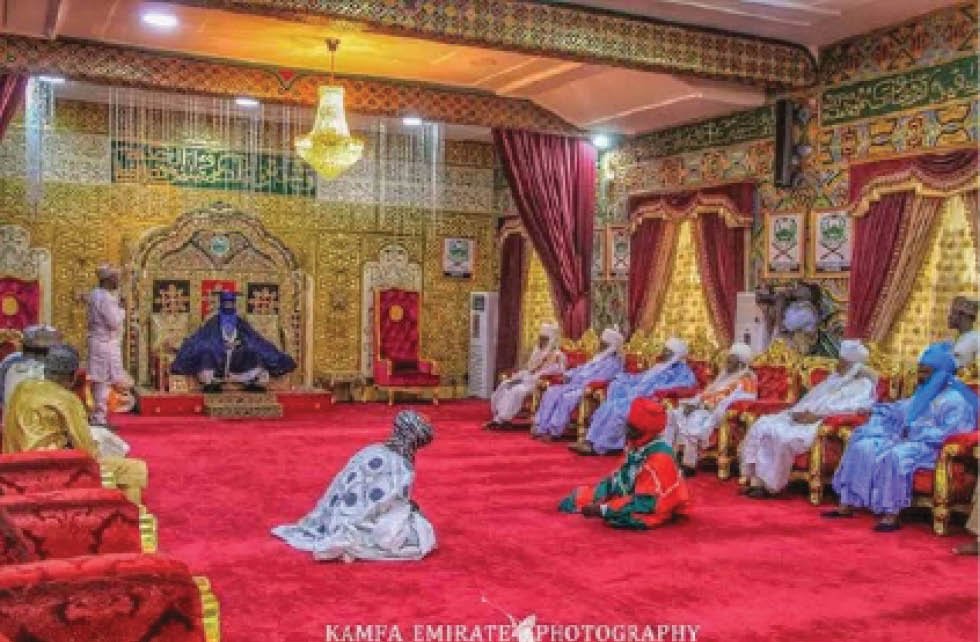
o Today, while the emir holds no formal constitutional executive power, the office remains a supreme cultural, moral, and religious institution in northern Nigeria.
Hausa kingdom and Sultanate
The Hausa Kingdom of Kano was based on an ancient settlement of Dala Hill. According to the Kano Chronicle, while small chiefdoms were previously present in the area, Bagauda, a grandson of the mythical hero Bayajidda, became the first king of Kano in 999, reigning until 1063. Muhammad Rumfa ascended to the throne in 1463 and reigned until 1499. During his reign he reformed the city, expanded the Sahelian Gidan Rumfa (Emir’s Palace), and played a role in the further Islamization of the city as he urged prominent residents to convert. The Hausa state remained independent until the Fulani conquest of 1805.
Fulani conquest and rule
At the beginning of the 19th century, Fulani Islamic leader Usman Dan Fodio led a jihad affecting much of northern Nigeria, leading to the emergence of the Sokoto Caliphate. Kano became the largest and most prosperous province of the empire. It was one of the last major slave societies. Heinrich Barth, a classical scholar who spent several years in northern Nigeria in the 1850s, estimated the percentage of slaves in Kano to be at least 50%, most of whom lived in slave villages.
From 1893 until 1895, two rival claimants for the throne fought a civil war. With the help of royal slaves, Yusufu was victorious over Tukur and claimed the title of emir.
The British pacification campaign termed the Kano-Sokoto Expedition set off from Zaria at the end of January 1903 under the command of Colonel Thomas Morland, heading up a force of British officers and N.C.O.s and 800 African rank and file. Apart from a company of mounted infantry and a few gunners, the whole force consisted of infantry. They were supported, however, by four 75-mm. mountain guns, which could, if necessary, be dismantled and transported by porters, and by six machine guns.
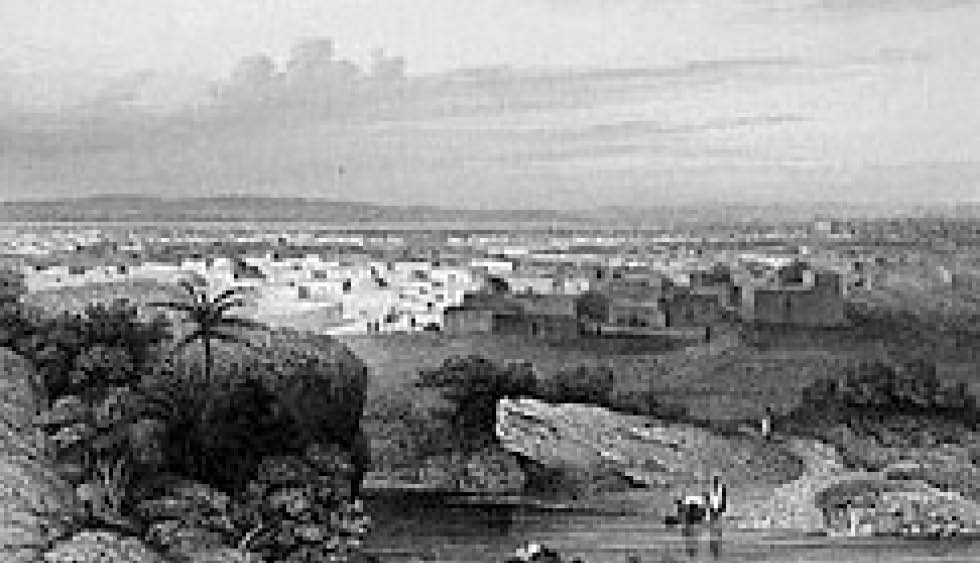
1850 steel engraving of Kano
After sporadic fighting outside the walls of the fort, the British managed to penetrate the defensive parameters of the capital. Kano was mostly left defenceless at the time. The emir, Aliyu Babba, was away with its large contingent of cavalry for the autumn campaign at Sokoto. Madakin Kano, a local noble, rallied whatever troops there were still in the city to defend it. Despite his efforts, the British successfully took over the city after heavy fight wherein the defenders sustained 70 casualties. News of the British capture of Kano in February 1903 sent the cavalry in a long march to retake the city.
After successfully defeating the British in three encounters, on 27 February 1903, Ahmadu Mai Shahada, Grand Vizier of Kano, and much of the Kano cavalry was ambushed at Katarkwashi. The death of the vizier and subsequent capture and exile to Lokoja of Emir Aliyu Babba spelled the formative end of the Kano Emirate. The British made Kano an important administrative centre and kept most of the emirate’s institutions in the form of the Kano Emirate Council, subject to the British crown in a newly formed state called Northern Nigeria.
Emirs of Kano under Sokoto vassalage
Emirs under Sokoto Caliphate vassalage were:
• Suleiman Dan Abu Hamma (Ruled from 1805–1819)
• Ibrahim Dabo Dan Mamudu (Ruled from 1819–1846)
• Usman I Dan Ibrahim Dabo (Ruled from 1846–1855)
• Abdullah Maje Karofi Dan Ibrahim Dabo (Ruled from 1855–1883)
• Muhammad Bello Dan Ibrahim Dabo (Ruled from 1883–1892)
• Mohammed Tukur Dan Muhammad Bello (Ruled from 1893–1894)
• Aliyu Babba Dan Abdullahi Maje Karofi (Ruled from 1894–1903)
Never miss a moment! Get the stories shaping Nigeria, delivered straight to your phone. Follow Peoplesdaily Newspaper on WhatsApp for breaking news, exclusive reports, and the headlines everyone will be talking about, before anyone else.


