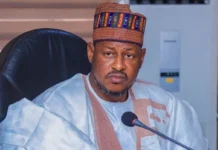


By Femi Oyelola
It is an undisputed fact that Kaduna State passed through a rigorous transformation characterized by unprecedented improvements in almost all sectors over the eight years of Governor Nasir Ahmed El-Rufai. The transformative drive traversed the legislative, policy, and institutional reforms to human capital development and social investment.
Investigation, however revealed that the state is also harbouring 3.9 million poor people and over 1 million vulnerable households in its 23 local government areas.
Speaking on this recently at a forum the State deputy governor, Dr. Hadiza Sabuwa Balaraba, said the state government in demonstration of its commitment to social justice, promotion of equality of opportunities, and protection of human rights of all citizens has sustained budgetary investments in the social sector which includes the poor and vulnerable.
In his electioneering campaign, the State Governor, Senator Uba Sani promised the Citizens a social contract titled “SUSTAIN” which will strengthen Safety and Security, Upgrade Infrastructure, Strengthen Institutions, and enhance Trade and Investment.
Not unmindful of the plight of the poor and vulnerable in the state, Gov. Sani assured that Social welfare will be one of the trademarks of the key target.
Many Experts think that now that elections are far over the Governor and his team were advised to subject the state’s current social protection policy to proper study to synchronize his peculiar approach and thoughts on welfare and social investment with the existing policy framework.
He was also advised to strengthen the State Social Protection Agency to streamline social protection and investment programmes for greater efficiency. The people have high hopes on him.

Gov. Sani had demonstrated that he has a listening ear when he signed his first Executive Order on “Financial Inclusion in Kaduna State following the State efforts to address the exclusion of about 2.1 million poor, underserved, and vulnerable citizens in the rural areas from financial services in the State and to ensure benefit from the State and Federal Government’s Social Intervention Programmes.
He also Constituted Financial Inclusion and Literacy Committee to fashion strategies and modalities to ensure the inclusion of the poor, underserved, and vulnerable in Kaduna State, as well as equip them with financial skills to enable them to make sound financial and investment decisions.
The Governor disclosed that the
the target of the State Government is to include about 1 million poor, underserved, unbanked, and vulnerable citizens in the financial services sector in the next year.
“ The State Government, in collaboration with key stakeholders, including CSOs, NGOs, and Financial Technology Companies (FINTECHS) will develop a State Financial Inclusion Strategy.
48 hours after signing the order he hinted that arrangements have already reached an advanced stage for the establishment of a Trust Fund for the poor and vulnerable in the State, even as a committee to guide the entire process is set to be set up soon.
Leading by example, Gov Sani donated 50% of his salary to the special Trust Fund for the poor, underserved, and vulnerable in State., saying the Kaduna State government is committed to addressing issues of social justice, promoting equality of opportunities, and protecting the human rights of all citizens of the state.
“In keeping with these commitments, the government has sustained budgetary investments in the social sector, leading to the expansion of health care access in underserved areas, and increased enrolment in primary and secondary schools, which are now free and compulsory in all our public schools.’
“We shall develop a credible State Register that will capture our people in the rural areas, as well as the urban poor. We shall assist them to open bank accounts to enable them to benefit from available opportunities. Our goal is to effectively integrate the poor, underserved, and vulnerable in Kaduna State into the financial ecosystem so that they can benefit from State and Federal Government’s social investment programs, as well as donor agency interventions”, he disclosed.”
Similarly, the Deputy Governor of the State Dr. Hadiza Sabuwa Balaraba disclosed at a Forum with CSOs recently that the
The state has equally created the social investment office to coordinate and implement social intervention programs to support the vulnerable and poor populations of our dear state. These social interventions are delivered in the most scientific manner using the state social register which as of today has about 3.9 million vulnerable and poor persons and over 1 million vulnerable households from across the 255 wards of the State, the Deputy Governor said.
While reacting to this Active Citizen Yusuf Goje said the move by Gov. Sain empathize with the current challenging economic situation, should be appreciated.
He, however, opined that to demonstrate the Governor’s seriousness and commitment to transparency and accountability, it will be important for the administration to declare how much in total the 50% salary slash will amount to in two years.
This, according to him will enable the residents to better appreciate the significance of the sacrifice of the Governor. More importantly, the Governor needs to urgently mandate the immediate review of the 2023 approved budget to ensure the re-allocation of strategic priorities in response to the current difficult realities.
“Instructively, among a few examples, the State allocated a meager N1.4 billion, approximately 0.4% of the total 2023 approved budget of N376.5 billion, with capital expenditure getting a disturbing N750 million, to the entire agriculture sector. While allocating N3.9 billion for the procurement of motor vehicles under the Ministry of Finance. Also, why should we at this dire time be allocating N877.7 million to Citizens’ Engagement and N559.6 million to Entertainment and Hospitality under the overhead cost of the Government House?
“For a State that already has a 70% incidence of multidimensional poverty as well as combined unemployment and underemployment of about 67%, the administration needs to review its budget to reflect the current priorities.
“Even though the State has allocated N15.4 billion for social protection, it needs to balance the distribution, Old Age (pension) has the highest chunk of 59%; while 22.0% went to Social Protection programs, 7.4% to Housing, 7.8% to Survivors and 3.6% to Social Exclusion. “
Goje stressed that, beyond the laudable personal sacrifices of the Governor and other political leaders, there is an urgent need to review the 2023 budget to re-allocation resources to strategic priorities that directly have to do with poverty reduction, ensure value for money in service delivery and enable social accountability through openness and proactive disclosure of information.