

By Femi Oyelola
The recent results of the 2024 Unified Tertiary Matriculation Examination (UTME) have sparked a nationwide conversation about the state of education in Nigeria.
With a significant number of candidates scoring below the average mark, expert in education sector are calling for a critical examination of the educational system.
Some of the stakeholders who spoke to Peoples Daily Weekend said that the results reflect a decline in educational standards, with some youths labeling education as a “scam”.
According to data released by the Joint Admissions and Matriculation Board (JAMB), over 1.9 million candidates sat for the 2024 examination where only 8,401 candidates scored 300 and above.
The data further revealed that 77,070 scored 250 and above with 439,974 scored 200 and above, while the remaining 1.4 million, representing 76% of the candidates scored below 200.
Although the total score for the UTME remains 400, comprising four subjects chosen by a candidate to determine his/her eligibility for tertiary education in their desired field, however, the number candidates scored below the average raised significant concerns.
Some of the experts have expressed their views, urging the government at all levels to show more interest in the education development of the youth.
An Educationist Prof. Ibrahim Bichi, blamed the government attitudes towards education and JAMB’s policies are factors in the declining standards.
Also speaking to the People’s Daily Weekend, Temiloluwa Oyelola, a 300-level student of Human Kinetics Ahmadu Bello University, Zaira stated that since its inception in 1978, JAMB has stood as a cornerstone of Nigerian education, shaping the futures of countless students seeking tertiary education.
She however said that the 2024 UTME results left many bewildered by the staggering number of candidates who failed to meet even moderate performance standards.
 Oyelola queried, “The question on everyone’s mind is: why? Why did a whopping 76% of candidates score below the modest cut-off of 200 out of a possible 400? Moreover, why did only a mere 0.5% manage to achieve exceptional scores in an era marked by significant technological advancements”.
While the internet has undeniably revolutionized communication and information dissemination, it has also ushered in an era of unprecedented distraction”.
She continued, “Many students now find themselves trapped in the vortex of social media platforms like Facebook, Instagram, Twitter, and Snapchat, the allure of endless scrolling, likes, and shares has seemingly supplanted the diligence required for academic success.
It’s not uncommon to find students devoting more time to maintaining their online personas than to their studies, a trend that undoubtedly contributed to the poor performance in the 2024 UTME”.
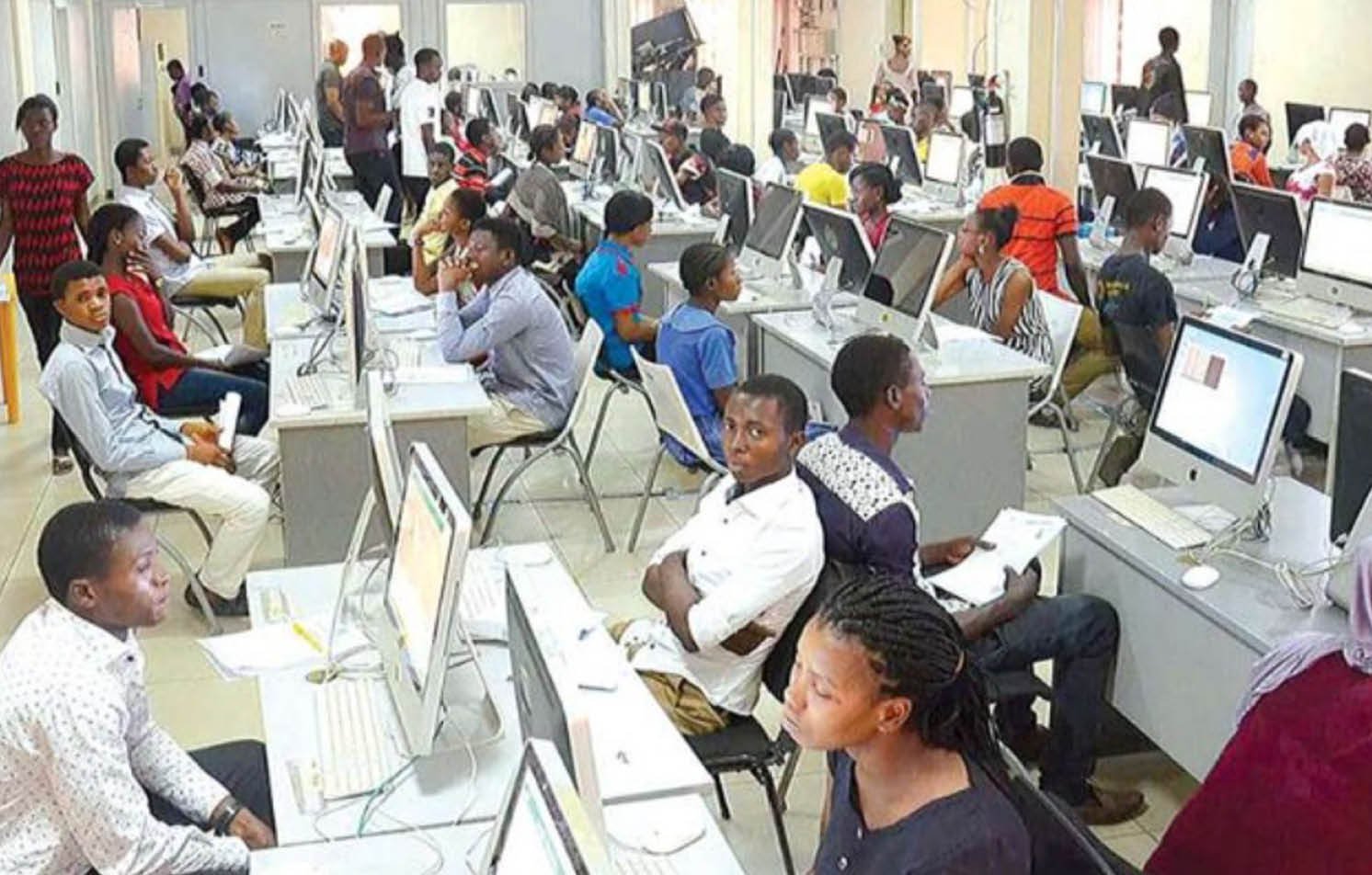
Oyelola also blamed the mass failure on the level of computer illiteracy especially in the rural areas with little or no access to computer and training.
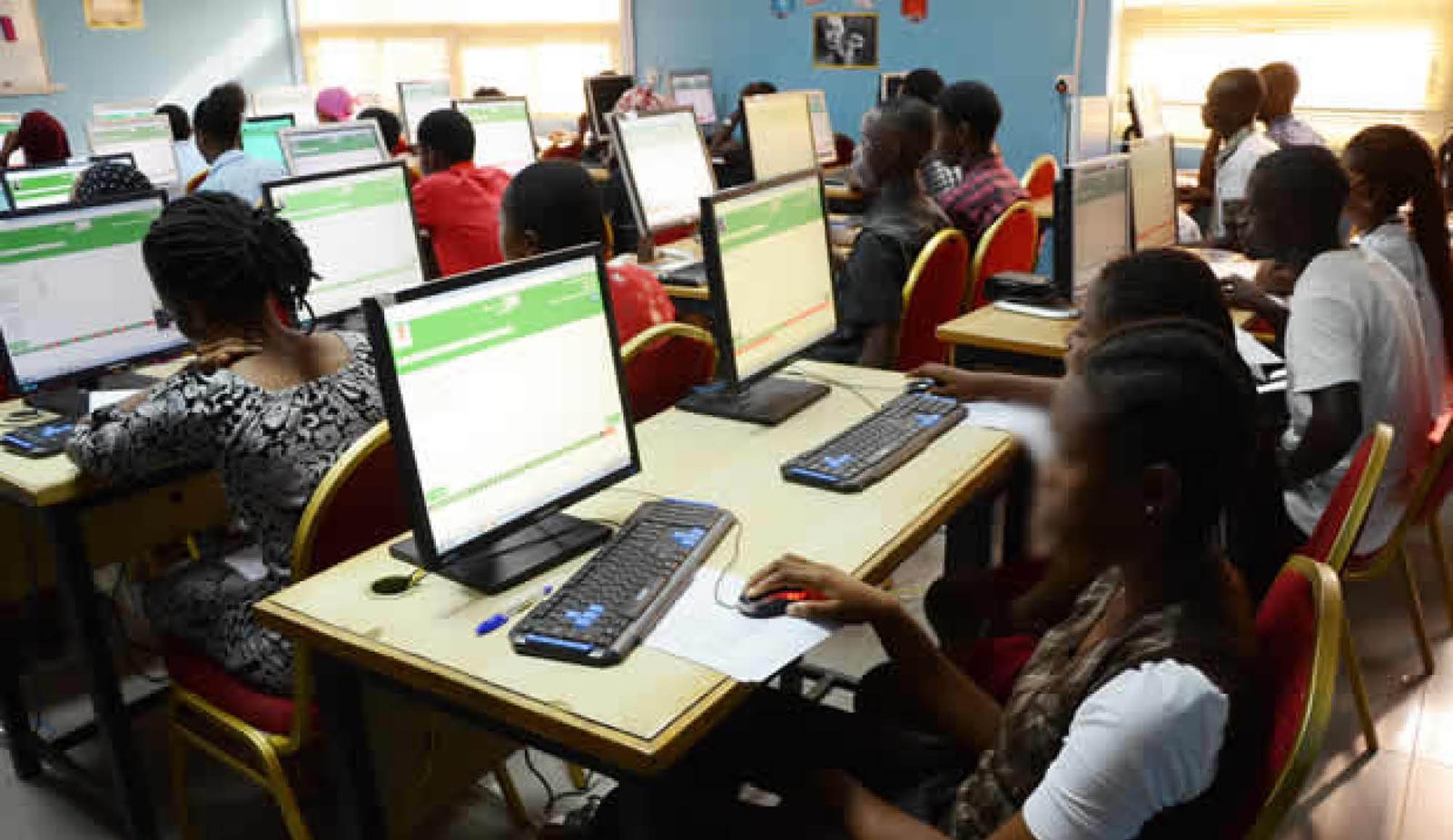
She said, “For students hailing from such backgrounds, the transition to computer-based testing (CBT) presents a formidable challenge.
Moreover, reports of malfunctioning computers at some JAMB centers further compounded the problem, robbing candidates of the smooth testing experience they deserved. While occasional technical glitches are inevitable, proactive measures should have been taken to ensure that such issues did not unduly affect students’ performance”.
She added, “It is important that efforts be made to address these systemic challenges. Education stakeholders in the country must prioritize digital literacy initiatives to equip students with the skills needed to navigate an increasingly technology-driven world. Furthermore, JAMB and its affiliated centers must undertake rigorous quality assurance measures to guarantee the seamless conduct of examinations, including timely repairs and replacements of faulty computers, provision of more stable internet facilities, etc.
“ The disappointing performance of candidates in the 2024 UTME serves as a reminder of the multifaceted challenges facing Nigeria’s education system. By acknowledging and addressing the root causes of this failure, we can work towards building a more equitable and inclusive learning environment for all learners in Nigeria”.
Similarly, the Acting Executive Director of African Environment and Economic Justice (ANEEJ,) Mr Leo Atakpu wonders why some people justify the failure in some quarters, saying that this year’s result is better than past years.
He expressed dismay that the 1.4 million candidates who scored below 200 remains a serious disappointment and poses a big problem for the nation.
He advised that all stakeholders, governments, parents, students, and the various school proprietors and religious leaders must take responsibility for this failure.
Atakpu further linked corruption to the falling educational standards in the country.
He said, “ I said this because, JAMB appears to be one of the cells that exam malpractice is very low in this country today and so if you want to test schools and students who are not involved in exam malpractice, let them come and register JAMB and that is where you will know those who are serious and those who are not.
That is where you can separate the goats from the sheep because by the time they write jamb, O’level exams, WAEC, and NECO, you find that some students will be scoring Alpha everywhere, some schools will tell you we got 100 percent and one student from that school did not score up to 200 in JAMB and that shows that there is serious malpractice in other exams”.
Atakpu continued, “People write for others, and that is why you have some very beautiful results coming out at such a level and when it comes to JAMB, the people are not able to perform and you see a student with five credits or more, both in English and maths, unable to secure a place in the university.
So it is important that stakeholders begin to address this issue, particularly parents, they are responsible for this problem. When you send your children to special centers to go and pass through the school without acquiring the requisite knowledge and still come out certificated and cannot stand external exams, that is not good enough in this nation”.
“ It also has its implications for the development of Nigeria, we are talking about the future of Nigerians. Those who are supposed to be the leaders of tomorrow are the ones we are discussing here.
“It is important that parents, and religious leaders, emphasize the issue of malpractice in these special centers. The government should track down these centers and make sure that examination bodies are allowed to do their duties free of interference without money changing hands and compromising the system”, he added.
He said, “So JAMB is doing a good job in ensuring that the right result comes out. So is the flagship of examination bodies in Nigeria today, when it comes to the secondary level.
All stakeholders must join hands together, all those involved in special centers, and manufacturing results for students should stop it and the government should descend on such places because the future of Nigeria is at stake.
JAMB management should sustain its credibility and this quality of exam they are giving out to students”.
“ Students should equally brace up, they should study well. Students should take up their responsibilities because in this era of GEN-Z, children handling phones and other kinds of gadgets year in, and year out is not helping them.
Students no longer read, and this is an opportunity for libraries to be opened everywhere.
Parents should take their children to the library to read because when you read, you have knowledge and they will be able to pass and give better results in the JAMB testing exams”, he added.
Corroborating, Atakpu’s point of view, a Citizen Activist, Yusuf Ishaku Goje lamented the mass failure in the examination.
Goje said, “More so, in public schools where students are learning under deplorable conditions due to poor funding of the education sector. Budgetary allocation to education in most states leaves much to be desired. Quality Assurance is at its lowest peak.
Parents are also not helping matters. As they support their children to engage in examination malpractices. Many of the parents are too busy skiing out and living to support the children with assignments at home or even follow up on their performances”.
According to him, “There is a need for reorientation away from the assumption that all one needs is to get a certificate without necessarily acquiring the knowledge to succeed.
To address this ticking time bomb, we need to adopt a whole-of-society approach to ensure the standard of education is improved. Pressure must be put on the government to increase funding, allocate the scarce resources to strategic priorities, and ensure value for money in service delivery in the education sector.”
The Manager of Dariq International School Malali, Kaduna North Local Government Area, Abubakar Musa blamed the failure on inadequate student preparation, lack of access to quality educational resources, and challenges encountered during the exam, such as network/server issues leading to frequent logouts have caused the mass failure.
He also said parents need to be very intentional in their parenting journey and play their part deliberately to facilitate their children education success.
Reacting further, Musa said students find themselves trapped in the vortex of social media platforms like Facebook, Instagram, Twitter, and Snapchat.
According to Alhaji Musa Shehu, a businessman based in Kano, government agencies should see a proper policy alliance, implementation to enhance education performance.
He said, “The time for the preparation of the UTME was insufficient. Most of the children are not trained in the use of CBT from their schools and JAMB expects them to use CBT. Insecurity too is an issue; I wonder how someone can pass very well when there is fear of banditry and kidnapping around, especially in vulnerable environments.”
The students need to wake up to know they have their lives to live on their own and must take responsibility for their actions, corruption in the educational sector must be scrutinized properly, from ministry operations to examination bodies.
This is part of a broader issue, but the ripple effects of cutting corners in the educational sector will be felt for decades.”
In the same vein Jessica Emeka, a parent blamed technical hitches encountered by some candidates during the examination in some centers, to be responsible for the mass failure in the 2024 UTME.