

-
Workers grumble over unpaid entitlements, seek Tinubu’s intervention
-
NUTGTWN laments plight of once flourishing industry
From Femi Oyelola, Kaduna
The National Union of Textiles, Garments and Tailoring Workers of Nigeria, (NUTGTWN), has lamented the continuous deterioration of the textile industry in Nigeria, recalling that for decades, it was the bedrock of the country’s economy as it employed over a million people and contributed about 15% of the manufacturing sector earnings to the GDP.
The union noted that textile and apparel industry played a dominant role in the manufacturing sector of the Nigeria’s economy, saying with a record high of over 140 companies, Nigeria had witnessed a boom in the textile manufacturing industries in the 1960s to 1970.
President, of NUTGTWN Comrade John Adaji, in an interview with our Correspondent, said the textile industry is labour intensive and remains a panacea to the unemployment crisis in the country.
According to him, in Nigeria, the industry was the highest employer of labour after the federal government in the 1980s with over 500,000 workers. It was also a veritable source of revenue to the government.
Comrade Adaji maintained that in spite of the depressed state of the industry, it is still one of the highest employers of labour in the country.
However, today the story has changed following the discovery of oil and the subsequent oil boom, the government became reliant on oil and abandoned agriculture.
Findings revealed that the neglect of the agricultural sector had an adverse effect on the textile industry. The production of cotton, the basic raw material used for the manufacture of clothes regressed rapidly as its production capacity declined by 50 per cent.
Also, the trade liberalisation policies adopted in 1986 following the implementation of the Structural Adjustment Programme (SAP), saw the flooding of imported fabrics and finished goods, thereby degenerating the manufacturing capacity of the industry.
By the 1990s, the degradation of infrastructure, especially the lack of stable electricity supply affected textile manufacturers as they could not keep up with the strains of production and this led to the closure of a number of textile companies with hundreds of workers rendered jobless. And by 1998, the industry was operating at a capacity of just 28 per cent.
Giving credence to this, the NUTGTWN president said, unrestrained smuggling and counterfeiting of Made-in-Nigeria textiles is a major problem facing the sector in the country, saying today, over 90 percent of textile products in Nigerian markets are smuggled or imported into the country.
Comrade Adaji observed that other challenges that brought the textile industry on its knees included: inadequate and costly electricity supply, high-cost of production that has rendered the Nigerian textile products non-competitive; poor patronage in spite of the Federal Government of Nigeria’s Executive Order 003 of 2017 (that mandated Federal Government Ministries, Departments, and Agencies to patronize made-in-Nigeria products), poor infrastructure, high taxation and interest rates, high cost of diesel and LPFO and the depreciating value of the Naira.
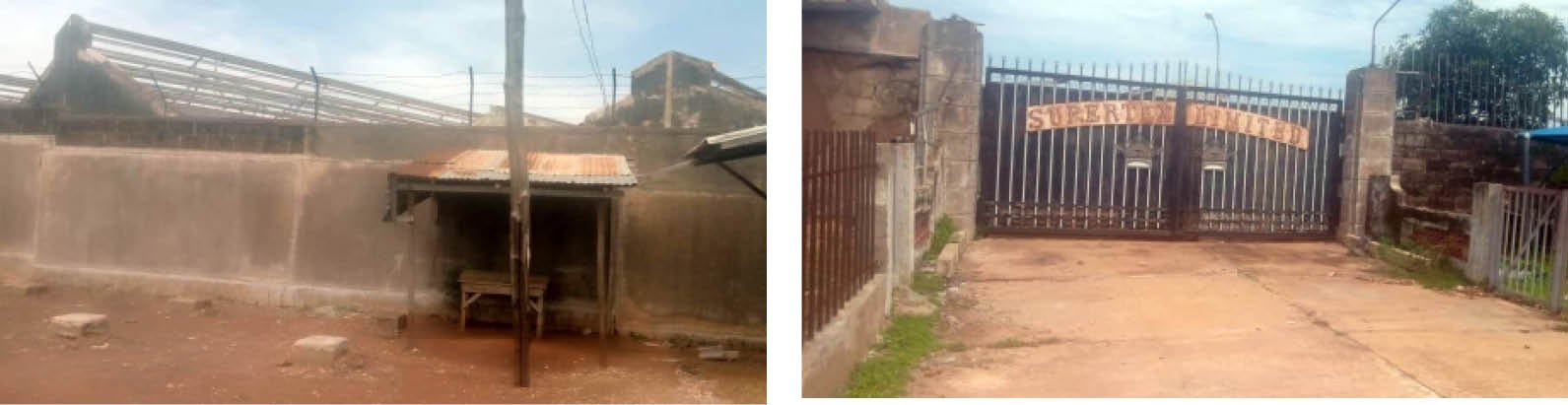
A visit to Kakuri Industrial Layout in Kaduna South Local Government Area of Kaduna State which harbours major textile companies like Kaduna Textile Limited, (KTL); Finetex, Nortex, Unitex, Supertex, UNTL, Arewa Textiles and others reveals an eyesore, as most of them are in terrible state, overgrown with weeds.
Painfully, Arewa Textiles located along the popular Kachia road has been vandalized as most of the roofing and irons have been carted away.
A former staff, Mr. Emmanuel, who said he worked directly under Mr Innocent Achimugu, of the Achimugu’s family- the major Shareholder of the company-recalled how the factory was run in its hay days; how it was being operated in three shifts – morning, afternoon and night shifts.
The 75 years old grandfather who could not hold back his tears, said, they were sent packing without payments.
The case of Kaduna Textiles Limited, is even more pathetic considering that it is owned by the Northern States Government and has remained closed since 2002. In 2017, the Northern Governors’ Forum, (NGF), set up a committee comprising of the then Governors Nasir Ahmad El-Rufa’i of Kaduna state, Abdullahi Ganduje of Kano state and Abdulaziz Yari of Zamfara state, to look into the possibility of reviving the company.
The NGF assured the citizens that the factory would be revived, however, it warned that it would not take place overnight as the forum had to address the challenges of smuggling and dumping of cotton products from China, poor electricity and water supply and obsolete machines and production system.
The NGF who said, “Kaduna used to be called the Manchester of Nigeria because of the concentration of textile industry. The textile industry had over 33,000 people working there at its peak in the early 80s.
“Since we came in, we have been working with the federal government to be able to revive the textile, because we need the support and cooperation of the Federal Government. “We have to look at the entire value chain, because if you revive the textile without the cotton production, there would be a problem.”
Seven years down the line, the story is still the same as the gates of the company is still under lock and key.
Reacting to this, the NUTGTWN president said, the oldest textile mill in Nigeria, Kaduna Textiles Limited (KTL) owned by the 19 Northern States of the Federation has remained a shadow of itself.
He said KTL which was one of the proud legacies of the late Sir Ahmadu Bello has closed down since 2002 and has remained closed since then without payment of the benefits of the workers.
He also said that successive State governors in the North have paid lip service to the call by the union and other stakeholders for its resuscitation and settlement of the entitlements of the workers.
“These workers have suffered untold hardship due to non-payment of their benefits since the unilateral closure of the factory. The union since September 2005 obtained a court judgment for settlement of the entitlements of the workers amounting to N687, 073,346.00. Unfortunately, the management and owners of the company (19 Northern States) have remained insensitive to the plight of these workers in spite of repeated appeals and protests by the union and the workers,” he said.
Comrade Adaji added that apart from KTL, notable textile companies in Kaduna such as Arewa Textiles, Finetex, Nortex, Unitex, Supertex, UNTL among others have remained closed with cumulative job losses amounting to over 25,000 workers. Arewa Textile is also yet to settle the entitlements of the workers in spite of the court judgment obtained by the union on behalf of the workers.
“Apart from KTL and Arewa Textiles, other closed textile companies in Kaduna have paid the entitlements of the workers through the effort of the union,” Comrade Adaji clarified.
On the way forward, the Union called on President Bola Tinubu’s urgent intervention to save the remaining textile companies in the country from total collapse.
While acknowledging the efforts of the successive government to revive the industry, the Union said the current administration must do more to provide the enabling environment for the revival of the textile industry in Nigeria and manufacturing activities in general.
President Bola Tinubu should also consider the establishment of a National Council on Textile or Ministry of Textile as is the case in many developing countries, he advised.
The union is hopeful that the new administration will give the revival of the labour intensive textile industry the urgent attention it requires. A fully revived textile industry is capable of creating millions of jobs, addressing security challenges in the country, improving internally generated revenue for the government, reduce the pressure on the country’s foreign exchange market while earning foreign exchange for the country.
“We are ready to partner with President Bola Ahmed Tinubu led-government for a friendly business environment, stable macro-economic policies, consistent, clear and focused industrial strategy that will provide support and incentives for manufacturing activities and revival of the textile industry in particular,” Adaji state.
Never miss a moment! Get the stories shaping Nigeria, delivered straight to your phone. Follow Peoplesdaily Newspaper on WhatsApp for breaking news, exclusive reports, and the headlines everyone will be talking about, before anyone else.

