

By Our Correspondent
The National Council of State meeting which held at the Aso Rock Presidential Village last week came amid high expectations from the citizenry. Not a few Nigerians believed that the August body would knock the presidency and order it to open the vault of the Central Bank of Nigeria [CBN] and cause a deluge of the scarce new naira notes of 1,000, 500 and 200 denominations across the country.
Nigerians had been generally frustrated by the new CBN policy which aims to achieve a cashless society due to their inability to access the new notes for any transactions. Aside from the timing and the seeming poor implementation, however, analysts have unanimously agreed that the policy which seeks to reduce excess cash in circulation is desirable. But if the pain caused the populace is weighed against the expected merits of the policy, the verdict is likely to be different, if not entirely harsh.
Constitutionally, the council is the highest advisory body to the federal government which ought to meet once in every quarter subject to the desire of the president, especially when contentious matters of state policy or governance are at stake. But it has become a tradition that the council would meet and be briefed before every general elections as has been seen in the past. Accordingly, it can be suggested that last Friday meeting of the body was essentially to take briefings from relevant government institutions on their preparedness for the all-important fast approaching general elections scheduled for February 25 and March 11. But, with the crisis and confusion in the polity over the unavailability of the new currency notes, it was practically impossible for the matter not to be brought to the table of the council.
Before the council meeting, however, governors elected on the platform of the All Progressives Congress [APC] had an audience with President Muhammadu Buhari to seek his intervention in order to douse the rising tension over the scarcity of the redesigned naira notes. The governors led to the meeting by Chairman of Progressive Governors Forum, Atiku Bagudu who is also the governor of Kebbi State, didn’t get a prompt response contrary to their expectation. The presidency after Buhari’s meeting with the governors issued a statement to the effect that a major decision on the subject matter would be taken in a week.
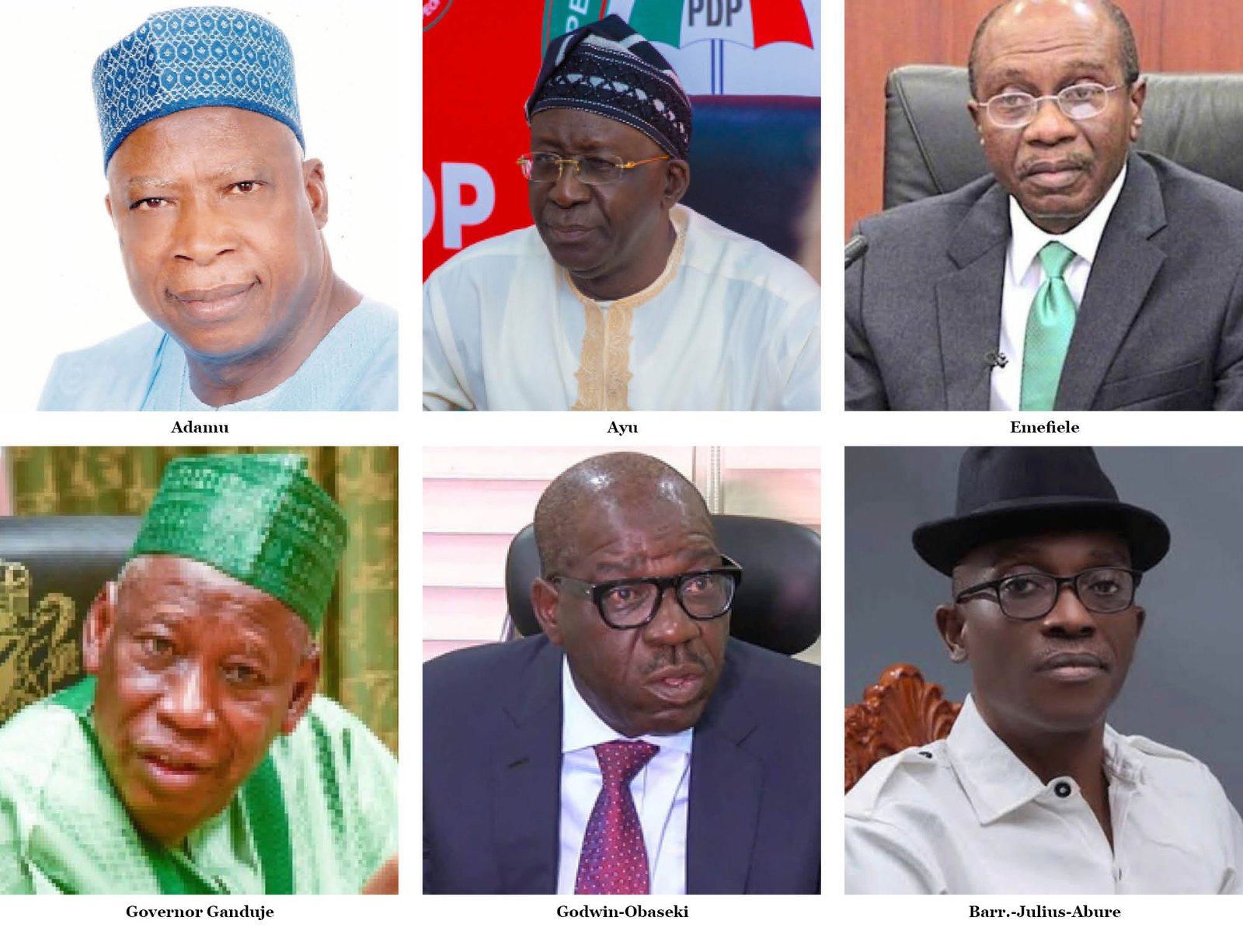
That one week passed, culminating in the Council of State meeting and there was seemingly no deal as the president didn’t say a word. Many have attributed the president’s silence to the action of the governors of Kaduna, Nasir el Rufai, his Zamfara and Kogi States counterpart, Bello Matawale and Yahaya Bello respectively who had challenged the federal government’s policy and obtained a restraining order to thwart it.
The Council of State meeting ended without a clear direction on the way forward for the anxious populace. The body simply gave its backing to the CBN policy and advised that efforts should be made to make the scarce naira notes more available. A communique read at the end of the meeting by the Attorney General of the Federation and minister of Health, Abubakar Malami said: ‘relating to the naira redesign policy, the policy stands but then the council agrees that there is need for aggressive action on the part of the CBN as it relates to the implementation of the policy by way of ensuring adequate provision being made with particular regard to the supply of the naira in the system.’ Malami who had filed a counter case against the Supreme Court order on the new naira policy quickly washed his hands off when newsmen sought to know the council’s stand on the order by the apex court, saying that the issue was already before the court for determination.
Before Malami read out the resolutions, Governor Dairus Ishaku of Taraba State and his Lagos State counterpart Babajide Sanwoolu, had spoken on the presentations by the CBN and INEC bosses as well as the IGP to the council, stating that suggestions made by council consequently were advisory.
The same palpable anxiety that had gripped Nigerian ahead of the Council of State meeting was the mood of citizens last on Wednesday, February 15 when the Supreme was supposed to open hearing into the matter. The expectation was that having failed to enforce the order of the apex court with respect to the new policy, the court would give a marching order to the federal government to unconditionally comply with its decision. The adjournment by another one week to February 22 for the case to be heard the dashed anxiety of the populace, just like the outcome of the council meeting.
However, the nationwide broadcast by President Buhari early Thursday morning before jetting out to Addis Ababa for AU Summit was intended to douse the heightened anxiety on when the naira crisis will abate. Feelers, however, suggested that it was a mixed grill. To some Nigerians, the president has provided some relief with his approval of N200 to be brought back into circulation for sixty days. Some others, however, felt that it should have been a holistic lifting of ban on the entire currency notes.
The surprise, if not irony, in the whole episode is the fact the opposition to the naira policy is being led by APC chieftains, while their counterparts in the opposition parties have given a nod to the policy. For instance, at the level of the governors, Edo and Bayelsa governors, who are members of the opposition Peoples Democratic Party, PDP, have lined up behind the federal government while the rank of APC governors opposing the policy initiated by the ruling party has continued to swell. At the last count, Niger, Kano, Lagos and Ogun had joined the league of states that are up in arms against the policy.
Reports said the governors, who are clearly not happy with the refusal of the CBN to reverse its decision had taken it upon themselves to enforce the Supreme Court order by warning indigenes and resident in their states to continue to use the banned notes as legal tender.
APC presidential candidates, Bola Tinubu was the first to raise issues with the naira redesign when at a rally in Abeokuta recently, he said the policy was meant to affect the electoral fortunes of the ruling party negatively, but swore that he was unstoppable. His spokesmen were later to rationalize that the candidate’s anger was directed at the CBN governor and not President Buhari.
Taking a cue, El Rufai who has been in the forefront of criticisms of the policy alleged during the week that some retired generals and those who failed primary elections were the brain behind the new Nigeria policy to scuttle the general election and pave the way for an interim government. This view has resonated around the APC governors camp.
But for the PDP and the Labour parties, their spoken and body language has been that of consent and approval. Both Atiku Abubakar and Peter Obi of PDP and LP respectively have lauded the policy, though to the criticism of the APC.
President Buhari in the Thursday broadcast said he was pained by the unintended outcomes of the new currency policy, explain, however that the country would be better for it in the long run. He listed the gains to include reduction of the influence money in the nation’s electoral process.
Never miss a moment! Get the stories shaping Nigeria, delivered straight to your phone. Follow Peoplesdaily Newspaper on WhatsApp for breaking news, exclusive reports, and the headlines everyone will be talking about, before anyone else.


