

By Abubakar Yunusa
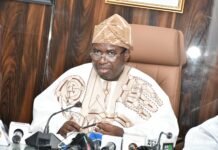
An economist and senior partner at SPM Professionals, Dr Paul Alaje, has urged the National Assembly, the Independent National Electoral Commission (INEC), and the Economic and Financial Crimes Commission (EFCC) to enact and enforce laws banning the use of foreign currency, especially the dollar, in political spending ahead of the 2027 general elections.
He warned that the reckless use of dollars by politicians during electioneering poses a grave threat to Nigeria’s economy and further weakens the naira.
Speaking with journalists on the sidelines of a two-day Business, Economy and Financial Reporting Training organised by Premium Times Academy in collaboration with the Central Bank of Nigeria (CBN) in Abuja on Wednesday, Alaje said that election spending in dollars had repeatedly destabilised Nigeria’s economic stability since 1998.
“Spending foreign currency will affect our economy. I am saying we should spend our local currency so that the Central Bank can manage the pressure.
But when politicians start spending from our foreign reserves, that becomes the real challenge,” he said.
According to him, data from previous elections showed that massive dollar spending during campaigns contributed to post-election economic downturns.
“I have tracked election spending since 1998. The flow of dollars into the economy peaked in 2010, 2014, and 2023. Each time, the following year, our economy dipped sharply,” he explained.
Alaje argued that the use of foreign currencies for political campaigns depletes the country’s reserves, fuels exchange rate volatility, and worsens inflation.
He called on the National Assembly and INEC to establish strict regulations mandating that all campaign-related spending be done strictly in naira, while empowering the EFCC to prosecute defaulters.
“If you must spend, whether within INEC’s approved limit or beyond it, it must be in naira. EFCC should follow up anyone who spends in foreign currency. Then, for the first time, we’ll have a relatively stable economy after an election,” he said.
The economist also decried the government’s pattern of borrowing for consumption rather than investment, noting that much of Nigeria’s debt does not translate to tangible economic growth.
“We’ve not spent enough of our borrowings on roads, rails, or power. Too much goes into administrative costs or private pockets. That’s corruption,” he stated.
Alaje advised the National Assembly to ensure that any future borrowing by federal or state governments is strictly tied to capital expenditure, such as infrastructure, and aligned with the country’s Medium-Term Expenditure Framework (MTEF).
He added that for Nigeria to achieve its ambition of becoming a $1 trillion economy by 2030, the country must sustain annual growth of at least 15–17 per cent, which would only be possible if investments were channelled into productive sectors.
He further encouraged governors to emulate the infrastructural progress recorded in Lagos and Abuja, and to prioritise regional economic development for inclusive growth.
“If each region focuses on production, like the South-West or North-Central, we’ll see a positive explosion in economic growth—just like China,” Alaje said .