
By Ikechukwu Okaforadi
The Federal Government yesterday said it has approved funds to be set aside for the payment of petroleum subsidy in the 2022 Budget, even as it revealed that the 2022 budget is prepared on a $57 per barrel oil benchmark.
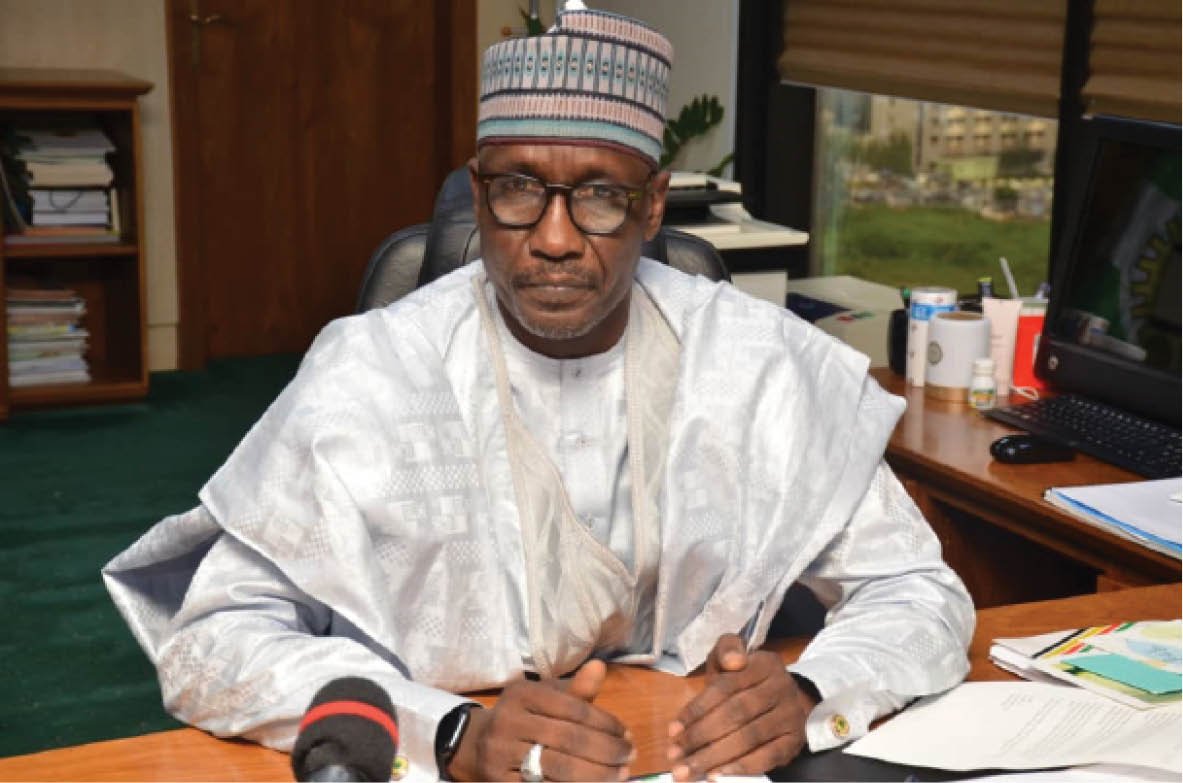
The Group Managing Director (GMD) of Nigeria National Petroleum Corporation (NNPC), Mele Kyari, made this disclosure while speaking during a three-day public hearing by the joint National Senate Committee on Finance, to consider the Medium Term Expenditure Framework (MTEF) and Fiscal Strategy Paper (FSP).
Briefing senators, Kyari recalled that in the 2021 budget, there was no provision for subsidy, though he said the reality on ground today is that oil marketers buy fuel at N256 per litter, yet they must sell at N162 per litter. He said this is a policy decision of the Federal Government.
Explaining what the corporation is doing to take subsidy out of the budget, the GMD said there is an ongoing engagement with labour unions and civil society organizations to secure their buy-in on the impending and unavoidable removal of subsidy, such as to ensure that there will not be disruption when the subsidy is eventually existed.
However, he explained that the Government decision to make provision for subsidy was because it is not yet certain when the engagement with the labour unions and the civil society Organizations will end, but expressed hope that it may come to an end by the end of 2021 or at most, early 2022.
He further said the fuel consumption in Nigeria does not reflect the data with the Department for Petroleum Resources (DPR), even though he said the sixty million liters per day usually create crisis anytime NNPC sticks to it. He said however that there are cases of sharp practices by oil dealers.
According to him, containing the round tripping and other sharp practices by dealers is a challenge that is very difficult to handle, pointing out that once a litre of fuel is sold at N162 per litre in Nigeria, the whole chain in fuel procurement and supply is already compromised. This, he said, is because anyone who buys fuel at N162 per liter, has already made profit even if he or she takes the product back to where it came from.
Earlier in her presentation, the Minister of Finance, Zainab Ahmad, represented by the Minister of State for National Planning, Clem Agba, said “on capital expenditure, the sum of N1,759,804,022,579 as opposed to the N2,019,119,204,546 will be available to Ministries Department and Agencies of government in 2022.
“On the exchange rate, the naira is being pegged at N410 to $1(US Dollar)”, just as that minister told legislators that the projection is likely to come down in favour of the naira in 2023.
Explaining the deficit, the minister said: “the budget deficit and the financing items for the expenditure. The budget deficit that is projected for 2022 is N5.62 trillion, up from N5.60 trillion in 2021.”
“The deficit is going to be financed by new foreign borrowing. And domestic borrowing, both domestic and foreign in the sum of N4.89 trillion, then privatisation proceeds of N90.73 billion and drawdowns from existing project titles of N635 billion.
“This amount represents 3.05 percent of the estimated GDP, which is slightly above the 3 percent threshold that is spent as recommended in the Fiscal Responsibility Act.
On revenue projections, the minister in the document stated that based on the decision of the Federal Executive Council (FEC) the sum of N6.54 trillion is expected to be realised for the 2022 fiscal year, adding that it was projected to increase in 2023 to N9.15 trillion.
“The revenue that we expect is N6.54 trillion N2.62 trillion to accrue to the Federation Account and VAT respectively,” she said.
She disclosed further that net oil and gas revenue which will be available for the Federation Account for distribution will be N6.151 trillion in 2022.
The key macro-economic assumptions contained in the MTEF/FSP include a crude oil benchmark price of $57 per barrel for 2022, crude oil production of 1.88 million barrels per day, and a dollar exchange rate of N410.15 to one US dollar, an inflation rate of 13 percent in 2022, and a nominal GDP of 149.369 trillion.
“What is interesting is that the non-oil GDP continues to grow at N169.69 trillion compared to oil GDP of 14.68 trillion included in the nominal GDP. Nominal consumption is 130,49.36 billion.”
On unemployment, the documents revealed that 82.9 million Nigerians are adjudged to be living in poverty.
According to the minister, the global economic growth is projected to moderate to 4.9 percent in 2022, just as she warned that Nigeria continues to be exposed to risk aversion in the foreign exchange market and devaluation of the naira.
The MTEF/FSP are documents that describe the Federal Government’s socio-economic and developmental objectives and priorities for the reporting period of 2022 to 2024.
It also has the fiscal strategies to put in place and policies to achieve government economic priorities, including highlights of the key drivers of government’s revenue and the spending plans.