

By Tobias Lengnan Dapam
Save the Children Internal (SCI), Nigeria, has said that the high rate of poverty in the country is unacceptable.
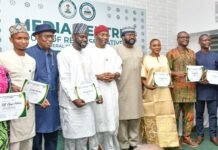
Speaking at the National Social Protection Electoral Advocacy in Nigeria yesterday in Abuja, Amanuel Mamo, Director of Advocacy, Campaigns, Communication and Medial
Save the Children International Nigeria, said recent report by the National Bureau of
Statistics, which said 82.9 million Nigerians are considered poor by
national standards was an unacceptable figure.
“In a country richly blessed with human and natural resources, this is simply unacceptable. No
Nigerian should have to go without food, no Nigerian child
should be out of school because their parents are poor and
cannot afford to send them to school, no woman should die
needlessly due to childbirth because they are too poor to
afford basic health care, no persons with disability should live
without access to basic services such as water, health, and
education because of their status.
“Addressing these issues needs to be treated as a matter of
urgency and it requires an innovative approaches, an out of
the box thinking that will ensure that all Nigerians, especially
children, irrespective of age and social status are able to live
a life of dignity – with all their rights being protected,
respected and fulfilled.
“Over the past decade, Social Protection has emerged as a
critical development instrument in Nigeria. Social protection
has the potential to not only reduce negative coping strategies but also, proved to create and enable more effective and rapid responses, strengthen national systems, and contribute to building the resilience of poor populations, particularly the most vulnerable or marginalized.
“Furthermore, social protection when designed and
implemented in an accountable manner, it helps households
to manage risk and can build the resilience of households that
are vulnerable to disasters, preventing a fall into, or further
into, poverty.
“I believe a golden opportunity is at hand for the leadership at
all levels to shift the narratives related to poverty and
economic inequalities in Nigeria.
It just needs to prioritize, strategize and invest in the
increased coverage of social protection programmes across
the country.”