

By Femi Oyelola
Social protection is the set of policies and programmes designed to reduce poverty and vulnerability by promoting efficient labour markets, diminishing people’s exposure to risks, and enhancing their capacity to protect themselves against hazards and interruption or loss of income.
This is a necessary tool for a developing country that is engulfed in fighting poverty, as 71 million are extremely poor and 133 million are in multidimensional poverty.
According to 40-year-old Hadiza Suileman, a resident of Kauru town in the Kauru Local Area of Kaduna state, poverty is food insecurity and her inability to provide food for her family members.
She said this often makes her anxious, inadequate, and helpless, especially coming from a local government perceived as the headquarters of poverty in the state
Similarly, Samuel Jack of Gododo Village in Jema’a Local Government Area of Kaduna state who fled his village to a more secured Jagindi community in the same council, sees poverty as an obvious state of deprivation of basic things in life, a situation he finds himself currently.
There is no gainsaying that manifestations of poverty in Nigeria include “hunger and malnutrition, limited access to education and other basic services, social discrimination and exclusion, as well as lack of participation in decision-making” which, according to the National Bureau of Statistics, (NBS) is fast drifting over 133 million (63 percent) Nigerians to be suffering from multidimensional poverty, with children constituting more than half of poor people, and 71 million extremely poor in the country.
This is a sad one for a country that is said to be endowed with enough resources to make life easier for its citizens.
Speaking recently at a national conference on the Social Investment Programme, (SIP) which doubles as a project closeout under the implementation of Enhancing Social Protection Programme in Nigeria, (ESPPIN), the Executive Director of Africa Network for Environment and Economic Justice, (ANEEJ), Rev. David Ugolor, said the growing poverty rate in the country should be an issue of concern to everyone because more Nigerians are multidimensionally poorer now than being monetarily poor.
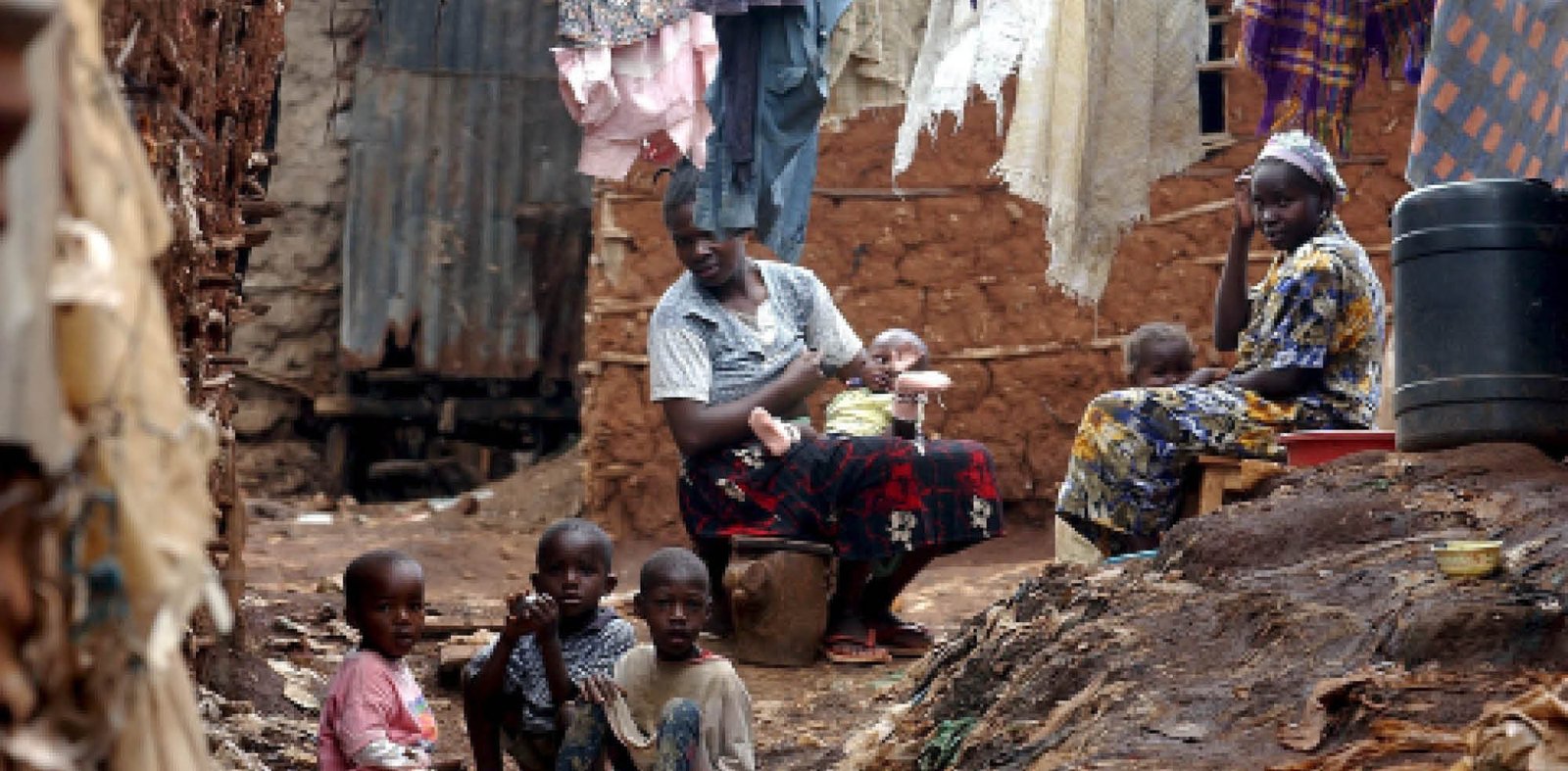
He said the fight against poverty remains one of society’s most pressing challenges today, particularly in regions where a substantial portion of the population is living in poverty.
The 2023 data from the World Poverty Clock, pegged the number of extremely poor Nigerians at 71 million. Nigeria, with its 213.4 million-strong population, faces this stark reality and experiences a range of deprivations that underscore the urgency of robust intervention.
In the words of Ugolor,” The sudden removal of fuel subsidy only increases these numbers exponentially as the cost of living is at a very worrisome level, one of the worst since Nigeria gained Independence in 1960.
He observed that the current economic hardship caused by the impact of COVID-19, the Russian-Ukraine war, and the removal of fuel subsidy has led to an uncontrollable increase in the dollar-Naira exchange rate, and has continued to put Nigerians in shock over uncertainties on the prices of food, goods, and services due to inflation.
This, according to him, has further pushed more people into poverty as the statistics of such persons are yet to be documented and justifies the need for further action and increased investment in social protection programmes to cushion the effect of poverty on Nigerians, particularly the vulnerable population.
Investigation by this Correspondent revealed that a 2021 UN report stated that about 828 million people will wake up every day having no idea when or where their next meal will come from, and many will go to bed that day without eating anything. The UN further states that of these 828 million people, 25,000 will die today, including more than 10,000 children as a result of poverty.
Many experts believe that a social protection programme will serve as a quick remedy to pull these 133 million Nigerians out of multidimensional poverty.
Corroborating the experts, Ugolor disclosed that in an attempt to address the increasing poverty level in Nigeria, the Federal Government designed several interventions such as the National Social Investment Programme, (NSIP), an ambitious effort aimed at improving the lives of the most vulnerable citizens.
He opined that NSIP, often lauded as one of Africa’s largest social protection programmes, is a beacon of hope for millions. With an annual allocation exceeding $1 billion, this programme transcends mere budgetary figures; “It symbolizes our shared commitment to uplifting the less fortunate and creating a stronger, more equitable society,” he said.
He, however, posited that the Enhancing Social Protection Policies in Nigeria, (ESPPIN) project of 2020 – 2023 emerged as a civil society effort to complement the efforts of both the national and sub-national governments in tackling poverty.
“ANEEJ, with support from Bread for the World (Germany) and the Foreign, Commonwealth, and Development Office, embarked on the three-year project (2020-2023) to enhance the implementation of the Social Investment Programme across Nigeria,” he added.
Disturbed by the daily increase of Nigerians falling into extreme poverty, ANEEJ ED said his organization kick-started the ESPPIN project in 5 states of Anambra, Bayelsa, Delta, Edo, Ekiti, and the Federal Capital Territory, (FCT) Abuja.
He said to ensure that the social protection benefits get to the poor and vulnerable, ANEEJ is working with CSO partners such as Community Empowerment and Development Initiative, (CEDI); International Peace and Civic Responsibility Centre, (IPCRC) in Awka, Anambra State; Development Initiators, Yenagoa, Bayelsa State; and the New Initiative for Social Development, (NISD).
“The final external evaluation of the project has just been completed as part of the project Monitoring, Evaluation, Research, and Learning, (MERL) processes and will be presented later today.
“The report shows that the ESPPIN project, which began in 2020 has yielded some remarkable outcomes.
“Aligned with our goal, we played a key role in advocating for the harmonization of Social Protection Bills at the National Assembly and aligning same with the National Social Protection Policy which we canvassed for a review.”
In line with the above, the General Manager, of Edo State Social Investment Programme, Osayuwamen Aladeselu, said the ESSPIN project contributed to social protection policy in 3 of the 5 states showcasing effective policy implementation at the state level.
Aladeselu said the project also contributed to the review and approval of the National Policy on Social Protection by the National Economic Council.
“Additionally, the project’s advocacy efforts contributed to the passage of the National Social Investment Programme Bill, which was assented to by former President Muhammadu Buhari in May 2023.
“The project achieved resounding success in its pursuit of three key objectives. Through ESPPIN, stakeholders in the five target states experienced a 50 percent increase in engagement, as indicated by a surge in applications,” she said.
Ugolor thinks that for social protection policy to succeed, there must be a multi-faceted approach, leveraging media engagement, training, learnings, and outcomes of National and subnational discussions to highlight the significance of Social Investment Programmes (SIPs).
It is a general opinion that Nigerians should not have to pay the price of decades of political and economic mismanagement of the subsidy scheme.
The authorities must finally respond to longstanding demands of civil society and parliamentarians to investigate the fuel market chain and hold accountable all those involved in smuggling, hoarding, and ‘subsidy scams’ — regardless of rank or status as a first step to addressing poverty in the land.
Also, Barrister Emmanuel Kuza from Nassarawa State who lauded ANEEJ’s efforts in pushing social protection as an antidote to fighting poverty, said there is no better time for the Nigerian authorities to urgently put in place measures to protect the rights of people most affected by the removal of the fuel subsidy and prioritize addressing widespread hunger, higher unemployment and the rapidly falling standard of living than now.
Similarly, the National Coordinator of the program, of the National Cash Transfer Office (NCTO) Mrs. Hajara A.T Ahmed said ANEEJ is a third-party monitor assigned to monitor the disbursement of $322.5M Abacha repatriated funds .
According to her, ANEEJ in its role as a third party, assisted with advocacy across the states and gave strong political support to the cash transfer program, a move that is helping the fight against the multidimensional poverty in the country
There have been many programmes geared towards poverty eradication and economic development, funded with billions of Naira, still, Nigeria is yet to win the battle against poverty and many Nigerians remain poor and citizens Hadiza and Samuel (earlier spoken to) will continue to languish in poverty if people that matters did not come out to fight the menace by instituting a clear and well defined social protection.
Never miss a moment! Get the stories shaping Nigeria, delivered straight to your phone. Follow Peoplesdaily Newspaper on WhatsApp for breaking news, exclusive reports, and the headlines everyone will be talking about, before anyone else.


