
By Tobias Lengnan Dapam
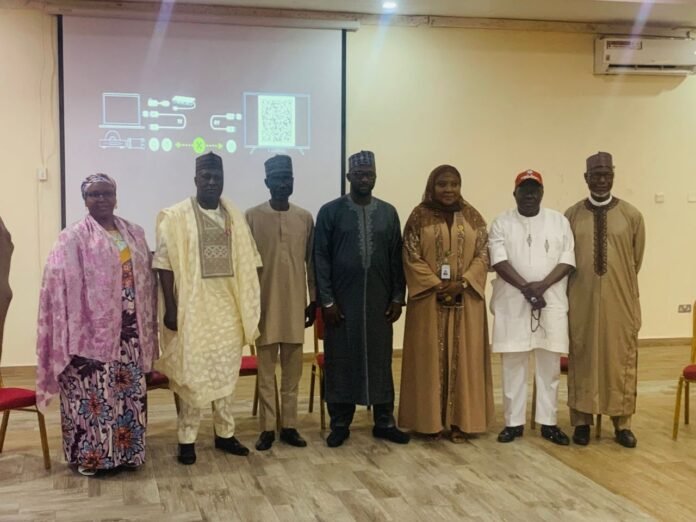
Education stakeholders in Kaduna state met on Thursday in Abuja, to jaw-jaw on institutionalizing life skills in school curriculum in the state
The one-day critical stakeholders’ meeting on the strategic institutionalization of life skills under the AGILE project was organized by the Centre for Girls’ Education (CGE), in collaboration with the Kaduna State Government.
Speaking, Mariam Dangaji KD Project Cordinator AGILE Kaduna State, said getting the buy-in of various stakeholders is necessary for the success of the programme.
“We need all the people we can get to make this project a success. We need the interfaith religious bodies, the community and the parents.
“We also need enough sensitisation to make everyone understands the context of these law, so that they won’t say we are teaching their children something else.”
She added that the Ministry of Information, Budget and Planning is critical to get a budget plan for that purpose.
“After this meeting, we will try and fast-track activities and see how we can get a policy for implementation
within the first quarter, second quarter of this year.
Also speaking, the Chairman, House Committee on Education, Kaduna State House of Assembly, Mahmud Lawal Ismaila said they looked into the draft bill, and are willing to support it.
He said the bill which is about ensuring protection for students is timely considering the challenges and molestation students face in schools.
“At the Assembly, we are going to work on the draft bill and ensure the speedy passage of the bill into law.
“However, we advised three things: We urged them to ensure that the bill covers what it intends to cover. Two, that the bill should avoid duplication of laws. Three, to ensure that if the bill is passed into law, it can be implemented.
These are the three areas that we advise that we look into it.
“Also, the commissioner of education should form a technical committee that will look into the draft bill and make a policy that can start working on it pending when the bill will pass into law. That’s what we discuss and that’s our resolution and I assure you that the assembly will not hesitate to pass this bill into law within the shortest possible time.”
On her part, Habiba Mohammed
Executive Director, Centre for Girls’ Education (CGE), said the media briefing offers a rare and important opportunity for direct engagement
with senior state leadership actively shaping the future of education in Kaduna State.
“The conversations we have held today, and the discussions you will continue to have
with these leaders, go beyond programmes. They speak to policy choices, legislative
intent, and long-term system transformation.
What we have concluded today is not just another meeting. It marks a clear transition
from project-based experimentation to system-level reform in how we prepare young
people, especially girls, for life beyond the classroom.
“For more than 18 years, the Centre for Girls’ Education has worked across Northern
Nigeria and parts of West Africa to answer a difficult but urgent question: How do we
ensure that schooling actually equips girls with the skills, confidence, and
agency to shape their own lives?
Our answer has been the Safe Space model, a structured, mentored approach that
blends life skills, literacy, numeracy, health knowledge, and leadership within
environments that families and communities trust.
“Today’s engagement reflects that the conversation has moved from whether Life Skills
matter to how they can be sustainably embedded in the education system. Central to
this shift are ongoing policy reforms and legislative actions, including updates on a draft
Bill to institutionalize Life Skills as a co-curricular subject across public
secondary schools in Kaduna State.
“This proposed reform has far-reaching
implications for learners, teachers, schools, and the broader education system, as well
as for girls’ education, protection, and long-term life outcomes.
“The evidence is no longer abstract. Across multiple independent evaluations and
large-scale programmes, including Adolescent Girls Initiative for Learning and
Empowerment (AGILE, supported by the World Bank) and Adolescent Girls Initiative
(AGI supported by UNFPA), we have seen consistent results: improved school
retention, delayed marriage, stronger voices and decision-making among girls, and
healthier relationships between schools, families, and communities. Life skills are not
“soft outcomes.” They are foundational capabilities that protect learning, dignity, and
future opportunity.
“We are particularly encouraged by the institutional framework discussed and
strengthened today, which outlines a clear pathway for embedding Life Skills
education into Kaduna State’s education system. This includes formal policy and legal
integration through state education policies and development plans; curriculum adoption
of the Life Skills manual; and the creation of dedicated budget lines to sustain delivery
across public schools.
Equally important is the emerging governance structure, with clear leadership roles for
the Ministry of Education, SUBEB, the Senior Secondary Schools Education Board, and
the Kaduna State School Quality Assurance Authority. “Integrating Life Skills indicators
into existing monitoring systems ensures that this reform will be tracked, improved, and
owned by the system itself.
Capacity building is another critical pillar. Moving teacher training, mentorship, and
refresher programmes from project units into permanent ministry structures reflects a
commitment to sustainability. CGE remains fully committed to supporting this process as
a technical and learning partner to the state.”