
By Mashe Umaru Gwamna
Sahelian Institute For Bamboo Research and Entrepreneurship Development (SIBRED),
Nnamdi Azikiwe University, Awka, said Nigeria needs
operational national bamboo policy, regulations and plantation
establishment standards.
The Institute called for an urgent implementation of regulations to enable Nigeria aligned to global standards.
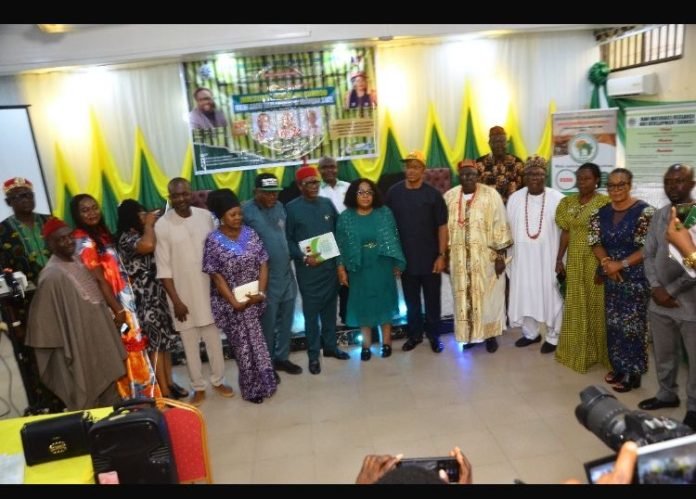
The institute made this known during a one day Investors’ Forum on Bamboo Value Chain Development in collaboration with Raw Materials Research and Development Council (RMRDC) Coordinating Office and Sahelian Institute of Bamboo Research and Entrepreneurship Development (SIBRED), UNIZIK, Awka in Anambra State.
Speaking at the workshop, Founding Director, SIBRED, Dr. John Agbo Ogbodo
said there is no single state in Nigeria currently that has at least one hectare of planted bamboo forest.
“All we can see, are naturally occurring
bamboos in the wild.
“ Anambra state government owned bamboo forest nursery.”
He noted despite Nigeria is the second leading bamboo producing country in West Africa .
“It does not have an operational policy, standard and regulations “.
He stressed that bamboo is potentially a key component to green economy transformation in Nigeria.
“The world is experiencing a confluence of
pressures from climate change, demands for
greenhouse gas mitigation and stakeholder
pressures on corporations to do more to mitigate climate change”.
He said “As the world is now, there is a demand
for more sustainable solutions for manufacturing
materials that can enhance climate justice demands
and lots more.
Dr.Agbo cited International Network on
Bamboo and Rattan (INBAR) saying, “Bamboo is considered to be a vital resource for Green Economy.”
He explained that since 2018, China earns up to $60 billion globally and $39 billion domestically
from the bamboo and rattan sector”.
He noted that, bamboos have presence in Anambra state of Nigeria; and its versatility could offer Nigerians sustainable solutions to their needs and unemployment issues.
The Director stated that bamboo can be used for economic development and
global bamboo supply chains .
He maintained that globally, the increase in demand
pressures on corporations to develop sustainable materials and
source materials from vetted organization that insure employee
health and well-being and
environmental sustainability.
He said diverse applications
of bamboo is seen as a replacement
material for many non-sustainable
materials in many industries including
construction, fabric, paper, and
biomass among others .
The acting Vice-Chancellor of Nnamdi Azikiwe University (UNIZIK), Awka, Prof. Carol Arinze-Umobi, in her keynote address said that the value chains in bamboo promotes economic development, business growth, job creation and consumer satisfaction.
Prof. Arinze-Umobi represented by Director of General Studies (GS) Unit, Engr. Prof. Philomena Igbokwe called on government at all levels to developing more interest in bamboo .
“We need to explore and exploit the abundant natural resources as a tool socioeconomic development” .
Similarly, Director General/CEO (RMRDC), Prof. Nnanyelugo Martin Ike-Muonso said bamboo value chain in Nigeria holds significant potential for economic growth, job creation, and environmental sustainability, but it remains underdeveloped due to various constraints.
He said bamboo is an underutilized yet highly valuable resource in Nigeria. “Developing the bamboo value chain can contribute to Nigeria’s green economy, reduce deforestation, and provide raw materials for various industries”.
Prof Ike-Muonso emphasized that
to fully harness the benefits of this valuable resource in today’s economic landscape,Nigeria must explore new investment models, modern processing technologies, and value addition opportunities.
He said Bamboo-related activities currently form a small fraction of Nigeria’s economic output, but with proper development, the sector could generate significant foreign exchange (potentially US$22 billion annually) through exports of products like bamboo charcoal, tiles, and ply bamboo.
He stated that bamboo’s versatility supports over 100 products, including construction materials, furniture, handicrafts, textiles, and bioenergy (charcoal, briquettes).
“Recently, on the 2nd of July, 2025, the Nigeria Senate passed the Raw Materials Research and Development Council’s amendment Bill on 30% value addition to raw materials before export after a successful 3rd reading on the floor of the senate.
“I am happy to state here that the bill enjoys positive responses and support from all stakeholders”,he said
He said the presidential assent is being awaitedwhile other ratifications at the lower house is ongoing.
“The bill mandates that at least 30% local value addition must be applied to raw materials before they can be exported from Nigeria. It also seeks to prohibit the importation of raw materials that are considered sufficiently available locally.
“This legislation aims to boost Nigeria’s industrialization by encouraging domestic processing of raw materials, protecting natural resources, creating jobs, and fostering economic growth through increased local manufacturing capacity and stimulate economic sovereignty in Nigeria”, he said.
Director General/CEO (RMRDC), Prof. Nnanyelugo Martin Ike-Muonso said bamboo value chain in Nigeria holds significant potential for economic growth, job creation, and environmental sustainability, but it remains underdeveloped due to various constraints.
He said bamboo is an underutilized yet highly valuable resource in Nigeria. “Developing the bamboo value chain can contribute to Nigeria’s green economy, reduce deforestation, and provide raw materials for various industries”.
Prof Ike-Muonso emphasized that
to fully harness the benefits of this valuable resource in today’s economic landscape,Nigeria must explore new investment models, modern processing technologies, and value addition opportunities.
He said Bamboo-related activities currently form a small fraction of Nigeria’s economic output, but with proper development, the sector could generate significant foreign exchange (potentially US$22 billion annually) through exports of products like bamboo charcoal, tiles, and ply bamboo.
He stated that bamboo’s versatility supports over 100 products, including construction materials, furniture, handicrafts, textiles, and bioenergy (charcoal, briquettes).
“Recently, on the 2nd of July, 2025, the Nigeria Senate passed the Raw Materials Research and Development Council’s amendment Bill on 30% value addition to raw materials before export after a successful 3rd reading on the floor of the senate.
“I am happy to state here that the bill enjoys positive responses and support from all stakeholders”,he said
He said the presidential assent is being awaitedwhile other ratifications at the lower house is ongoing.
“The bill mandates that at least 30% local value addition must be applied to raw materials before they can be exported from Nigeria. It also seeks to prohibit the importation of raw materials that are considered sufficiently available locally.
“This legislation aims to boost Nigeria’s industrialization by encouraging domestic processing of raw materials, protecting natural resources, creating jobs, and fostering economic growth through increased local manufacturing capacity and stimulate economic sovereignty in Nigeria”, he said.
In his paper presentation, Prof. Muyisa Kazimoto,
Open Learning University, Democratic Republic of Congo, titled bamboo value chain development in Africa’s green economy : A comparative analysis of institutional support, environmental benefits, and economic opportunities, DRC and Nigeria, Identify that bamboo is no longer a marginal plant, it’s a vehicle for inclusive, sustainable growth.
He said that with the right policies and investments, DRC and Nigeria can lead in the bamboo sector .
He said there is opportunity to create a replicable model for sustainable African development.
He also recommended policies such as institutionalize bamboo in national development framework, establishing bamboo clusters innovative zones and mobilizes private partnership and integrate systems.
He mentioned some strategies investment areas such as training, vocational centers , innovation hub and e-commerce among others .
Prof.Kazimoto, said bamboo can unlock green finance, green bond funding bamboo project and blend financial model reduction risk and attract private investors.
SIBRED appreciates
the Governor Chukwuma Soludo, who was represented by Hon. Christian Udechukwu, Anambra State Commissioner of Commerce and Industry, Prof. Carol Arinze-Umobi, Ag. Vice Chancellor, Nnamdi Azikiwe University, Awka (represented by Engr. Prof. Philomena Igbokwe – Director, General Studies, UNIZIK), Prof. Nnanyelugo M. Ike-Muonso, Director General/CEO of Raw Materials and Development Council (RMRDC), Abuja (represented by Lady Dr. Uche Arinze Nwosu – State Coordinator, RMRDC, Anambra State) Ms. Iris Song, Global President, Global Climate Innovation Coalition (GCIC), USA.
Others are Prof. Muyisa P. Kazimoto, Vice Chancellor, Open Learning University, Democratic Republic of Congo
Prof. Benedict D. Illozor, Eastern Michigan University, USA and Mr. C. I. Diribe, State Coordinator, Raw Material Development Council (RMRDC), Ebonyi State amongst many others .