

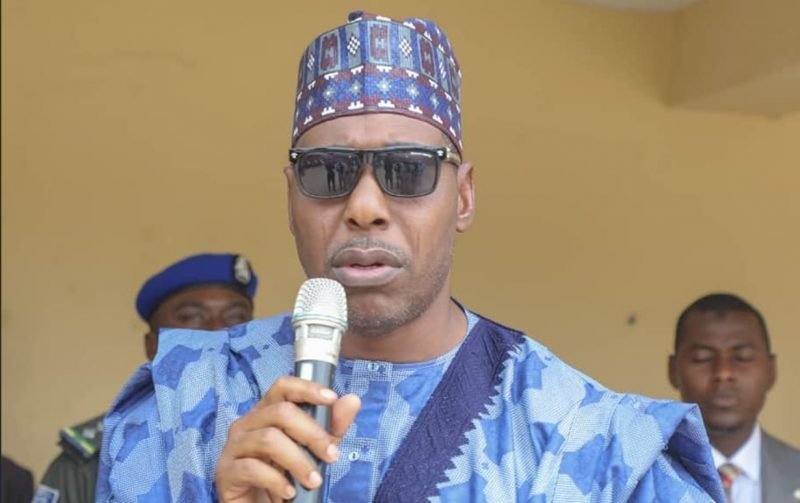
Borno State governor Babagana Zulum has repeated a call on the federal government to engage mercenaries to fight the enemies of the state who are instigating insecurity. He pressed again for mercenaries last week during the weekly briefing organised by the Presidential Communication Team at the Presidential Villa, Abuja.
The governor’s argument is that “developed countries with superior military power are also engaging mercenaries”. He said, “I have said times without number that in addition to what we are doing, there is a need for the government to rethink and look into the possibility of hiring mercenaries. There is nothing wrong. America, Britain and many more countries that are stronger than Nigeria, who used to seek support outside, there’s nothing wrong because this problem has been compounded.
“And it’s not easy for us to solve the security challenges that we’re having now. Nigeria is providing a lot of things, the federal government is buying equipment, but there is the need for us to seek support from external agencies to defeat these insurgents once and for all before the matter reaches other parts of the nation. This is very important. Whether we like it or not, we have an existing gap that we need to fill and this gap … cannot be filled without external support.”
Governor Zulum is the one wearing the tight shoes, so he knows where and how painful the pinching is. We have believed him when he said ISWAP elements are capable of causing more havoc than Boko Haram insurgents in the Lake Chad region because they “are more sophisticated, more funded and they’re more educated.” According to him, seeing “a growing number of ISWAP in some parts of the state is a matter of great concern to everybody.”
He feared that growing number was an early warning sign that shouldn’t be ignored. “We shouldn’t allow ISWAP to grow; we (must) do everything possible to defeat ISWAP. Otherwise, what Boko Haram does will be a child’s play. ISWAP will be a threat to the entire nation … Because of the proximity of Sub-Saharan Africa, they are coming from Libya and others to resettle here.”
We agree with the governor on the real threat that ISWAP poses, perhaps far greater than Boko Haram was. However, his suggestion that mercenaries be hired to deal with that threat is strange, given some of the admissions he made about ISWAP’s immense capabilities. He said the group was much more “sophisticated, better funded and educated”. And we know that mercenaries or “dogs of war” or “soldiers of fortune” as they are also called, give their loyalty to the highest bidder. Once in our country or before they arrive, ISWAP, with its huge war chest, will not have any difficulty getting them to change allegiance.
What more, mercenaries follow no rules of combat or engagement. You hire and release them into the wild and they do as they want. In other words, their modus oparandi is no better than that of the enemy. They come to kill and to destroy. Hiring them will be giving credence to the charge by organizations like Amnesty International and Human Rights Watch that Nigeria’s military does not follow internationally defined rules of engagement in the fight against terrorists. This allegation has stopped some foreign governments from selling military hard and soft wares to us. And those that want to help us give strict conditions, including not deploying them in civilian populated locations.
The federal government is acutely aware of the negatives involved in hiring mercenaries to ‘help’ in the anti terror campaign. And it is right in not taking that option, no matter how alluring.