The House of Representatives Committee on Humanitarian Services has pledged to strengthen Nigeria’s response to human trafficking and improve the repatriation, rehabilitation and reintegration of trafficked Nigerians stranded in Mali and other West African countries.
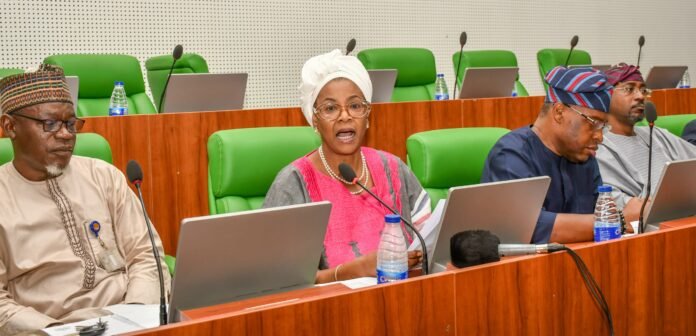
The commitment was made on Wednesday at a High-Level Stakeholders’ Technical Meeting on Strengthening the Repatriation, Rehabilitation and Reintegration of Trafficked Nigerians from Mali and Other West African Countries held at the National Assembly, Abuja.
Speaking at the meeting, Chairperson of the Committee, Hon. Tolulope Akande-Sadipe, described human trafficking as a grave violation of human rights and called for a coordinated national response involving government institutions, development partners and civil society organisations.
She said thousands of Nigerians, particularly women, children and young people, continue to fall victim to human trafficking, forced labour and sexual exploitation across West Africa and beyond.
“Bringing our citizens home is only the beginning. The true measure of our success lies not simply in repatriation, but in the quality and sustainability of the support we provide after survivors return,” she said.
Akande-Sadipe stressed that sustainable reintegration requires a survivor-centred approach that includes healthcare, psychosocial support, legal assistance, education, vocational empowerment and economic opportunities to prevent re-trafficking.
She also urged stakeholders to develop practical and evidence-based recommendations that would strengthen Nigeria’s anti-trafficking framework and improve institutional coordination.
Earlier, Operation Consultant on Diaspora Issues to the National Council of Child Rights Advocates, Nigeria (NACCRAN), Prince Adefioye Gbolagade Simeon, presented findings from an 11-month fact-finding mission in Mali, alleging widespread trafficking and exploitation of Nigerian girls in Mali, the Republic of Benin, Togo, Burkina Faso and Senegal.
Simeon alleged that several underage Nigerian girls had been trafficked and forced into prostitution, while some rescued victims suffered physical and emotional abuse.
He also raised concerns over the handling of repatriation activities at the Nigerian Embassy in Mali, alleging a lack of transparency and poor documentation of Nigerian migrants.
According to him, rescued victims were often kept around the embassy for prolonged periods while awaiting repatriation through the International Organization for Migration.
He further alleged that efforts by NACCRAN to collaborate with relevant authorities and rescue trafficked victims were hampered by bureaucratic bottlenecks and lack of cooperation from some officials.
The consultant disclosed that despite the challenges, NACCRAN, with the support of the House Committee on Humanitarian Services, successfully repatriated more than 10 underage Nigerian girls between September and December 2025.
He called on the Federal Government to investigate allegations surrounding the management of repatriation activities at the Nigerian Embassy in Mali and strengthen collaboration among the Federal Ministry of Foreign Affairs, the National Agency for the Prohibition of Trafficking in Persons, security agencies and civil society organisations.
Simeon also urged the Federal Ministry of Foreign Affairs to issue letters of introduction to facilitate humanitarian operations and support the rescue and repatriation of trafficked Nigerians across West Africa.
The stakeholders’ meeting brought together lawmakers, officials of government ministries and agencies, representatives of international organisations, development partners, security agencies and civil society groups to deliberate on strategies for combating human trafficking and supporting returning victims.