

US imposes fresh 12.5% tariff on Nigerian exports
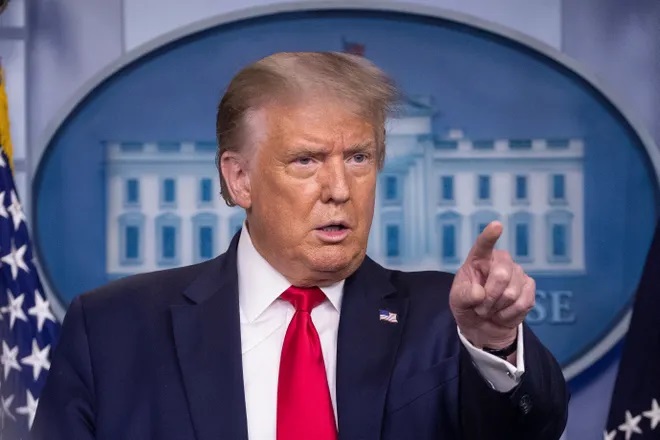
Donald Trump
The measure is aimed at encouraging trading partners to strengthen efforts to prevent forced labour from entering global supply chains.
According to a statement published on the USTR website on Thursday, Nigeria is among the countries that will be subjected to the 12.5 per cent tariff because it does not have what the United States considers an effective prohibition on the importation of goods produced through forced labour.
However, countries that have already adopted such prohibitions, or have formally committed to introducing and enforcing them, will attract a lower tariff rate of 10 per cent.
Those countries include India, Indonesia, Malaysia, Mexico, the United Kingdom, Argentina, Bangladesh, Cambodia, Canada, Ecuador, El Salvador, Guatemala, Honduras, Jordan, Pakistan, Sri Lanka and Trinidad and Tobago.
The USTR said the tariffs followed investigations launched in May 2026 into 60 of America’s largest trading partners under Section 301 of the Trade Act.
The agency said the investigations involved extensive consultations with governments and stakeholders before the final decision was reached.
According to the USTR, more than 1,600 written submissions were received during the review process, while over 100 witnesses testified at public hearings. It also held consultations with more than 45 governments before announcing the new tariffs.
Explaining the tariff structure, the agency said countries that have already implemented or pledged to implement effective forced labour import bans would qualify for the lower tariff rate.
It stated: “10 percent is the appropriate rate of Section 301 duties for investigated economies that (i) impose a forced labor import prohibition; (ii) have committed to impose and enforce such a prohibition through an Agreement on Reciprocal Trade; or (iii) have imposed a partial regime with the effect of preventing the importation of certain forced labor goods.
“These economies are: Argentina, Bangladesh, Cambodia, Canada, Ecuador, El Salvador, Guatemala, Honduras, India, Indonesia, Jordan, Malaysia, Mexico, Pakistan, Sri Lanka, Trinidad and Tobago, and the United Kingdom.
“10 percent or 12.5 percent, net of Most-Favored-Nation (MFN) rate, is the appropriate rate of Section 301 duties for certain products of the European Union, Taiwan, Japan, Korea, and Switzerland that are not otherwise exempted, as explained in greater detail in the Federal Register Notice.”
The agency added that “12.5 percent is the appropriate rate of Section 301 duty for all other investigated economies.”
A Federal Register notice issued by the USTR and obtained on Friday further confirmed that Nigeria would be subjected to the 12.5 per cent tariff on its exports to the United States, except for products covered by specific exemptions contained in Annex I and Annex II, Part A, of the notice.
The notice stated: “Based on the findings in the investigation of Nigeria, considering the public comments, testimony, and the advice of the Section 301 Committee, as well as the advice of advisory committees, and in accordance with the specific direction of the President, the Trade Representative has determined to impose 12.5 percent tariffs on products of Nigeria, except as provided in Annex I and Annex II, Part A, of this Notice.
“The Trade Representative has determined, in accordance with the specific direction of the President, that the tariff rate to be applied, and the scope of tariffs and exemptions, are appropriate to obtain the elimination of the acts, policies, and practices determined to be actionable in the investigation.”
The latest action comes after President Donald Trump invoked Section 122 of the Trade Act of 1974 to impose a temporary universal tariff on imports after the US Supreme Court blocked his administration’s broader tariff programme introduced under the International Emergency Economic Powers Act.
US Trade Representative Jamieson Greer said the latest tariffs were intended to encourage governments to adopt stronger measures against forced labour.
“President Trump recognises that decades of moral suasion have not eradicated forced labour from global supply chains,” Greer said.
“The United States has had a forced labour import ban for nearly a century. It’s well past time for our trading partners to do the same.”
The USTR said several categories of products would be exempt from the tariffs.
According to the agency, exemptions include raw materials whose restriction could create supply shortages in the United States, goods that could cause significant disruptions to the US economy, products that are not available in sufficient quantities from domestic or alternative foreign sources, and certain goods originating from countries that have already adopted or committed to implementing forced labour import prohibitions.
The agency added that additional exemptions were granted in cases where the tariffs were not considered likely to eliminate the trade practices that formed the basis of the investigations.
Never miss a moment! Get the stories shaping Nigeria, delivered straight to your phone. Follow Peoplesdaily Newspaper on WhatsApp for breaking news, exclusive reports, and the headlines everyone will be talking about, before anyone else.


