

From Mika’il Tsoho, Dutse
As part of effort to ensure that education is accessible to children, the United Nations Children’s Fund (UNICEF), has called for more investment in Early Child Education in Jigawa, Kano, and Katsina state.
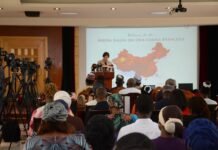
The call was made by Dr Karanveer Singh, Officer-in-Charge, UNICEF Field Office Kano, while delivering his speech at Media Dialogue on Strengthening Early Childhood Education (ECE) in Katsina, Kano, and Jigawa States, held at manpower development institute Dutse.
He explained that, the Early Childhood Education is one of the most powerful and cost-effective investments a country can make, adding that, “a child’s brain develops most rapidly in the early years of life.
“During this period, strong foundations in cognitive, social, and emotional development are established. When children have access to quality early learning, they are more likely to start school on time, stay in school, and succeed”, he said.
According to him, Early Childhood Education (ECE) specifically targets children aged 3 to 5 years, as well as younger children from birth to age 2 through parenting support and early stimulation interventions.
For children aged 3 to 5 years, ECCDE is delivered through play-based, child-centred learning approaches in pre-primary settings, using structured activities that promote early, social skills, and emotional development. For children from birth to 2 years, support is provided through caregiver education, responsive parenting, nutrition, and early stimulation, ensuring that children are developmentally ready before entering formal pre-primary education.
Mr Singh, who decried limited access to early childhood education remains limited in Northwestern states said there is need of urgent attention as in Kano State, only about 29% of children access ECE, in Katsina State, approximately 32% while in Jigawa State, only about 24%.
He maintained that, these figures reflect deep inequalities, particularly for children in rural and underserved communities.
At the same time, these states are facing a significant out-of-school children crisis, compounded by high levels of learning poverty. In some areas, foundational literacy rates are below 15%.
“This means that many children are not acquiring even the most basic reading skills an outcome that undermines their future and the development of society.
“We know that the roots of this crisis begin early. When children miss out on quality early learning opportunities, they start primary school already behind and many never catch up”, he stated.
He identified the challenges as challenges as limited parental awareness, a shortage of trained ECCDE teachers, inadequate learning and play materials, weak infrastructure, and insufficient financing, saying but these challenges are not insurmountable.